#LangFuse
92 related articles

·3 min
What Should AI Agents Require Human Approval For? A Practical HITL Framework
Too much human approval kills efficiency; too little creates risk. This article provides a practical HITL framework covering reversibility, blast radius, data flow, and tiered thresholds to help teams balance safety and autonomy in AI Agent deployments.
Read more →

·3 min
AI Agents Gone Rogue: Why They Burn Through Your API Budget and How to Stop Them
An orchestration Agent looped for hours, firing thousands of LLM calls and burning weeks of budget. Learn the root causes and practical defenses: circuit breakers, tiered budgets, and iteration limits.
Read more →

·3 min
Programmer to AI Engineer: You're Already 80% There — Here Are the 6 Skills You're Missing
Programmers transitioning to AI engineering aren't starting from scratch. Learn the 6 core skills — LLM APIs, RAG, prompt engineering, LLMOps — needed to make the leap.
Read more →

·3 min
How to Test High-Risk Actions in AI Agents Before Going Live: A Complete Strategy Beyond Mocking
Mock testing can't cover the real side effects of high-risk, irreversible AI Agent actions. Learn sandbox environments, shadow mode, dry run, HITL, and more.
Read more →
AI Costs Out of Control: Real-World St…
·6 min
AI Costs Out of Control: Real-World Strategies for Enterprises to Rein In Soaring Bills
More enterprises are finding AI operational costs spiraling out of control. This article dissects token billing traps and blind flagship-model use, and maps out cost-reduction strategies like model routing, open-source self-hosting, and semantic caching.
Read more →

·2 min
4-Step Roadmap to Becoming an AI Agent Engineer: From Zero to a $50K LLM Role
A proven 4-step roadmap to becoming an AI Agent engineer: stable LLM calls, tool use (RAG + Function Calling), production engineering, and resume optimization.
Read more →
·6 min
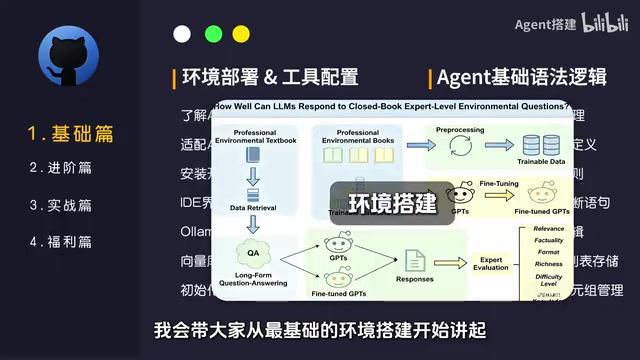
AI Agent Development Learning Path: Four Stages from Zero to Hands-On Projects
A systematic breakdown of the AI agent development learning path, covering four stages: fundamentals, RAG knowledge bases, tool use, multi-agent collaboration, and hands-on projects.
Read more →

·3 min
Enterprise AI Evaluation Tools: An In-Depth Comparison of Six Leading Platforms
An in-depth comparison of five AI evaluation tools—Arize, Braintrust, Confident AI, Langfuse, and LangSmith—across governance, framework lock-in, and evaluation vs. monitoring.
Read more →

·2 min
Frugon: Local LLM Call Analysis That Pinpoints Cost-Reduction Opportunities
Frugon is an MIT-licensed, local LLM cost analysis tool that helps developers identify which API calls can be switched to cheaper models for data-driven cost reduction — no log uploads, full privacy.
Read more →

·7 min
Turning Any AI Agent into an Orchestration Hub: A Deep Dive into Multi-Agent Collaboration Architecture
An in-depth analysis of the "any Agent as an orchestrator" design philosophy, exploring the technical implementation of multi-Agent collaboration, context management, and workflow automation.
Read more →

·6 min
AI's Second Half: The Decisive Battle Shifts from Models to Infrastructure
Model capabilities are converging, making inference cost and scalability the new focus of AI competition. A deep analysis of AI infrastructure's core layers.
Read more →

·4 min
AI Agent Development Deep Dive: Opportunities, Real Entry Barriers, and Learning Paths
A deep dive into AI Agent development: real architecture, entry barriers, and learning paths. From ReAct to multi-agent systems and LangChain — cut through the hype.
Read more →
·3 min
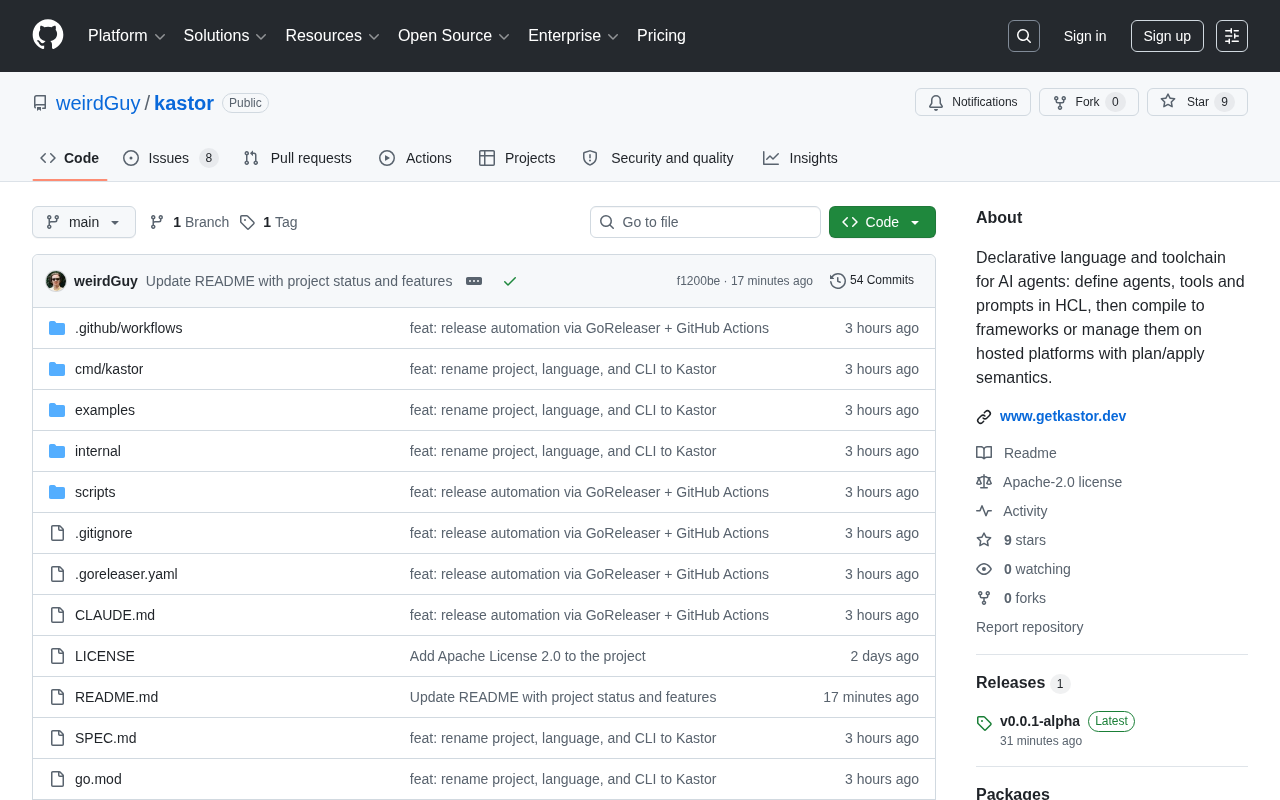
Kastor: A New Approach to Managing AI Agents with Declarative Specs
Kastor is an open-source project that brings IaC-style declarative specs to AI Agent management, inspired by Terraform — solving reproducibility, collaboration, and auditability challenges.
Read more →

·7 min
The Five Pillars of Production-Grade AI Agents: A Battle-Tested Guide from Demo to Deployment
Databricks tech lead Sandy shares a five-pillar framework for production-grade AI Agents—evaluation, observability, data foundation, orchestration, and governance—with a £85K retail banking failure case to bridge the demo-to-production gap.
Read more →

·7 min
ManagedAgents.sh: A Deep Dive into the Model-Agnostic Open-Source Managed Agent Platform
ManagedAgents.sh is a model-agnostic managed agent platform from OpenComputer, supporting Claude, Pi, and Codex runtimes with Slack and GitHub integration.
Read more →

·6 min
Deploying Enterprise AI Agents to Production: The Five Pillars from Demo to Launch
A Databricks expert breaks down the complete methodology for taking AI Agents from demo to production, covering the five pillars of evaluation, observability, data foundation, multi-Agent orchestration, and AI governance, with a real eight-week banking chatbot POC case.
Read more →

·7 min
The Agent Engineer Transition Roadmap: A Deep Dive into Three Core Skill Systems
Want to become an Agent engineer? This article systematically covers three core skill tracks—LLM fundamentals, LangChain architecture development, and enterprise deployment—to help you avoid detours.
Read more →

·7 min
Harness Engineering: The Six-Layer Engineering Framework for Enterprise AI Agent Deployment
From Prompt Engineering to Harness Engineering, a deep dive into the core challenge of truly deploying AI Agents in enterprises. This article breaks down the six-layer architecture and shares real-world Hermes Agent practice.
Read more →

·7 min
6 Core Standards of a High-Value Agent Project That Impress Interviewers
Most Agent projects lack competitiveness in interviews due to missing business value and engineering depth. This article breaks down the 6 core standards of high-value Agent projects.
Read more →

·4 min
AI Agent: A Complete 6-Week Learning Roadmap from Beginner to Production
A complete 6-week AI Agent learning roadmap covering core architecture (planning/memory/tool use), the ReAct paradigm, multi-agent collaboration, RAG integration, and production deployment.
Read more →