#LangGraph multi-agent
405 related articles

·2 min
LangGraph Multi-Agent Architecture in Practice: From Core Components to Production Deployment
A deep dive into LangGraph multi-agent architecture — covering hierarchical, network, and pipeline patterns with three hands-on projects using LangGraph 0.3.
Read more →

·7 min
Getting Started with LangGraph Multi-Agent Development: Architecture Analysis and Three Practical Case Studies
Learn LangGraph multi-agent development covering Supervisor and Collaboration architectures, with three hands-on projects: code assistant, prompt assistant, and WebRTC digital human.
Read more →

·3 min
LangGraph Core Explained: Its Relationship with LangChain and Multi-Agent Orchestration Principles
Deep dive into LangGraph's core positioning, its relationship with LangChain, practical code comparisons of Chain vs Graph, understanding Agent essentials, and multi-agent orchestration design.
Read more →
 Tutorials
·3 min
LangGraph Multi-Agent Architecture: Graph Structure Principles and Enterprise-Level Implementation Guide
Deep dive into LangGraph's core graph structure design, single and multi-agent collaboration patterns, MCP protocol integration, and Time Travel fault-tolerance, with enterprise-level hybrid multi-agent architecture implementation.
Read more →
 Tutorials
·3 min
LangGraph Multi-Agent Architecture: Core Principles and Enterprise-Level Implementation Guide
Deep dive into LangGraph multi-agent architecture covering Graph structure principles, MCP service integration, Time Travel debugging, and supervised multi-agent enterprise implementation patterns.
Read more →
 Tutorials
·2 min
LangGraph Multi-Agent Architecture in Practice: A Complete Guide from Single Agent to Enterprise-Level Applications
In-depth guide to LangGraph multi-agent architecture: covering Graph structures, MCP protocol integration, single Agent building to enterprise-level multi-agent collaboration for AI developers.
Read more →
 Tutorials
·1 min
LangGraph 1.0.5 Tutorial: Master AI Agent Orchestration & Multi-Agent Systems in Six Lessons
Complete guide to LangGraph 1.0.5 tutorial series covering durable execution, memory management, Human in the Loop, streaming, time travel, and multi-agent collaboration.
Read more →
 Tutorials
·3 min
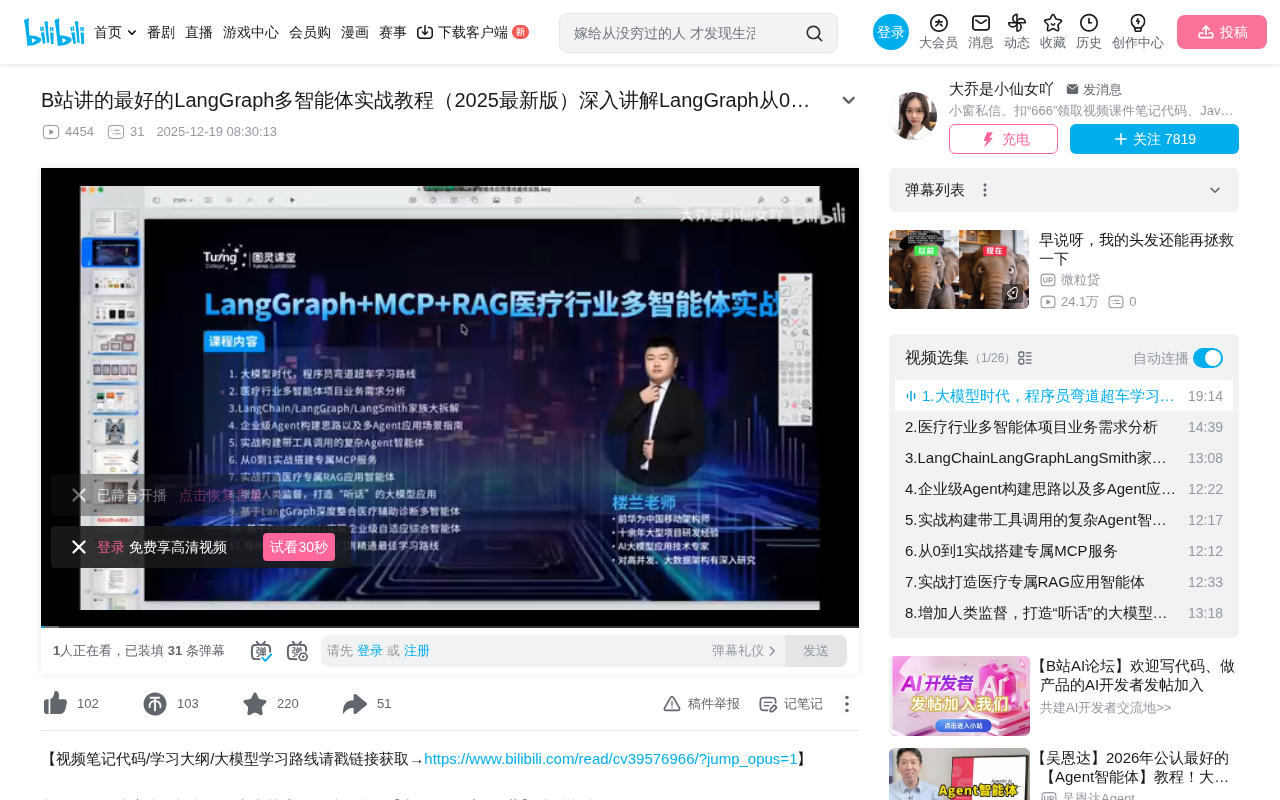
LangGraph Multi-Agent in Practice: Building a Medical Agent System from Scratch
A deep dive into LangGraph multi-agent architecture for healthcare, covering LangChain, RAG, and MCP integration, from requirements analysis to Agent orchestration.
Read more →
 Tech Frontiers
·3 min
LangGraph Multi-Agent Company Research Tool: A Practical Guide to Open-Source AI Due Diligence
Deep dive into the open-source company-research-agent: LangGraph multi-agent architecture + Tavily search + dual-LLM collaboration for automated company due diligence and competitive intelligence.
Read more →

·2 min
Tempest Open-Source Tool: Reduces Token Consumption by 64% for Parallel AI Coding Agents
Tempest is an open-source developer tool that reduces token consumption by up to 64% for parallel AI coding agents through shared code understanding and isolated workspaces.
Read more →

·4 min
Walsh Multi-Agent Trading System: How Risk Management Veto Power Ensures AI Autonomous Decision-Making Safety
Deep dive into the Walsh multi-agent trading system architecture, exploring how its risk management agent with veto power establishes safety boundaries for AI autonomous decision-making.
Read more →

·3 min
Kopai: Turn Your Expertise into AI Agents and Earn Passive Income from Knowledge
Kopai is a no-code AI agent platform where experts upload knowledge to publish sellable AI agents, with per-message billing and 70% revenue share for creators.
Read more →

·3 min
Graph Engineering: The Core Paradigm and Design Patterns for AI Agent Orchestration
Deep dive into how graph engineering uses state machines and directed graphs to constrain AI agent behavior, covering reflection, routing, human-in-the-loop, and parallel execution patterns.
Read more →

·3 min
Graph Engineering: The Core Paradigm and Design Patterns for AI Agent Orchestration
Explore how graph engineering uses state machines and directed graph structures to constrain AI agent behavior, covering reflection, routing, human-in-the-loop, and parallel execution patterns.
Read more →

·4 min
Tiling Window Management: A New Interaction Paradigm for Multi-Agent Conversations
Exploring tiling window management for multi-agent AI conversations: how it solves parallel monitoring and observability challenges, real-world limitations, and the evolution from chat boxes to control consoles.
Read more →

·3 min
Claude Opus 5 Plays Pokémon: A 12-Hour AI Experiment in Multi-Agent Loop Architecture
Deep analysis of Claude Opus 5 playing Pokémon for 12 hours via multi-agent loop architecture, exploring Agent design patterns, long-horizon planning, and AI Agent trends.
Read more →

·3 min
Claude Opus 5 Plays Pokémon: Analyzing a 12-Hour AI Experiment Under Multi-Agent Loop Architecture
In-depth analysis of Claude Opus 5's 12-hour Pokémon gameplay through multi-agent loop architecture, exploring multi-Agent design, long-horizon planning, and AI Agent trends.
Read more →

·2 min
Moving State Out of Framework Memory: A Multi-Agent Architecture Refactoring Guide
Exploring how 70% of multi-agent memory is consumed by non-reasoning state, and a refactoring approach using email threads to replace framework memory for better token efficiency, auditability, and resilience.
Read more →

·2 min
LangChain or LangGraph? Framework Choices for Production-Grade AI Applications
In-depth analysis of LangChain vs LangGraph differences, why teams are migrating to LangGraph for production AI apps, and framework selection guidance based on project complexity.
Read more →

·2 min
LangChain or LangGraph? Choosing the Right Framework for Production-Grade AI Applications
In-depth analysis of core differences between LangChain and LangGraph, exploring why more teams are migrating to LangGraph for production AI apps, with framework selection guidance.
Read more →