#MCP protocol game development
113 related articles

·3 min
Google Cancels AI Studio App: Why 800K Pre-Registrations Weren't Enough to Save It
Google cancels its AI Studio app despite 800K pre-registrations. Analysis of the strategic reasoning, developer impact, and what it reveals about AI product attrition rates.
Read more →

·3 min
Kimi K3 Real-World Testing in 3D Modeling & Game Development: Can Open-Source Models Overtake Closed-Source Giants?
In-depth testing of Kimi K3 in 3D modeling, physics simulation, animation rigging, and game development vs Fable 5 and GPT Solve 5.6. Open-source model delivers top-tier results at one-quarter the price.
Read more →

·3 min
Kimi K3 Hands-On: 3D Modeling & Game Development — Can an Open-Source Model Outperform Closed-Source Giants?
Hands-on testing of Kimi K3 in 3D modeling, physics simulation, animation rigging, and game development versus Fable 5 and GPT Solve 5.6. The open-source model delivers top-tier results at a quarter of the price.
Read more →

·5 min
Opus 5 Builds a No Man's Sky-Style Exploration Game in One Day: MCP and Sub-Agent Architecture Explained
A developer used Anthropic's Opus 5 model to build a No Man's Sky-style space exploration game in one day using Blender MCP and sub-agents. Deep dive into the technical architecture and industry implications.
Read more →

·4 min
WebMCP in Practice: How MakeMyTrip Is Reshaping the Travel Booking Experience
India's largest OTA platform MakeMyTrip uses WebMCP to standardize AI Agent interactions with web apps, replacing fragile DOM scraping with natural language-driven test automation and simplified complex booking scenarios.
Read more →

·4 min
WebMCP in Practice: How MakeMyTrip Is Reshaping the Travel Booking Experience
India's largest OTA platform MakeMyTrip uses WebMCP to standardize AI Agent interaction with web apps, solving DOM scraping fragility, enabling natural language test automation, and simplifying complex international flight bookings.
Read more →

·5 min
The Complete Guide to AI Agent Development: A Four-Stage Progressive Roadmap
A systematic guide to AI Agent development across four stages: LLM fundamentals, ReAct paradigm, memory & tools, and multi-agent collaboration for developers.
Read more →
·5 min
Advanced Claude Code in Practice: Building a Top-Tier AI Development Workflow
In-depth analysis of Claude Code customization methodology: from access, knowledge injection to tooling. Master context window management, zero-overhead Hooks, and MCP & Skills plugin primitives to build a scalable AI software engineering workflow.
Read more →

·1 min
Navi: The Open-Source Desktop Assistant That Alerts You When Claude Code Needs Attention
Navi is an open-source MCP-based tool for Claude Code users. It alerts developers with tri-color status indicators and the classic "Hey! Listen!" sound when AI tasks need attention.
Read more →

·2 min
OpenSpiel 2.0 Released: Reinforcement Learning Framework Fully Embraces Large Language Models
OpenSpiel 2.0 by Google DeepMind adds LLM fine-tuning examples, MCP tool server, JSON trajectories, AlphaZero on JAX, 19 new games, and Windows support.
Read more →

·7 min
Claude Code Practical Tutorial: A Complete Beginner's Guide to Automating Your Entire Workflow
No coding required! This guide breaks down the complete Claude workflow: custom Projects, batch SEO content, one-sentence tool building with Artifacts, and Claude Code terminal ops—with real traffic-growth cases.
Read more →

·4 min
WebMCP in Practice: A Complete Guide to Making Your Website AI Agent-Ready
A deep dive into the WebMCP proposal: how AI agents read websites, how to expose structured tools via imperative and declarative APIs, and how to audit agentic readiness with Lighthouse.
Read more →

·3 min
GPT-5.6 Real-World Test: The True Capability Limits of AI-Assisted Game Development
A creator tests GPT-5.6 Codex on two real projects: an Android MAUI app and a tower defense game prototype. Zero code written for the app; the game demo surfaces multiple bugs. Honest look at AI coding's real limits.
Read more →

·3 min
MCP + Skills AI Reverse Engineering Toolchain: Technical Capabilities and Compliance Boundaries
A technical deep-dive into AI-assisted reverse engineering: how MCP, Skills libraries, and Frida toolchains work together, their real capability limits, and the legal boundaries of iOS/Android/Web reverse analysis.
Read more →

·3 min
Generate a Mini-Game from a Single Prompt? Testing the Cocos AI Agent Plugin
Deep dive into the Cocos Creator AI Agent Plugin: three-level context compression, tool approval, multi-agent parallelism, and DeepSeek-powered Mario scene building — all in one test.
Read more →

·7 min
Unity Custom MCP Tool Development Guide: Enabling AI Agents to Precisely Control the Editor
Learn how to develop custom tools based on the Unity MCP Relay Server, enabling AI agents like Cursor to directly control the Unity editor. Covers setup, tool building, parameter validation, and MCP Pro comparison.
Read more →

·3 min
Google Open-Sources Stitch Skills: A New Practice in AI Agent Skill Standardization
Google Labs open-sourced stitch-skills, a standardized skill encapsulation solution for AI Agents, compatible with Gemini CLI, Claude Code, Cursor and more.
Read more →
·5 min
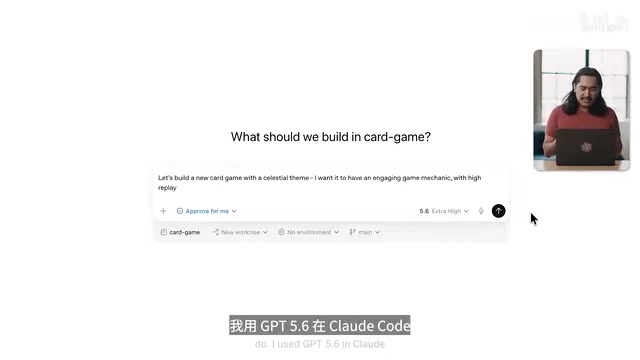
GPT-5.6 Released: Hands-On Analysis of Programmatic Tool Calling and Autonomous Agents
GPT-5.6 is officially released with core upgrades including programmatic tool calling, autonomous subagent delegation, and higher token information density. A hands-on card game build reveals its Agentic power.
Read more →

·5 min
GLM-5.2 Hands-On Review: A 753B-Parameter Open Model That Beats GPT and Claude on Value
In-depth hands-on review of Zhipu AI's flagship GLM-5.2: a 1M-token context window and API pricing just one-fifth of GPT/Claude. Covers website building, Chrome extensions, 3D game cloning, and agentic workflows.
Read more →

·5 min
Getting Started with AI Agents: Concepts, Architecture, and Core Components Explained
What is an AI Agent? Starting from Bill Gates' claim about the computing revolution, this article explores AI Agents' intuitive concepts, four core components (LLM+Planning+Memory+Tools), and what Agent development means for programmers.
Read more →