#MoE quantized communication
21 related articles

·3 min
Running the 1.56TB Kimi K3 Model on 8GB RAM with Pure C
A developer built a pure C99 inference engine that runs the 1.56TB Kimi K3 model on 8GB RAM using MoE sparsity and NVMe on-demand loading—no GPU, 176KB binary.
Read more →

·3 min
MI355X Running Kimi K3 Benchmark: The Logic Behind Outperforming B300 in Performance per Dollar
Deep analysis of AMD MI355X running Kimi K3 with superior cost-efficiency vs NVIDIA B300, and its implications for the AI inference hardware market.
Read more →

·3 min
How Cheap Can It Be to Serve a 2.8 Trillion Parameter Model? A Deep Dive into Inference Economics
Deep analysis of the real cost of serving a 2.8 trillion parameter model. From MoE sparse activation to batching scale effects and inference optimization, revealing why model size and serving cost are less correlated than assumed.
Read more →

·3 min
Is LLM Inference Actually Profitable? Breaking Down the Cost Structure and Business Logic of Large Model Inference
A deep dive into LLM inference cost structure and profitability models—from GPU throughput, MoE architecture, and KV Cache to scale effects—revealing the business logic behind API price wars.
Read more →

·4 min
Laguna S 2.1 Deep Dive: Hands-On Local Deployment of a 118B Parameter Coding Model
In-depth review of Poolside's Laguna S 2.1 open-source coding model: MoE architecture, RL training, DGX Spark local deployment, and real-world agentic coding tests with 8B active parameters.
Read more →

·7 min
Alibaba Open-Sources 2.4T Qwen Model as Chinese AI Sweeps the Global Competitive Landscape
Alibaba open-sources a 2.4 trillion parameter Qwen model and launches the Qwen Token Plan. Chinese models surge, Kimi K3 tops global rankings, and China's AI is reshaping the global competitive landscape.
Read more →

·2 min
ExLlamaV3 v1.0.0 Official Release: Faster Inference, Lossless KV Quantization, and Streamlined Dependencies
ExLlamaV3 v1.0.0 releases with lossless KV cache quantization via kernel fusion, removal of flash-attention-2/xformers, major GEMM/GEMV gains, and broader tensor parallelism support.
Read more →

·3 min
AI Daily: Alibaba Open-Sources Dance Model, World Model Launches, First AI-Native Phone Debuts
Alibaba open-sources 14B dance model Wan-Dancer, AutoNavi launches World Studio, Stepfun debuts AI-native phone STEPS NEO; GPT-5.6 file deletion and AI companion shutdowns spark safety and regulation debates.
Read more →

·6 min
GPT-5.6 vs Grok 4.5 on the Same Day: A Packed Week of Flagship AI Model Launches
OpenAI's GPT-5.6 launches with Sawa, Terra, and Luna sub-models the same day as Musk's Grok 4.5, while Anthropic, Meta, and NVIDIA make their moves. A packed week of flagship AI launches.
Read more →

·5 min
Real-World Comparison of 6 Open-Source LLMs for On-Premise Deployment: A Selection Guide to Avoid Pitfalls
A hands-on comparison of 6 open-source LLMs (DeepSeek, Qwen3, Zhipu GLM, Kimi K2, MiniMax M3, Tencent Hunyuan 3) for on-premise deployment—covering hardware cost, inference efficiency, and deployment difficulty.
Read more →

·6 min
Unsloth Major Update: DeepSeek-V4 Support and a Deep Dive into NVFP4 Quantized Export
Unsloth v0.1.481-beta adds full DeepSeek-V4-Flash support, NVFP4/FP8/imatrix GGUF quantized export, 1.3x faster GRPO, 3-5x faster MoE training, and an OpenAI-compatible API service in Studio.
Read more →

·7 min
A Java Developer's Guide to AI: Framework Selection and Practical Tutorial for LangChain4J
As LLM costs keep falling, how can Java developers seize the AI opportunity? This article explores LangChain4J's core capabilities, supported models and vector databases, and compares LangChain4J vs. Spring AI to help you build local knowledge bases and intelligent customer service systems.
Read more →
·6 min
The Complete Guide to GLM-5.2: Hands-On Review of an Open-Source Long-Context Model
An in-depth hands-on review of Zhipu AI's flagship GLM-5.2: 1M-token context, strong coding, mature agent workflows—at one-fifth the price of top frontier models. Covers website testing, Cursor integration, MCP tooling, and production migration.
Read more →

·5 min
Chinese AI Praised Abroad but Criticized at Home: Three Mismatches Reveal the Truth Behind Divided Reviews
The same Chinese AI wins praise on Hacker News yet gets criticized at home. This article dissects three mismatches — user identity, product form, and positioning — behind the divided reviews.
Read more →

·6 min
LangChain + MCP in Practice: A Pitfall-Avoidance Guide to LLM Selection and Local Deployment
DeepSeek R1 lacks Function Calling and JSON Output by default. Qwen3's programmable thinking modes make it the top open-source agent choice. Key LLM selection pitfalls and MCP protocol updates.
Read more →

·6 min
A 284B Model Running on a MacBook: The Real Breakthrough and Barriers of Local DeepSeek Inference
Redis creator runs 284B-parameter DeepSeek model on a MacBook Pro at 26 tokens/sec using a pure C engine, asymmetric quantization, and MoE architecture.
Read more →
·8 min
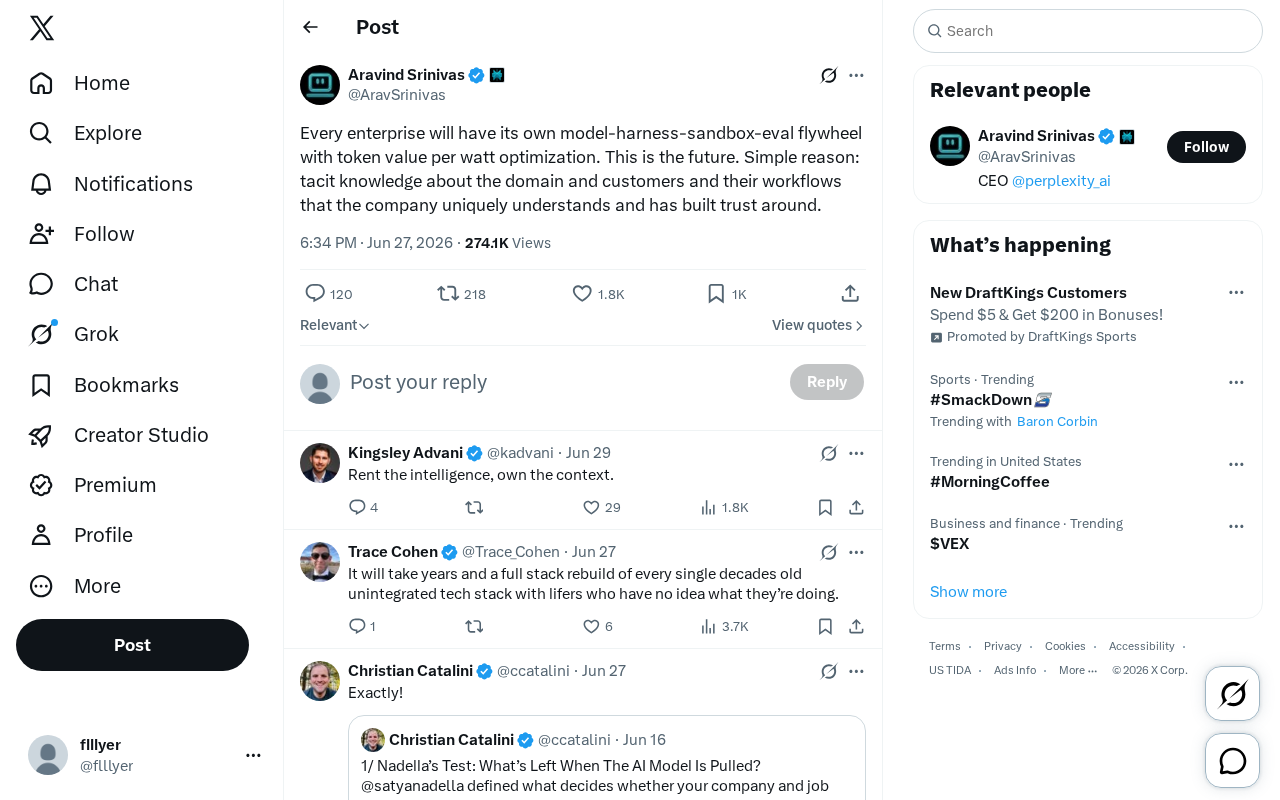
The Enterprise AI Flywheel: Building a Model-Eval Loop as a Competitive Moat
The core of enterprise AI isn't calling general models—it's building a self-reinforcing "model-harness-sandbox-eval" flywheel. This article analyzes the four components, tacit knowledge moats, and the "token value per watt" efficiency metric.
Read more →

·4 min
The Complete Guide to Running GLM-5.2 Locally with 4 RTX 3090s for $4,000
How to build a local AI inference server with 4 used RTX 3090 SXM4 GPUs to run GLM-5.2 via Llama.cpp and Unsloth IQ quantization, with real benchmarks on speed and quality.
Read more →

·3 min
Fireworks AI Launches Qwen 3.7 Plus: Zero Data Retention and 99.9% SLA for Enterprise Deployment
Fireworks AI launches Qwen 3.7 Plus with latency/throughput optimization, zero data retention, and 99.9% SLA enterprise guarantees. Explore the full-stack deployment solution for commercial open-source model inference.
Read more →

·3 min
Hands-On Testing of DS4 Engine by Redis Creator: How Does DeepSeek V4 Perform Locally on a 128GB Mac?
Redis creator Antirez's DS4 inference engine tested: running DeepSeek V4 Flash locally on a 128GB Mac via asymmetric structure-aware quantization, with real-world coding benchmarks.
Read more →