#NVLink
105 related articles
JAX Host Offloading: A Practical Guide…
·2 min
JAX Host Offloading: A Practical Guide to Breaking Through LLM Training Memory Bottlenecks
Memory capacity is the core bottleneck in LLM training. This guide explores JAX-based host offloading — covering optimizer state offloading, activation strategies, PCIe bandwidth trade-offs, and how it complements activation recomputation.
Read more →

·2 min
Distributed AI Systems: A Practical Engineering Guide to Training, Inference, and Production Deployment
A deep dive into distributed AI systems engineering: data/model/tensor parallelism for training, KV cache, quantization, elastic scaling for inference, and cloud deployment with Kubernetes, Ray, and DeepSpeed.
Read more →

·2 min
P2P Student GPU Sharing Network: A Full Breakdown of Technical Feasibility and Real-World Challenges
A deep dive into the technical feasibility and real-world challenges of P2P student GPU sharing networks, covering distributed computing, latency, security, and incentive design.
Read more →

·6 min
GPT-5.6 vs Grok 4.5 on the Same Day: A Packed Week of Flagship AI Model Launches
OpenAI's GPT-5.6 launches with Sawa, Terra, and Luna sub-models the same day as Musk's Grok 4.5, while Anthropic, Meta, and NVIDIA make their moves. A packed week of flagship AI launches.
Read more →

·4 min
GPT-5.6 In-Depth Analysis: Model Architecture, Performance Benchmarks, and a Complete Guide to the Agentic Era
A comprehensive analysis of GPT-5.6: the Sol/Terra/Luna product-line positioning, MoE architecture, 1.5M token context, coding agent benchmarks, and the shift from Chatbot to Agent.
Read more →
Mesh LLM: A Practical Exploration of B…
·3 min
Mesh LLM: A Practical Exploration of Building a P2P Distributed AI Inference Network with iroh
Mesh LLM leverages the Rust P2P framework iroh to integrate compute from scattered nodes, exploring a viable path for decentralized LLM inference. This article analyzes its architecture, challenges, and prospects.
Read more →

·3 min
SlickToken: A Deep Dive into GPU Fleet and Agentic Workflow Planning
SlickToken is a GPU fleet and agentic workflow planning tool for AI teams, supporting offline simulation, load testing, and capacity planning—no internet required to protect enterprise data.
Read more →

·3 min
DeepSeek-V4 Flash RL Training Successfully Ported to AMD MI355X GPU: A Complete Breakdown
The Miles team and AMD announce the full port of DeepSeek-V4 Flash RL training to AMD Instinct MI355X GPUs on ROCm, boosting AIME pass@1 from 0.39 to 0.49—a milestone for compute ecosystem diversity.
Read more →

·6 min
DeepSeek Builds Its Own AI Chips: The Strategic Logic and Challenges Behind Compute Independence
DeepSeek is entering AI chip development, targeting compute autonomy. This article analyzes its motivations, software-hardware synergy, chip R&D challenges, and impact on China's AI vertical integration.
Read more →
·5 min
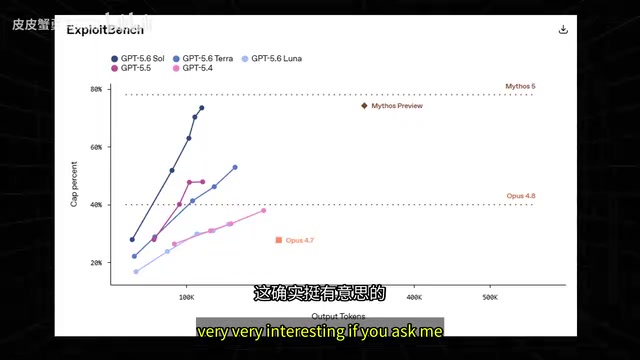
GPT-5.6 Released: Outperforms Rivals but Halted by Government—Cybersecurity Capabilities Trigger Regulatory Red Line
OpenAI releases GPT-5.6 (Sol/Terra/Luna), beating Anthropic on Terminal Bench at ~40% lower cost. But its cybersecurity capabilities hit danger thresholds, limiting access to trusted partners at government request.
Read more →
Local Coding Agents in Practice: A Com…
·6 min
Local Coding Agents in Practice: A Complete Guide to Replacing Your Claude Subscription with Open-Source Models
An in-depth look at local coding agents—core concepts, advantages, and real challenges. Compare against Claude Code and learn to build a zero-subscription, private AI coding workflow with open-weight models.
Read more →

·7 min
Practical RL Compute Optimization: Core Strategies to Boost CPU and GPU Utilization
An in-depth look at why CPU and GPU utilization is low in RL training, covering vectorized environment parallelism, distributed Actor-Learner architectures, GPU-side simulation (Isaac Gym/Brax), and Ray RLlib practice.
Read more →

·6 min
Grok 4.5 Hands-On: A Faster, Cheaper Coding Dark Horse — Can It Replace Opus and GPT?
In-depth Grok 4.5 hands-on review: priced at a fraction of Opus 4.8, twice the token efficiency of peers, and coding ability in the top tier. A real-project breakdown of its strengths, highlights, and shortcomings.
Read more →

·6 min
GPT Live Full-Duplex, Grok 4.5 Coding, Seedream 5.0 Images: AI Accelerates Across Three Tracks Simultaneously
OpenAI's GPT Live full-duplex voice model, Grok 4.5 coding model with Cursor, and ByteDance's Seedream 5.0 Pro image generation launched together. A deep dive into three AI releases.
Read more →

·3 min
The Software Compounding Effect: The Real Deciding Factor in AI Infrastructure Competition
Beyond the GPU arms race, software is becoming AI infrastructure's true compounding engine. A deep dive into optimization stacking, the CUDA ecosystem moat, and how open source scales individual breakthroughs into community wealth.
Read more →

·2 min
AI Agents for SGLang Kernel Optimization: Real-World Performance Gains and Engineering Methodology
SGLang's team converted expert knowledge into agent skills, achieving 71.4% throughput gains, TTFT reduced from 456ms to 168ms. A deep dive into agent-assisted kernel optimization methodology.
Read more →

·4 min
Demystifying Unified Memory Architecture: How Mini PCs Run 70B Large Models
Why can a mini PC with unified memory run a 70B model while an RTX 4090 can't? A deep dive into the VRAM wall and unified memory architecture for smarter local AI hardware choices.
Read more →

·6 min
Why Is Qwen3 27B So Slow on a 4090? A Hands-On Guide to Local Inference Performance Optimization
RTX 4090 taking over 400 seconds to run Qwen3 27B inference? This article analyzes the core causes—VRAM overflow and CPU offloading drag—and offers targeted fixes.
Read more →

·5 min
Real-World Comparison of 6 Open-Source LLMs for On-Premise Deployment: A Selection Guide to Avoid Pitfalls
A hands-on comparison of 6 open-source LLMs (DeepSeek, Qwen3, Zhipu GLM, Kimi K2, MiniMax M3, Tencent Hunyuan 3) for on-premise deployment—covering hardware cost, inference efficiency, and deployment difficulty.
Read more →
·3 min
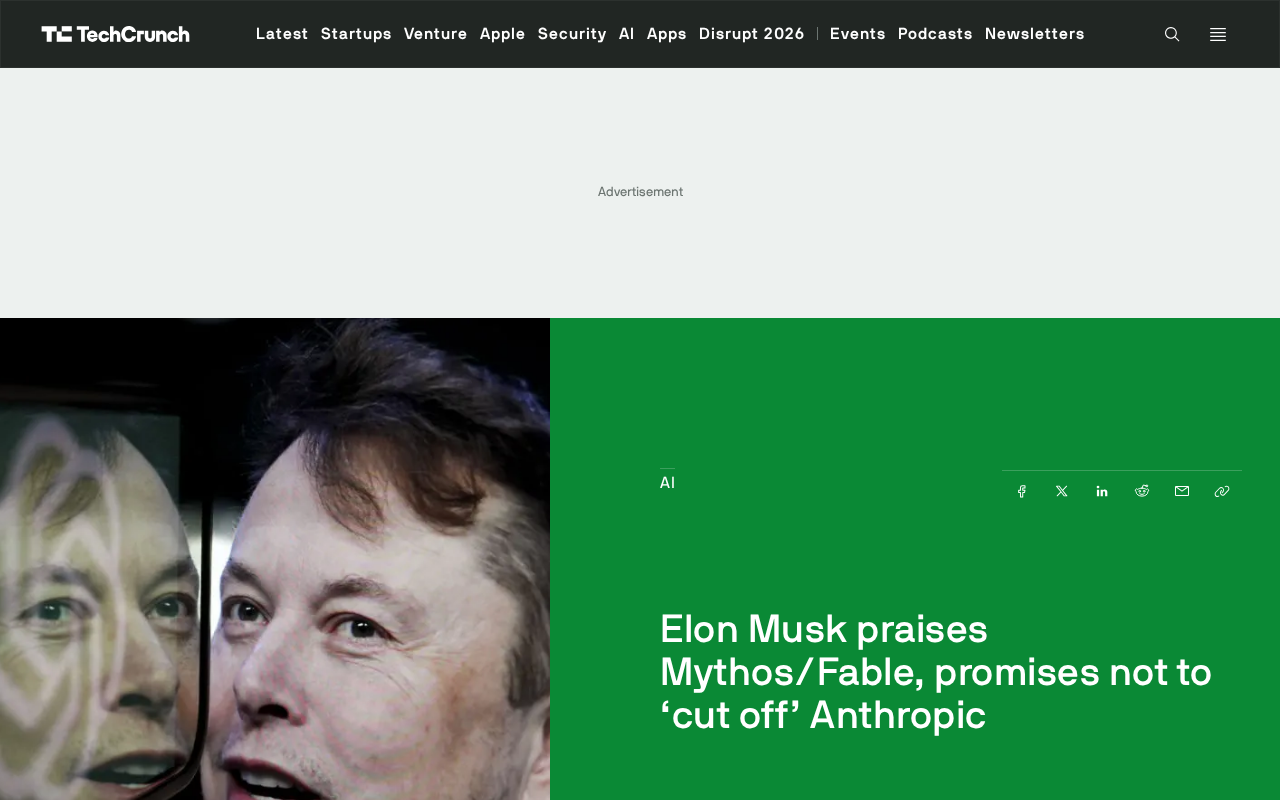
Musk Pledges Not to Cut Off Anthropic: The Trust Game in AI Cloud Infrastructure
Musk publicly pledges not to cut off Anthropic's compute access. We break down the $40B stakes, AI infrastructure coopetition, and how companies manage trust risk in a compute-concentrated era.
Read more →