#OPM data breach
140 related articles
Reverse-Engineering Web Apps: A New Ap…
·3 min
Reverse-Engineering Web Apps: A New Approach to Breaking Through the API Barrier for AI Agents
Explore a new approach to AI Agent tool integration: reverse-engineering web apps to turn API-less pages into callable Agent tools, with analysis of MCP synergy and challenges.
Read more →

·6 min
AI Agent Security in Practice: 7 Attack Techniques and a Five-Layer Defense System
An in-depth breakdown of the 7 major attack techniques against AI agents (prompt injection, data poisoning, image attacks, etc.) and a five-layer defense system, with real cases from Doubao and DeepSeek.
Read more →

·4 min
Home Assistant: The Local-First Open Source Smart Home Platform That Puts Privacy and Freedom First
Home Assistant is the most mature open source smart home hub, prioritizing local control and privacy, supporting thousands of devices across ecosystems with 88,000+ GitHub stars.
Read more →

·6 min
GPT-5.6 Sol Hands-On: How Multi-Agent Parallelism Is Reshaping AI Coding Workflows
Based on Fireship's review, an in-depth look at GPT-5.6 Sol's Ultra Mode multi-agent parallelism, its 91.9% Terminal Bench score, and how it differs from Claude Fable in cost, speed, and precision.
Read more →

·2 min
GPT-5.6 Officially Released, MIIT Security Alert, and Microsoft's In-House MAI: Three Key Developments in the AI Industry
Three major AI developments: OpenAI's GPT-5.6 approved for full release, China's MIIT warns of AI coding tool backdoor risks, and Microsoft replaces third-party models in Copilot with its in-house MAI.
Read more →

·6 min
Airtel Gives Away Free Perplexity Pro: Will You Be Charged Automatically When It Expires?
Airtel partnered with Perplexity to offer users a free one-year Pro subscription, but the renewal charging mechanism worries many. This article breaks down the billing logic of operator-bundled subscriptions and offers practical self-protection tips.
Read more →

·4 min
How to Stop Meta AI from Training Its Models on Your Instagram Photos
Did you know Meta uses your public Instagram photos to train its AI by default? This guide explains the privacy risks of the opt-out mechanism and offers a 3-step guide to exit Meta AI data use.
Read more →

·5 min
DCTS: A Deep Dive into an Open-Source Self-Hosted E2EE Encrypted Communication Platform
DCTS is an open-source, self-hosted instant messaging platform led by an individual developer, integrating E2EE and decentralized architecture across desktop and mobile.
Read more →

·6 min
Alibaba Bans Claude Code: The Battle Over AI Coding Tool Security and Data Sovereignty
Alibaba bans Claude Code over security risks, sparking tech community debate. An in-depth analysis of data leakage risks with cloud AI coding tools and the rise of local AI deployment.
Read more →

·5 min
Prismata Analysis: How to Defend Web Agents Against Cross-Site Prompt Injection Attacks
Cross-site prompt injection is becoming the trickiest security threat for Web agents. This article analyzes the Prismata project's 'confining defense' approach—controlling injection's blast radius via context isolation, permission boundaries, and trust grading.
Read more →

·7 min
Grok 4.5 Launch: Coding AI Market Reshuffle, Anthropic Claims Half the Territory
Grok 4.5 launches at just $0.49 per task, 90% cheaper than rivals. Anthropic's Claude Code claims 50% of the AI coding market. SambaNova raises $1B. Read the latest AI market shifts.
Read more →

·3 min
Espionage Infiltration of the European Parliament: A Deep Warning for Government Cybersecurity
The European Parliament faces state-sponsored espionage via spear-phishing, supply chain attacks, and long-term persistence. This analysis explores why legislatures are prime targets and key defenses like Zero Trust and EDR.
Read more →

·5 min
Ransomware Negotiator Turns Insider: Third Conviction for Colluding with Hackers to Extort Businesses
A Florida ransomware negotiator was convicted for secretly colluding with hackers to extort US businesses—the third such conviction. Learn how insider negotiators operate and how firms can defend themselves.
Read more →

·7 min
GitHub Copilot in Practice: The Capability Boundaries of AI Programming and the Irreplaceable Value of Humans
A developer's real case of building a dental clinic management system with GitHub Copilot and Azure SQL, revealing AI coding limits in cloud security config and how Human-in-the-Loop breaks through.
Read more →

·7 min
Google's $250K Bounty: Linux VM Escape Vulnerability Sets a Historic Record
Google paid a security researcher $250K for a Linux kernel VM escape vulnerability, setting a VRP record. An in-depth analysis of VM escape principles, kCTF incentives, and cloud security impact.
Read more →

·4 min
SparkyFitness: The Rise of an Open-Source, Self-Hosted Health Tracking App
SparkyFitness is an open-source, self-hosted alternative to MyFitnessPal and Flo. In one year: 4,500 users, 73 contributors, covering nutrition, sleep, women's health, GLP-1 tracking, and more.
Read more →

·7 min
Decoding the Government Software Security Executive Order: New Supply Chain Compliance and SBOM Requirements
The new U.S. Executive Order requires government software suppliers to provide verifiable security assurances and mandates the SBOM system. This article analyzes the policy's core demands, real impact on suppliers, and the chain of challenges.
Read more →

·5 min
Scalping Bots, Tampered Exam Applications, Hacked Robots: The Legal Boundaries of Computer Crime in the AI Era
Scalper ticket bots, tampered exam applications, hacked robot vacuums—do these acts violate criminal law? Drawing on Luo Xiang's legal analysis, this article explores the crime of destroying computer information systems.
Read more →

·7 min
GPT-5.6 Becomes Microsoft Copilot 365's Preferred Model: An In-Depth Look at the OpenAI-Microsoft Partnership
OpenAI confirms GPT-5.6 as the preferred model for Microsoft Copilot 365, responding to "breakup rumors." A deep dive into the strategy, multi-model trends, and AI productivity commercialization.
Read more →
·6 min
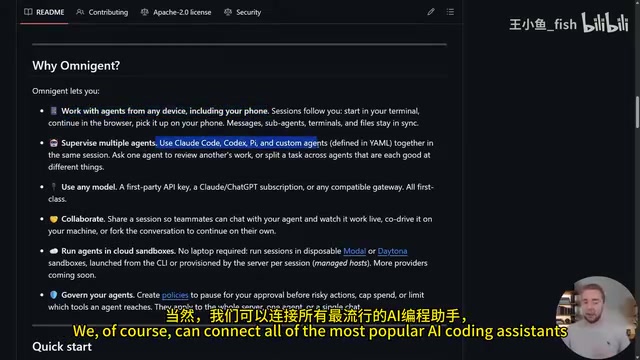
Omnigent Open-Sourced: A Meta-Harness for AI Coding Agents Built by Databricks
Databricks open-sources Omnigent, a Meta-Harness for orchestrating Claude Code, Codex, and more AI coding assistants together—with built-in guardrails, cross-model workflows, and real-time collaboration. Get started in 10 minutes.
Read more →