#Orchestrator
301 related articles

·3 min
Vibe Coding: Enterprise-Level Practices and a Skill Progression Guide for AI-Driven Frontend Development
A deep dive into Vibe Coding: how AI-led development workflows are reshaping frontend engineers' value. From interview hot topics to a three-tier competency model for the AI era.
Read more →

·3 min
Inside DeepMind's Robotics Lab: How VLA Models Teach Robots to Think Before They Act
Inside DeepMind's robotics lab: how VLA models give robots generalization and 'think-before-act' reasoning — from packing lunches to sorting trash, the path to general-purpose robots.
Read more →

·3 min
40-Hour Stress Test: An In-Depth Evaluation of GPT-5.6's Coding Capabilities
A developer spent 40 hours exhausting Codex Pro's weekly quota to benchmark GPT-5.6 on real enterprise projects. Key findings: proactive root cause tracing, stronger global codebase understanding, and stable long-task execution.
Read more →

·2 min
Forge: Adding Reliability Guardrails to Local Model Tool Calling
Forge is an open-source Python middleware for local models (Ollama, llama.cpp, vLLM) that boosts tool-calling reliability via three-layer guardrails: validation, rescue parsing, and retry.
Read more →

·3 min
From RAG to Agent: A Complete Architecture Guide for AI-Native Systems
A comprehensive guide to modern AI-native system architecture: LLM reasoning, three RAG paradigms (vector/knowledge graph/BM25), Agents, MCP tool calling, AI gateways, and observability for enterprise AI.
Read more →

·3 min
SJTU Professors Open-Source Agent Tutorial: A Four-Stage Path from Zero to AI Engineer
SJTU professors open-source a 4-stage Agent tutorial on GitHub, covering LLM basics, ReAct, multi-agent systems, and real-world projects — a practical path to AI engineering.
Read more →

·2 min
AI Agent Beginner's Guide: A Structured Learning Path and Hands-On Project Roadmap
New to AI Agents? This guide breaks down the full learning path — covering Agent principles, Prompt Engineering, RAG, multi-Agent systems, and hands-on projects to get you building fast.
Read more →

·3 min
Deep Dive into ChatGPT Ultra's Parallel Sub-Agent Architecture: Parameters, Configuration, and Best Practices
A deep dive into ChatGPT Ultra mode's parallel sub-agent architecture, covering concurrency limits, delegation depth, token optimization, and configuration best practices for GPT-5.6.
Read more →
Codex Encrypts Sub-Agent Prompts: The …
·2 min
Codex Encrypts Sub-Agent Prompts: The AI Black-Box Trend and What Developers Should Do
OpenAI Codex is encrypting sub-agent prompts, sparking debate about AI transparency. We analyze the motivations, community concerns, and strategies for developers navigating the black-box trend.
Read more →

·4 min
Can Local Models Replace Cloud AI? Five Key Questions That Determine Success or Failure
71% of ChatGPT queries can be handled by local models — but "going local" isn't a one-step move. This guide breaks down the three tiers of local models, license traps, deployment methods, and cost logic to help you find the optimal routing strategy between local and cloud AI.
Read more →
·3 min
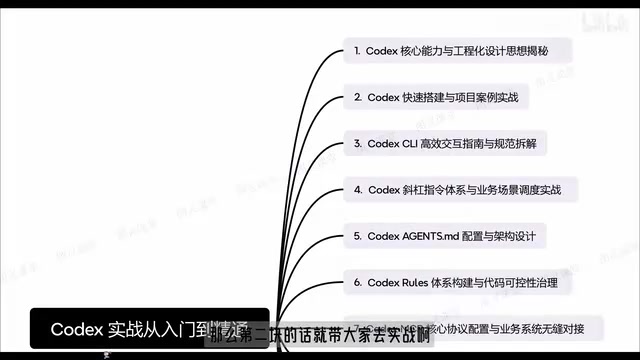
The Complete OpenAI Codex Practical Guide: From Installation to Enterprise Deployment
A complete guide to OpenAI Codex: CLI setup, slash commands, AGENTS.md, MCP integration, multi-agent collaboration, and a RAG customer service project walkthrough.
Read more →

·4 min
Six Layers of Defense: Engineering Reliable Structured Output from LLMs
LLM JSON output unstable in your Agent? This guide covers 6 engineering layers: constrained decoding, validation retry, fake tool calls, Logit Masking, Schema contracts, and anti-pattern locking.
Read more →

·3 min
Complete AI Agent Development Learning Path: From Core Principles to Enterprise Deployment
A structured AI Agent learning path covering core principles, prompt engineering, tool use, multi-agent systems, and frameworks like LangChain, CrewAI, and Dify for enterprise deployment.
Read more →

·2 min
The Complete AI Agent Development Roadmap: A Four-Stage Guide from Zero to Production
A complete four-stage AI Agent development roadmap: from LLM fundamentals and core modules, to ReAct/CoT paradigms, multi-agent collaboration, and real-world projects.
Read more →

·3 min
From LLMs to Agents: Understanding the Core Logic and Use Cases of AI Agents
LLMs answer questions; Agents actually get things done. This article breaks down the differences between LLMs, Chatbots, and Agents, explains the perceive–think–act architecture, and maps real-world use cases across education, finance, and healthcare.
Read more →
Voice-Driven Geometric Interaction: LL…
·2 min
Voice-Driven Geometric Interaction: LLM Semantic Parsing and Function Calling Architecture in Practice
How can LLMs translate natural language into geometric operations? This article breaks down a voice-driven geometry system: LLM for semantic parsing, Function Calling to bridge the geometry SDK.
Read more →

·3 min
Complete Codex Practical Guide: From Getting Started to Enterprise-Grade AI Programming
Master OpenAI Codex end-to-end: CLI setup, slash commands, AGENTS.md design, MCP protocol, multi-agent coordination, and enterprise plugin development.
Read more →

·2 min
GPT-5.6 Three-Tier Model Breakdown: How Sol/Terra/Luna Rewrite the Agent Cost Structure
OpenAI releases GPT-5.6 with three tiers: flagship Sol, balanced Terra, and budget Luna. Sol leads competitors by 13 points on Agent benchmarks at one-quarter the cost, rewriting Agent economics.
Read more →

·3 min
GPT-5.6 and ChatGPT Work Launch: AI Evolves from Conversational Assistant to Task Executor
OpenAI launches the GPT-5.6 family (Sol/Terra/Luna), ChatGPT Work, a new desktop app, and Hosted Sites — marking AI's evolution from Q&A assistant to autonomous task executor.
Read more →

·4 min
Claude Code vs. Codex vs. Cursor: A Deep Comparison of Three AI Coding Tools
Claude Code, Codex, or Cursor? This in-depth comparison covers each tool's positioning, ideal users, and how to combine them for maximum productivity in your AI coding workflow.
Read more →