#Pareto search
29 related articles

·3 min
AI Research Automation: More Like Data Cleaning Than Inventing the Transformer
AI research automation will look more like data cleaning than inventing the Transformer. Explore how automating 60%-80% of repetitive research work reshapes the AI research paradigm.
Read more →
·3 min
AI Research Automation: More Like Data Cleaning Than Inventing the Transformer
Why AI research automation looks more like data cleaning than inventing the Transformer. Exploring the value of automating 60%-80% of repetitive research work and how human-AI collaboration reshapes the research paradigm.
Read more →

·3 min
Anthropic's Hands-On Guide: How to Scientifically Choose and Evaluate AI Models
Anthropic's Applied AI team breaks down a methodology for choosing AI models: building custom evals, avoiding three common pitfalls, measuring value by cost per success, and cutting costs with prompt caching and context engineering.
Read more →

·5 min
Inside Cursor: How Recursive Model Improvement Enables AI to Self-Evolve
A Cursor ML engineer breaks down AI training methodology: outer/inner loop acceleration, preventing reward hacking, textual feedback, and recursive self-improvement (RSI) where models train the next generation.
Read more →

·3 min
Codex vs Fable: Which AI Agent Is Better at Finding Real Pain Points?
Codex vs Fable in an open-ended problem space: Codex delivers flawless execution but plays it safe; Fable shows sharp strategic vision but lands too narrow. Here's how to combine both.
Read more →

·3 min
Render Code as Images and Send to Claude — Cut API Costs by 70%
PXPipe renders system prompts and tool docs as images sent to Claude, exploiting visual token pricing. Real-world results: 68% fewer input tokens, 59–70% lower bills.
Read more →
Deep Dives
Deep Dive into OpenAI's Official GPT-5…
·3 min
Deep Dive into OpenAI's Official GPT-5.6 Prompting Guide: The Shift from Manual to Automatic
A deep dive into OpenAI's official GPT-5.6 Sol prompting guide: conciseness-first, outcome-oriented design, autonomy boundaries, tool routing, and reasoning intensity tuning.
Read more →
The Quiet Drop: GitHub's Culture of Si…
·2 min
The Quiet Drop: GitHub's Culture of Silent Releases and Why Developers Love It
A tweet reveals GitHub's 'quiet drop' culture — releasing code silently and waiting for the community to notice. Explore why developers go low-key and whether it works.
Read more →

·4 min
E2AM: An Open-Source Tool to Quantify AI Training Energy Consumption and Carbon Emissions in Two Lines of Code
E2AM is a Green AI open-source tool that monitors AI model training energy use, carbon emissions, and accuracy-per-joule metrics in just two lines of code. Supports PyTorch and Hugging Face, runs locally with no server needed.
Read more →

·3 min
Benchmarking LLMs on Smartphones: A Deep Dive into the MELTing Point Benchmark
The MELTing Point paper is the first to evaluate mobile LLM performance in real user scenarios, covering iPhone, Samsung, Pixel and more, testing TinyLlama, Mistral-7B and others—revealing GPU inference gains, 47°C heat warnings, and prefill-decode disaggregation.
Read more →

·5 min
GPT-5.6 In-Depth Review: Crushing Competitors on Value, But Its Jailbreak Vulnerabilities Can't Be Ignored
OpenAI's GPT-5.6 Soul, Terra & Luna are priced at one-third of Claude, leading Anthropic Fable on many benchmarks. We analyze its value, reasoning, and jailbreak risks.
Read more →

·3 min
GPT Live Full-Duplex Voice Goes Live: Farewell to Walkie-Talkie Interaction, a Comprehensive Upgrade to AI Conversation
OpenAI officially launches GPT Live with a full-duplex architecture, enabling the AI to listen and speak at the same time, supporting interruptions, three reasoning tiers, and visual cards. A deep dive into its design and day-one issues.
Read more →

·6 min
1X NEO Robotic Hand and GPT-5.6: A Full Breakdown of Dual Breakthroughs in Robot Hardware and Software
1X releases a new robotic hand for the NEO humanoid robot—25 DOF, force transparency, and tactile skin enabling data self-labeling. OpenAI launches the three-tier GPT-5.6, boosting coding and cost-efficiency. Hardware and AI brains evolve together, accelerating humanoid robot commercialization.
Read more →

·6 min
Grok 4.5 Coding Benchmark: A Deep Dive into Performance, Speed, and Cost
xAI releases Grok 4.5, purpose-built for coding agents. 80 TPS speed, $2/M input tokens, SWE Bench Pro score of 64.7, and 4.2x better token efficiency than Opus 4.8. A deep hands-on review.
Read more →

·6 min
GPT-5.6 Hands-On Deep Dive: ChatGPT and Codex Merge, Full Analysis of the Sol Model
GPT-5.6 is officially released, merging ChatGPT and Codex into one app and launching the three-tier Sol, Terra, and Luna models. A detailed breakdown of 16 hands-on tests plus Worker mode and Codex dev upgrades.
Read more →
·5 min
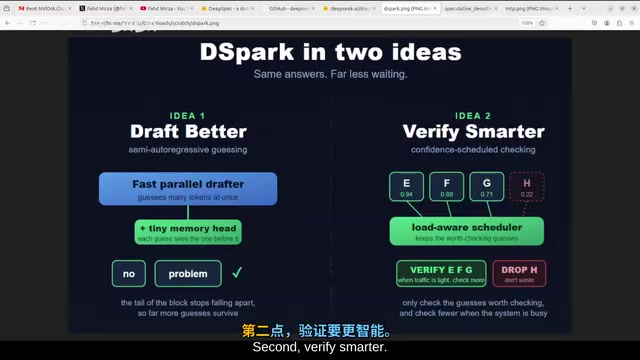
DeepSeek DSpec Hands-On: How Speculative Decoding Accelerates LLM Inference by 6x
Hands-on report on DeepSeek's open-source inference acceleration toolkit DSpec: draft model + smart scheduling delivers lossless speedup, hitting acceptance length 6 on GSM8K and reproducing official data.
Read more →

·6 min
Made by Google Event Confirmed: New Pixel Phones with AI Capabilities Coming Soon
Google confirms the Made by Google hardware event in NYC, unveiling next-gen Pixel phones with new Tensor chips and deep Gemini AI integration. On-device AI gets a major upgrade.
Read more →

·6 min
GPT-5.6 Three-Model Family Launch: A Complete Breakdown of Sol/Terra/Luna Capabilities and the Government Restriction Incident
OpenAI officially launches the GPT-5.6 family, including the Sol flagship, Terra balanced, and Luna lightweight models. Coding capabilities set a new industry benchmark, generating a Minecraft clone in 90 minutes—while OpenAI publicly opposes U.S. government release restrictions.
Read more →

·7 min
Cost Optimization for AI Agent Fleets: Why an Expensive Commander + Cheap Workers Is More Cost-Effective
Deep analysis of multi-agent system cost optimization: why the 'expensive commander + cheap workers' combination outperforms all-frontier fleets, covering decision-intent cost logic and Sonnet 5 tokenizer traps.
Read more →
 Expert Opinions
·2 min
The Lazy Person's Productivity Theory: Why Being 'Lazy' Actually Drives Peak Performance
Explore the engineering philosophy behind 'lazy people are most productive': how constructive laziness drives automation, AI tools amplify efficiency, and systems thinking eliminates wasted effort.
Read more →