#Python SDK
228 related articles
 Tech Frontiers
·2 min
NVIDIA Developer Account Migration to @NVIDIAAI: A Complete Guide to Brand Consolidation and Developer Impact
NVIDIA's developer team social media has migrated to @NVIDIAAI. Learn about the AI strategy behind this brand consolidation, its impact on the developer community, and recommended actions.
Read more →
 Deep Dives
·3 min
Claude Code Source Code Leak Revealed: Seven Core Mechanisms of the Harness Architecture Explained
Deep analysis of the Claude Code source code leak, revealing seven core mechanisms of its Harness architecture including context management, tool call orchestration, and state tracking for AI Agent developers.
Read more →
 Expert Opinions
·4 min
Interview with a Core Developer of Microsoft's Agent Framework: A Complete Analysis of Architecture Design and Evolution
In-depth interview with Microsoft Agent Framework core developer Roger Barreto on the evolution from Semantic Kernel, middleware architecture design, enterprise stability strategies, and AI development best practices.
Read more →
 Product Reviews
·3 min
Stock-MCP: An Open-Source MCP Server That Gives AI Agents Real-Time Access to Chinese and US Stock Data
Stock-MCP is an open-source MCP-based financial data server supporting China A-shares, US stocks, and crypto. Learn its core features, architecture, and use cases for building AI investment research assistants.
Read more →
 Product Reviews
·3 min
Tensorlake Skills: Giving AI Coding Agents Real-Time Access to Up-to-Date Documentation
Tensorlake Skills is a skill module for AI coding agents like Claude Code and OpenAI Codex, routing them to real-time docs on sandboxes, orchestration, and SDKs to fix outdated training data issues.
Read more →
 Product Reviews
·2 min
Perfect-Web-Clone: A Deep Dive into the Pixel-Perfect Web Cloning Tool Built on Multi-Agent Architecture
Deep dive into the Perfect-Web-Clone open-source project: how its Claude Agent SDK multi-agent architecture and 40+ specialized tools achieve pixel-perfect web cloning beyond Cursor and single-model tools.
Read more →
 Tutorials
·3 min
awesome-llm-apps: A 100K-Star GitHub Project with 100+ AI Agent & RAG Applications
awesome-llm-apps is a 100K+ Star GitHub project featuring 100+ ready-to-run AI Agent and RAG apps. Built in Python with clone-and-run simplicity, it's an essential resource for LLM developers.
Read more →
 Product Reviews
·3 min
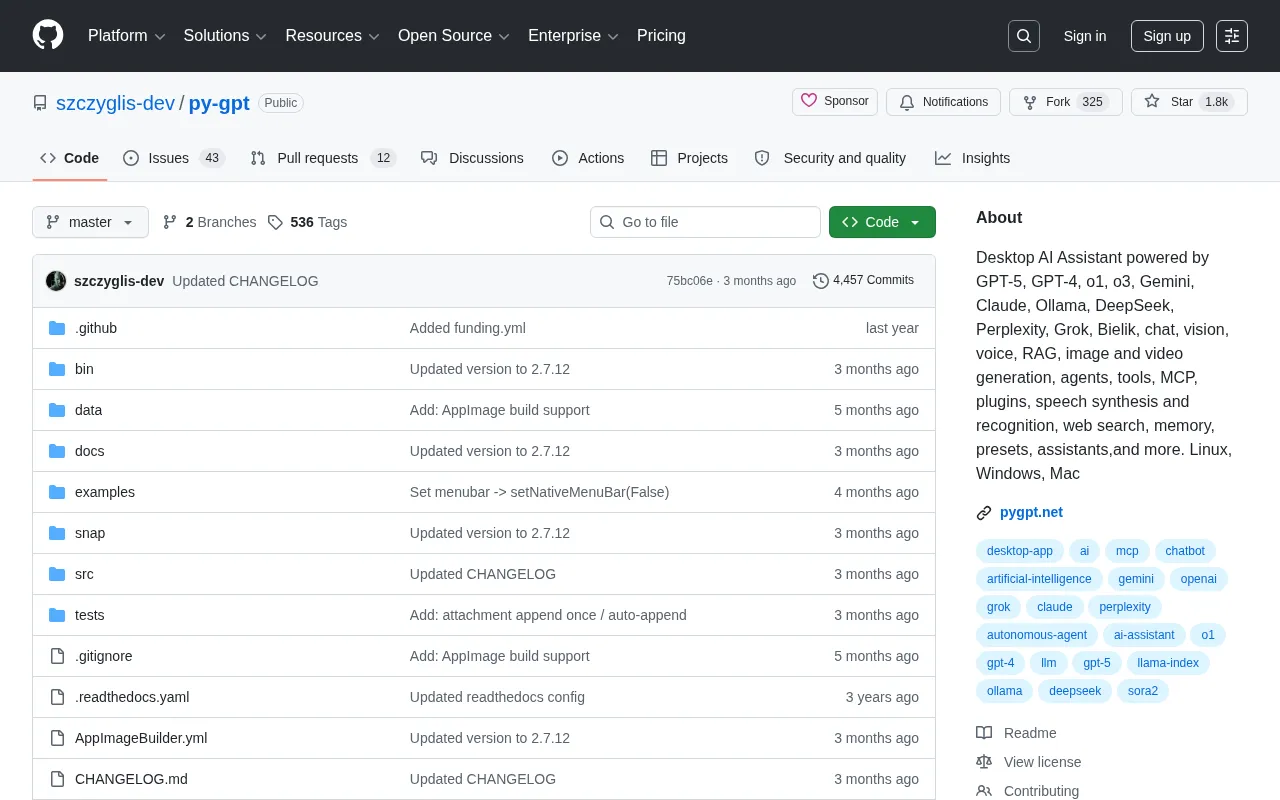
PyGPT: Open-Source Desktop AI Assistant with All-in-One Integration of GPT, Claude, Ollama, and More
Deep dive into PyGPT, an open-source desktop AI assistant supporting GPT-4, Claude, Gemini, Ollama local models, with built-in RAG, agents, voice interaction, and image generation.
Read more →
 Product Reviews
·3 min
MaxKB Open-Source Agent Platform: A Deep Dive into the 20K-Star Enterprise Knowledge Base RAG Solution
Deep dive into MaxKB, an open-source enterprise agent platform with 20K+ GitHub Stars. Explore its RAG capabilities, multi-model integration, visual orchestration, and comparison with Dify and FastGPT.
Read more →
 Tech Frontiers
·2 min
DeepAgents: LangChain's Deep Agent Development Framework Built on LangGraph
DeepAgents is LangChain's open-source Agent framework built on LangGraph, supporting multi-step reasoning, state management, and multi-Agent collaboration for production-grade AI development.
Read more →
 Deep Dives
·3 min
LangGraph Deep Dive: An Open-Source Framework for Building Resilient AI Agents
Deep dive into LangGraph's core architecture, StateGraph design, multi-Agent collaboration, and deployment. Learn how this 31K+ Star project helps build reliable AI Agents.
Read more →
 Product Reviews
·3 min
LiteLLM: A Deep Dive into the Open-Source Gateway for 100+ LLM APIs
Deep dive into LiteLLM, the open-source AI gateway supporting 100+ LLM APIs with a unified OpenAI format. Covers core features, usage modes, and enterprise use cases.
Read more →
 Product Reviews
·3 min
Deep Dive into AGGO Framework: A New Go-Based Choice for Enterprise AI Agents
Deep dive into AGGO—an enterprise AI Agent framework built with Go and CloudWeGo Eino, covering conversational AI, RAG, memory systems, and tool calling, with Go's performance advantages.
Read more →
 Product Reviews
·2 min
A Comprehensive Analysis of the Sentra-Agent Framework: Building Production-Grade Conversational AI Agents with TypeScript
Deep analysis of Sentra-Agent, a modular TypeScript framework for building production-grade conversational AI Agents, covering architecture, design philosophy, and comparison with LangChain.js.
Read more →
 Product Reviews
·3 min
Micro-Agent: Fudan University's Open-Source Lightweight AI Agent Framework Built for Vertical Domains
Micro-Agent is a lightweight AI Agent framework open-sourced by Fudan University, focused on vertical domain applications. It offers streamlined architecture, low learning costs, and high customization flexibility compared to heavyweight frameworks like LangChain.
Read more →
 Tutorials
·3 min
Hermes Agent Orange Book: A Practical Guide to the 3600+ Star Open-Source AI Agent Framework
A deep dive into Nous Research's Hermes Agent open-source AI framework and the community Orange Book guide covering tool calling, reasoning, multi-Agent collaboration, and more.
Read more →
 Product Reviews
·3 min
PaperOrchestra Open Source Project Explained: Automatically Generating Research Papers with Coding Agents
PaperOrchestra is an open source AI paper writing tool based on Google's research. It uses coding agents like Claude Code and Cursor to automate the full research paper workflow without API keys.
Read more →
 Product Reviews
·3 min
NekroAgent Open-Source Framework: AI Agent Solution Supporting QQ, Discord, and Multiple Platforms
Deep analysis of NekroAgent open-source AI Agent framework supporting QQ, Discord, Telegram and more, with sandbox execution, long-term memory, MCP management, and visual console for multi-user scenarios.
Read more →
 Deep Dives
·3 min
AI-Assistant Open Source Project Analysis: Building a Local AI Agent with the Anthropic API
Deep analysis of the open-source AI-Assistant project built on Anthropic Claude API for local AI Agents, covering architecture, use cases, security, and agentic AI trends.
Read more →
 Deep Dives
·3 min
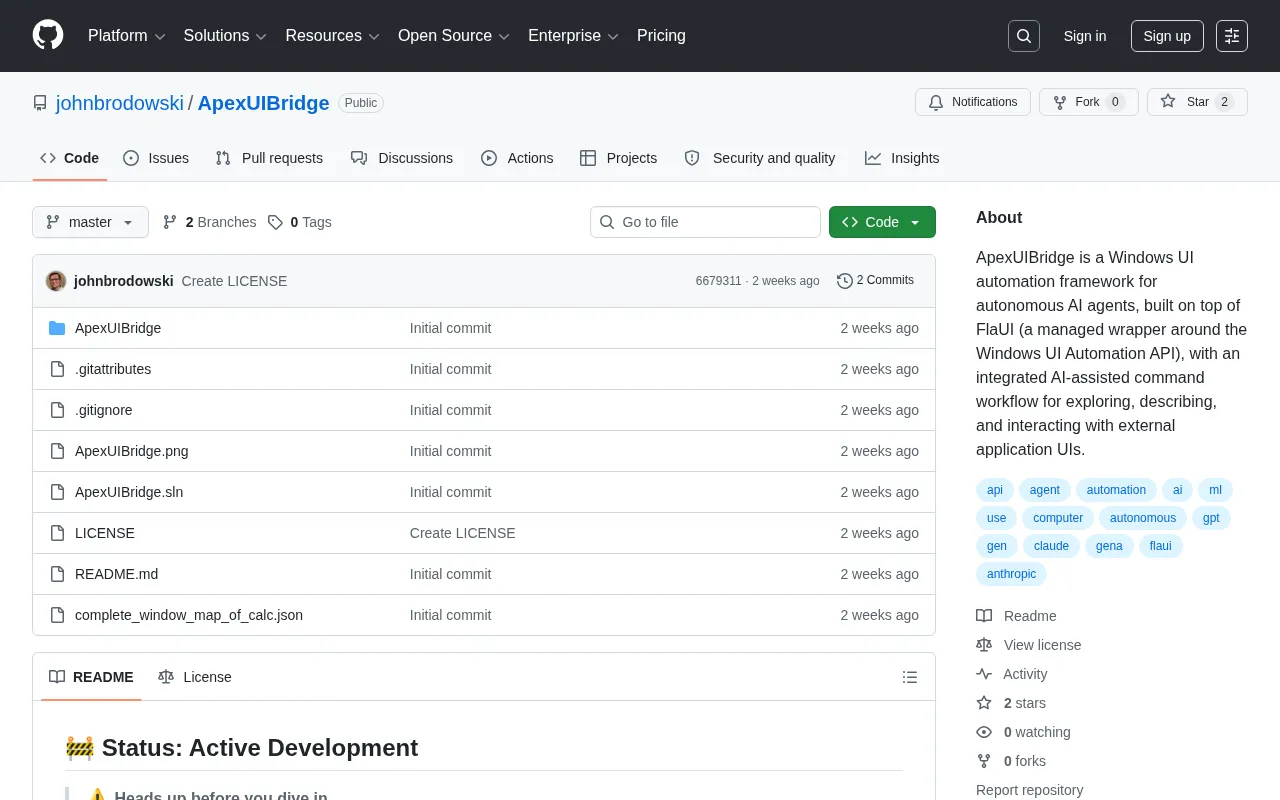
ApexUIBridge: A UI Automation Framework That Lets AI Agents Control Windows Desktop Applications
Deep dive into ApexUIBridge, an open-source AI agent automation framework built on FlaUI and Windows UI Automation API, enabling UI exploration, semantic description, and interaction with desktop apps.
Read more →