#Qwen3 architecture
788 related articles
 Deep Dives
·1 min
Qwen3.7 Max Deep Dive: How a 1T-Parameter MOE Architecture Creates the Ultimate Agent Foundation
Deep analysis of Alibaba's Qwen3.7 Max: 1T parameters, MOE architecture, 256K context, leading in agent programming, reasoning, and multilingual tasks with full LangChain/CrewAI compatibility.
Read more →
 Tech Frontiers
·2 min
Qwen3.7 Max Deep Dive: 1T Parameter MoE Architecture with Full Agent Framework Compatibility
Deep analysis of Alibaba's Qwen3.7 Max: 1T-parameter MoE architecture, 256K context window, leading agent programming capabilities, full framework compatibility, and the model-vs-harness industry debate.
Read more →
 Deep Dives
·1 min
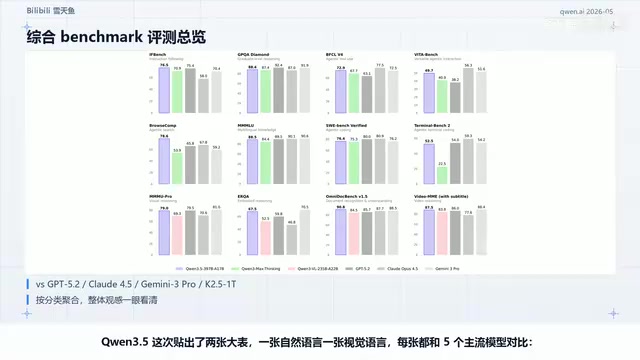
Qwen3.5 Deep Dive: Hybrid Attention Architecture Achieves 19x Speedup for Long Context
Deep analysis of Alibaba's open-source Qwen3.5 hybrid attention architecture, how Gated Delta Net achieves 19x speedup at 256K context, and multimodal results surpassing Gemini 3 Pro and GPT-5.2.
Read more →

·2 min
Ante: A Deep Dive into the Single-Binary Offline Programming AI Assistant
Ante is a fully offline single-binary programming AI agent requiring no internet or API keys. Deep analysis of its zero-dependency deployment, privacy protection, and cost advantages.
Read more →

·2 min
The Real Motivations Behind Meta's Open-Source AI Models: A Rational Breakdown from the Developer Community
Reddit developers dissect Meta's open-source AI strategy across technical performance, competitive dynamics, and business motivations, revealing why competition drives healthy open-source ecosystems.
Read more →

·3 min
Why Chinese LLMs Are Dominating the OpenRouter Weekly Rankings
Chinese LLMs dominate OpenRouter's weekly usage rankings. DeepSeek, Qwen, and Kimi win global developers with open-source strategies, extreme cost-efficiency, and technical breakthroughs.
Read more →

·4 min
Total Parameter Count Is Obsolete: Understanding the Two-Number Era of MoE Models
Mixture-of-Experts (MoE) makes single parameter counts obsolete. Learn the difference between total and active parameters, how MoE decouples knowledge capacity from inference cost, and why this matters for model selection.
Read more →

·2 min
Qwen3 Priced at Just $2/Million Input Tokens — The LLM Price War Intensifies
Alibaba's Qwen3 model priced at $2/million input tokens and $6 output, far below mainstream closed-source LLMs. Analysis of pricing logic, comparison with Claude, and the open vs closed-source debate.
Read more →

·2 min
Auto-Generating Paper Slides with Local LLMs: Balancing Efficiency and Privacy
Explore how local LLMs automatically convert academic papers into presentation slides, protecting unpublished research privacy while dramatically boosting efficiency for researchers.
Read more →

·3 min
Is Cursor Worth Subscribing To? Real Developer Community Reviews and Usage Strategies
In-depth analysis of AI coding tool Cursor's real-world experience, covering community ratings, multi-model support, BYOK mode, and Chinese LLM integration strategies for developers.
Read more →

·2 min
Qwen3 Max Tops the Agentic Index Leaderboard: A Deep Dive into Agent Capability Evaluation
Qwen3 Max tops the Agentic Index leaderboard, excelling in tool use, multi-step reasoning, and code execution. A deep analysis of evaluation results and model selection in the agent era.
Read more →

·2 min
GLM-5.3 Imminent Release: Zhipu AI's New Model Called a 'Monster'
Zhipu AI's next-gen LLM GLM-5.3 is reportedly imminent, dubbed a 'monster' by the community. We analyze the GLM evolution, potential breakthroughs, and China's LLM competition landscape.
Read more →

·6 min
Stimma: An Open-Source Creative Workbench Built on Top of ComfyUI, Solving Media Management and Multi-GPU Scheduling
A veteran user spent a year building Stimma, an open-source desktop app on top of ComfyUI that solves media asset management, multi-GPU load balancing, and agent-driven creation with local-first design.
Read more →

·3 min
MiniMax H3 Open-Source Video Model AMA Deep Dive: Architecture, Capabilities, and Future Roadmap
MiniMax H3 team hosts Reddit AMA detailing their open-source video generation model's architecture, image-to-video capabilities, inference optimization, and future roadmap.
Read more →

·3 min
KV Cache Quantization Benchmark: 413 Configurations Reveal KVarN 6-bit Outperforming q8_0
Benchmark of 413 KV cache quantization configs comparing KVarN variance normalization vs traditional methods on Qwen and Gemma models. KVarN 6-bit + precision tail beats q8_0 at lower VRAM.
Read more →

·3 min
Why Is Google the Only One Excelling at Video Understanding LLMs? The Triple Barrier of Data, Architecture, and Cost
Deep analysis of why Google Gemini leads in video understanding LLMs, covering YouTube data assets, native multimodal architecture advantages, and why OpenAI and Anthropic face compute cost and data barriers.
Read more →

·3 min
NVFP4 Dynamic Quantization in Practice: W4A4 Accelerated Deployment for the Full Gemma-4 Model Family
NVFP4 dynamic quantization covers all five Gemma-4 model sizes using W4A4 mixed-precision with calibrated FP8 KV Cache, dramatically reducing VRAM usage and deployment costs for efficient inference from edge to cloud.
Read more →

·3 min
Qwen3-Max Deep Dive: How Coding and Collaboration Capabilities Are Redefining AI Development Assistants
Deep analysis of Alibaba's flagship model Qwen3-Max, covering its coding, Cowork collaboration capabilities, and potential for redefining AI-assisted software development.
Read more →

·3 min
Five Local LLMs Built a Small Town, and Emergent Behaviors Included Facebook and a Duck Credit Bureau
A developer lets Mistral, Qwen, Llama and other local LLMs autonomously live in virtual town Pepperton. AI residents spontaneously invent social networks, conspiracy theories, and case law.
Read more →

·3 min
Qwen3 Series Deep Dive: The Multimodal Ambitions and Future Outlook of Open-Source LLMs
In-depth analysis of Alibaba's Qwen3 series, exploring its multimodal visual understanding, Chinese language capabilities, open-source ecosystem, and impact on developers and the AI industry.
Read more →