#Raspberry Pi AI assistant
21 related articles

·3 min
Opal: A Designer Built an AI Pet Assistant on Raspberry Pi Using OpenClaw
Microsoft designer Tua Nguyen built Opal, an AI rabbit assistant on Raspberry Pi using OpenClaw — capable of browsing the web, finding recipes, and operating GitHub.
Read more →

·3 min
Why IPFS and Filecoin Failed to Gain Traction in the Self-Hosting Community
IPFS and Filecoin promise decentralized storage and censorship resistance, yet the self-hosting community ignores them. This article analyzes why simpler tools like Syncthing and BitTorrent win.
Read more →

·4 min
Underrated Self-Hosting Gems: A Roundup of Niche but Powerful Open-Source Tools
Discover underrated niche self-hosted open-source tools across bookmarks, passwords, document archiving, knowledge bases, and dashboards, with deployment tips.
Read more →

·7 min
DIY Companion Robot: Building Your AI Desktop Buddy with Jetson Orin
A maker builds a DIY companion robot with NVIDIA Jetson Orin and 4S LiPo battery. Explore the full development journey from first power-up to AI interaction, including edge computing, power design, and companion robot trends.
Read more →

·7 min
Enterprise AI Agent Security Isolation and Memory Design: NanoClaw Founder Breaks Down Real-World Lessons
NanoClaw founder David Boyd breaks down the core engineering of enterprise autonomous Agents: a triple security isolation model, LLM Wiki memory design, and the real-world path from personal Agents to team-scale deployment.
Read more →
GitHub Daily · July 22: Financial Foun…
·3 min
GitHub Daily · July 22: Financial Foundation Model Kronos Leads, Architecture Visualization and the Claude Skills Ecosystem Soar
GitHub Trending July 22: Kronos brings the foundation model paradigm to finance, awesome-claude-skills tops with 70K stars, plus LikeC4 architecture-as-code and Rust-based Pumpkin.
Read more →
Moonshine: A Low-Latency Speech Engine…
·2 min
Moonshine: A Low-Latency Speech Engine and Open-Source Powerhouse for Building Voice Agents
Moonshine is an open-source, C++-based low-latency speech engine combining STT, intent recognition, and TTS for building voice agents. 9,400+ GitHub Stars.
Read more →

·3 min
Vibe Coding in Action: How AI Collaboration Built an Award-Winning Sleep Aid Product
A Bilibili creator used Vibe Coding to independently build 'Breath Garden,' an AI sleep companion app, winning third place at the Tencent Music Hackathon. Full breakdown inside.
Read more →

·2 min
Goodbye Paid Subscriptions: A Complete Practical Guide to Self-Hosting
A complete guide to self-hosting: replace paid subscriptions with Nextcloud, Jellyfin, Vaultwarden and more. Covers Docker deployment, backup strategy, and secure remote access.
Read more →
BillAI Bass: A Complete Guide to Rebui…
·2 min
BillAI Bass: A Complete Guide to Rebuilding a Classic Novelty Toy with an AI Agent
A developer rebuilt Big Mouth Billy Bass into an AI assistant using AWS Strands Agents, enabling real-time voice conversation with synced physical movements.
Read more →
·3 min
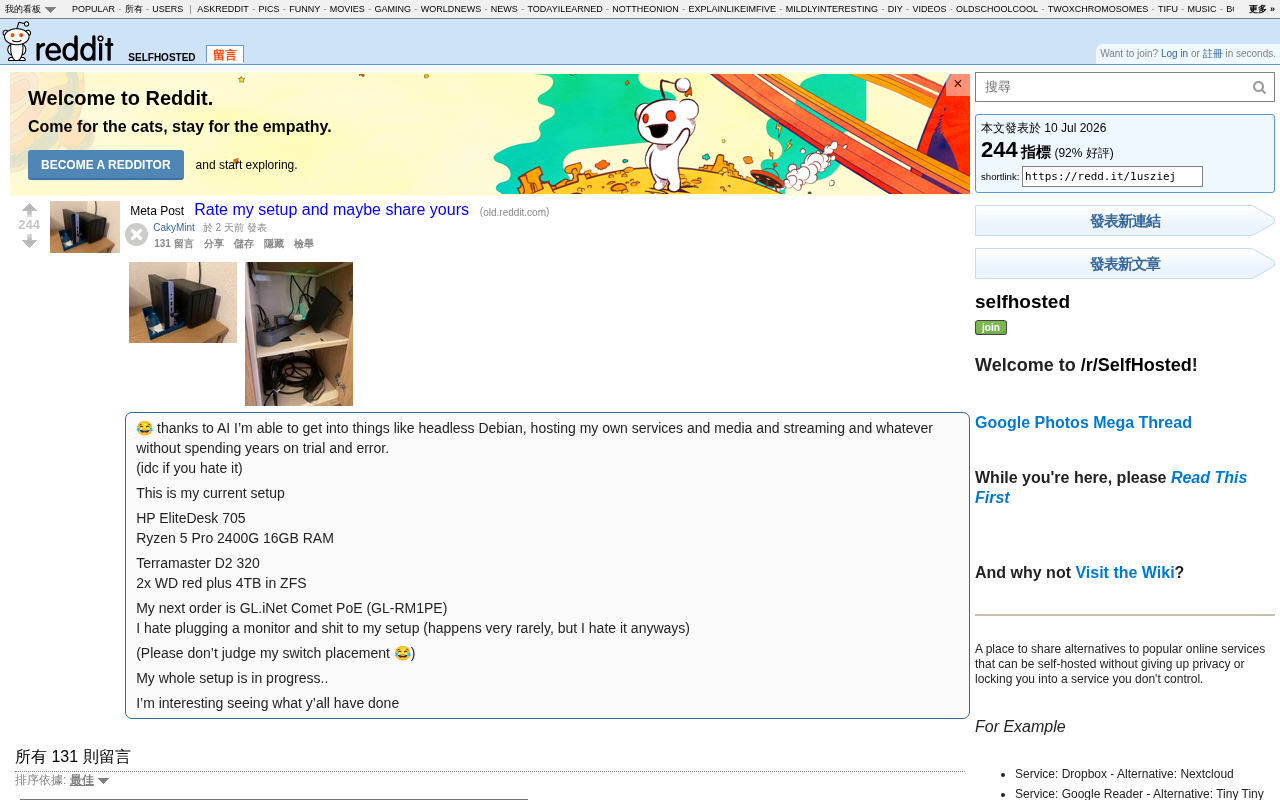
AI-Powered Home Server Setup from Scratch: Hardware Selection to Remote Management
With AI tools, beginners can build a home self-hosting server without years of experience. This guide covers hardware selection (HP EliteDesk, ZFS, IP-KVM), Docker deployment, and how AI compresses the technical learning curve.
Read more →

·4 min
Home Assistant: The Local-First Open Source Smart Home Platform That Puts Privacy and Freedom First
Home Assistant is the most mature open source smart home hub, prioritizing local control and privacy, supporting thousands of devices across ecosystems with 88,000+ GitHub stars.
Read more →

·5 min
A €35 IKEA Coffee Table Hides an Entire Home Server: Where Aesthetics Meets Function
A Reddit user hid a NAS, hard drive array, and modem inside a €35 IKEA Gillersberg coffee table, winning his partner's approval. Here's how this high-WAF home server solution works.
Read more →

·4 min
SparkyFitness: The Rise of an Open-Source, Self-Hosted Health Tracking App
SparkyFitness is an open-source, self-hosted alternative to MyFitnessPal and Flo. In one year: 4,500 users, 73 contributors, covering nutrition, sleep, women's health, GLP-1 tracking, and more.
Read more →

·8 min
GPT-5.6 Hands-On: Farm Automation, Mathematical Breakthroughs, and End-to-End AI Execution
GPT-5.6 (Sol, Terra, Luna) hands-on testing: a Hokkaido farmer controls a greenhouse with AI, a NYC small business builds custom software, and a Polish mathematician breaks a 3-year problem. A deep dive into end-to-end autonomous execution.
Read more →

·5 min
Chinese AI Praised Abroad but Criticized at Home: Three Mismatches Reveal the Truth Behind Divided Reviews
The same Chinese AI wins praise on Hacker News yet gets criticized at home. This article dissects three mismatches — user identity, product form, and positioning — behind the divided reviews.
Read more →

·7 min
PP-OCRv6 Deployment Deep Dive: Invoice Recognition Results and the Font-Missing Pitfall Explained
PP-OCRv6 is PaddlePaddle's SOTA-level OCR model. This article covers Docker deployment, invoice recognition testing, and the critical font-missing pitfall causing entire regions to be skipped.
Read more →

·3 min
5 Ways to Deploy LLMs Locally: From Getting Started to Production
A complete guide to 5 local LLM deployment methods: LlamaCPP, Ollama, LM Studio, vLLM/SGLang, and MLX-LM — from personal dev to production environments.
Read more →

·3 min
Cursor vs Codex In-Depth Comparison: Where Should You Spend Your $200?
In-depth comparison of Cursor and Codex AI programming tools — their strengths, ideal use cases, and cost differences. Find out where your $200 is best spent.
Read more →

·2 min
Your AC Is Showing a User Agreement? The Smart Home Privacy Dilemma and How to Deal With It
Daikin AC forces users to accept new terms to keep using it, exposing smart home privacy dilemmas. Analysis of hardware subscription trends, data collection, and consumer strategies.
Read more →