#React Hooks
82 related articles

·2 min
Three Major Updates to Gemini API Managed Agents: Free Tier, Cost Controls, and Scheduled Triggers
Google Gemini API Managed Agents launches three key updates: Free Tier for universal access, Cost Controls for budget safety, and Scheduled Triggers for automated execution.
Read more →

·3 min
SeaTicket: An AI Agent That Automatically Resolves GitHub and Discord Issues
SeaTicket is an AI Agent that automatically resolves GitHub Issues and Discord questions. This article analyzes its architecture, use cases, challenges, and value for open-source maintenance.
Read more →

·3 min
GitHub Agentic Workflows in Practice: Automating Cross-Repository Documentation Updates
Learn how GitHub Agentic Workflows automate cross-repo documentation updates. See the Aspire team's AI-driven approach: event triggers, smart drafting, and SME review to keep docs in sync with code.
Read more →

·2 min
Codex Voice Mode Hidden Trick: Tap the Circle to Instantly Show Subtitles
Discover a hidden trick in Codex iOS voice mode: tap the central circle to show subtitles, solving pain points like unclear code names and hard-to-distinguish technical content in voice interactions.
Read more →

·4 min
AI Coding Tools in Practice: Which Ones Actually Stuck with the Team?
A 12-person product team shares real-world experiences with Cursor, Codex, Claude Code, and CodeRabbit—exploring efficiency plateaus, scenario matching, and selection criteria for AI coding tools that actually stick.
Read more →

·5 min
From Chat to Agent: Automating Your Entire Business Workflow with AI Agents
Veteran AI practitioner Remy breaks down the leap from chat models to AI agents: how agents work, the three pillars of context, tools, and skills, MCP connections, and hands-on architecture to make you a 100x employee.
Read more →

·3 min
AI Not Working? Learn to Diagnose Which Layer Is the Problem — Loop, Harness, or Context
AI agents underperforming? The root cause usually isn't the model. This guide breaks down Loop, Harness, and Context Engineering so you can diagnose the real issue fast.
Read more →

·6 min
Vue3 from Scratch: A Hands-On Journey to Building an AI Health Monitoring System
A Vue3 beginner tutorial centered on "learn just enough, apply immediately." A three-stage path covers reactivity, Composition API, Element Plus, and data visualization, culminating in an enterprise-grade AI health monitoring system with blood sugar management, RAG consultation, and doctor-patient collaboration.
Read more →

·2 min
From Workflow Graphs to Distributed Protocols: Dissecting Multi-Agent System Architecture Paradigms
How does Cosmonapse replace LangGraph's graph structure with event-driven distributed protocols? A deep dive into two multi-agent architecture paradigms, their trade-offs, and when to use each.
Read more →
·2 min
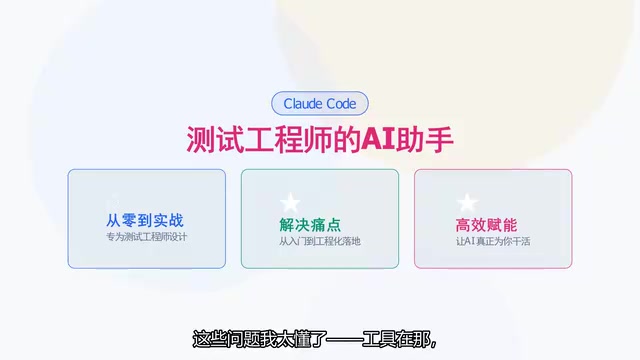
Claude Code for QA Engineers: A Practical Handbook from Basics to Engineering-Level Implementation
A practical Claude Code handbook built for QA engineers — covering environment setup, spec-driven development, Skill encapsulation, MCP integration, and AI test sub-agents across 10 core modules.
Read more →

·3 min
AI Second Brain Tech Stack: Building a Proactive Intelligent Assistant for ADHD Users
How to build a true AI second brain for ADHD users: LangGraph, n8n, RAG, vector databases, and layered architecture for a proactive personal assistant.
Read more →

·3 min
Cosmonapse: A Decentralized Multi-Agent Framework Built on an Event Bus
Cosmonapse is an open-source multi-agent framework that replaces central orchestrators with peer nodes, using typed signals and an event bus to fully decouple tool calls, memory, and HITL. Supports Python and TypeScript under Apache 2.0.
Read more →
Build Your Own X: The Hardcore Learnin…
·2 min
Build Your Own X: The Hardcore Learning Method with 520K Stars That Rebuilds Technology from Scratch
Explore build-your-own-x, the 520K-star GitHub project that teaches developers to rebuild databases, OSes, and compilers from scratch — and why it matters more than ever in the AI era.
Read more →
shadcn/helpers Open-Sourced: createCha…
·2 min
shadcn/helpers Open-Sourced: createChat Makes AI Component Testing More Efficient
shadcn open-sources @shadcn/helpers with createChat — a utility for AI SDK and TanStack AI that enables scripted conversations, tool calls, and deterministic testing.
Read more →
Capn-hook: Breaking the Cycle of Repet…
·2 min
Capn-hook: Breaking the Cycle of Repetitive Exploration for Coding Agents
Capn-hook is an open-source hook-based tool that helps coding agents retain knowledge across sessions—eliminating redundant exploration and turning one-time discoveries into reusable engineering assets.
Read more →
Agentic Loop Explained: The Three-Loop…
·2 min
Agentic Loop Explained: The Three-Loop Architecture of Reasoning, Tool Use, and Orchestration
A deep dive into the Agentic Loop — breaking down the three-layer architecture of reasoning, tool use, and orchestration to help developers build and debug reliable AI agent systems.
Read more →

·4 min
Agent Loop in Practice: A Guide to Building Self-Improving Automation with Guardrails
A deep dive into building verifiable, self-evolving Agent automation loops with Claude Code and Codex — covering Loop Contracts, four trigger types, three-phase execution architecture, and Evolve Loops.
Read more →

·2 min
GPT-5.6 Launch Triggers Industry Chain Reactions: The New Competition Landscape of Compute, Energy, and Open Source
GPT-5.6 raises frontier model expectations, Anthropic extends Fable 5; data center power bottlenecks emerge; open-source GLM5.2 rivals top closed models; AI review burden overlooked.
Read more →
Deep Dives
Deep Dive into AI Agent Skill Design: …
·3 min
Deep Dive into AI Agent Skill Design: Engineering Practices from Anthropic and Perplexity
A deep dive into Skill design philosophy from Anthropic's Claude Code team and Perplexity's Agent team, covering the Tax Test, Gotchas Flywheel, progressive disclosure, and Eval-First practices for building high-quality AI Agent skill systems.
Read more →

·3 min
AgentScope 2.0 Deep Dive: Six Core Upgrades for Production-Grade Multi-Agent Development
AgentScope 2.0 by Alibaba's Tongyi Lab delivers six major upgrades: typed event streaming, dangerous instruction interception, human-in-the-loop, concurrent execution, workspace system, and agent-as-a-service for production-grade multi-agent development.
Read more →