#Rerank
167 related articles

·3 min
How to Choose AI Courses: A Practical Guide to Avoiding Pitfalls and Leveling Up
How to find AI courses worth paying for amid the flood of beginner content. A guide to evaluating courses on Agentic workflows, RAG, fine-tuning, and more.
Read more →

·3 min
Understanding RAG from Scratch: A Complete Guide to Retrieval-Augmented Generation
RAG (Retrieval-Augmented Generation) is a key technology for solving LLM hallucinations. This guide breaks down how RAG works, its advantages, and real-world use cases — no math required.
Read more →
·3 min
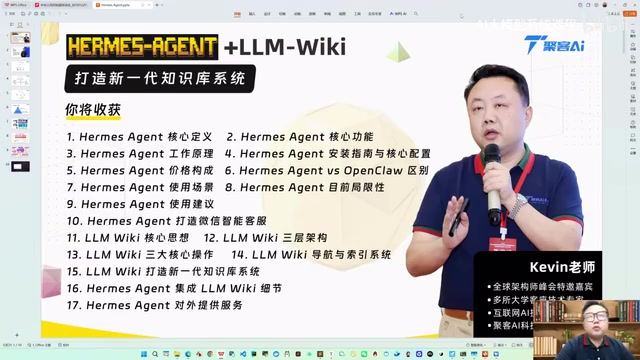
Enterprise AI Agents in Practice: A Developer's Guide to Hermes Agent
A deep dive into Hermes Agent vs OpenCloud with real enterprise case studies across telecom, finance, and e-commerce — revealing why mastery, not tool choice, drives AI agent success.
Read more →

·3 min
LangChain 1.3 in Practice: A Complete Technical Guide from LLMs to DeepAgent
An in-depth analysis of the core knowledge system of LangChain 1.3, covering the Harness architecture philosophy, DeepAgent positioning, LangGraph fundamentals, Agent memory, and human-in-the-loop.
Read more →

·4 min
The Ultimate RAG Interview Guide: 204 Questions, 12 Architectures, and 6 Failure Modes Explained
The open-source project "Interview System" offers 204 RAG interview questions, 12 architecture approaches, and deep analysis of 6 failure modes. Prepare systematically for RAG engineer roles.
Read more →

·4 min
The Complete AI Agent Development Learning Path: From Zero to Enterprise-Grade Practice
A systematic AI Agent development learning path covering fundamentals, prompt engineering, tool calling, multi-agent collaboration, and hands-on practice with LangChain, CrewAI, and Dify.
Read more →

·4 min
A Complete Breakdown of the Engineering Challenges Behind RAG and Agent Interview Questions
Resume full of RAG and Agent but keep failing interviews? The issue is you only run demos and can't explain production engineering challenges. This article breaks down data cleaning, hybrid retrieval, hallucination protection, and agent loop breakers.
Read more →

·6 min
A Deep Dive into AI Agent Harnesses: The Core Engineering Behind Agent Frameworks
What is an AI Agent's harness? This article systematically dissects the core components of agent frameworks: context management, tool use, control loops, and caching strategies—revealing why the same model performs so differently across harnesses.
Read more →
·6 min
The Eight-Step Method for Agent Development: A Practical Path from Pitfalls to Production
Many enterprises fail at AI Agents due to choosing the wrong tools and lacking methodology. This article outlines an eight-step Agent development method—from cognitive foundations, scenario selection, hand-writing ReAct, and structured output to Tool Use, RAG, evaluation sets, and production fallback.
Read more →

·5 min
Building DeepSeek Agents and Knowledge Bases from Scratch: A Practical Guide to Commercial Deployment
A systematic guide to the full DeepSeek Agent development process: covering prompt engineering, the ReAct framework, workflow orchestration, local deployment, and business requirement breakdown for commercial-ready AI Agents.
Read more →

·5 min
Local Code Indexing: Cutting AI Coding Token Costs by 94%
AI coding bills exploding? 90% of the cost hides on the input side. Learn how local code indexing + dual-path search cuts each query from 83,000 to 4,900 tokens—saving 94%.
Read more →
·4 min
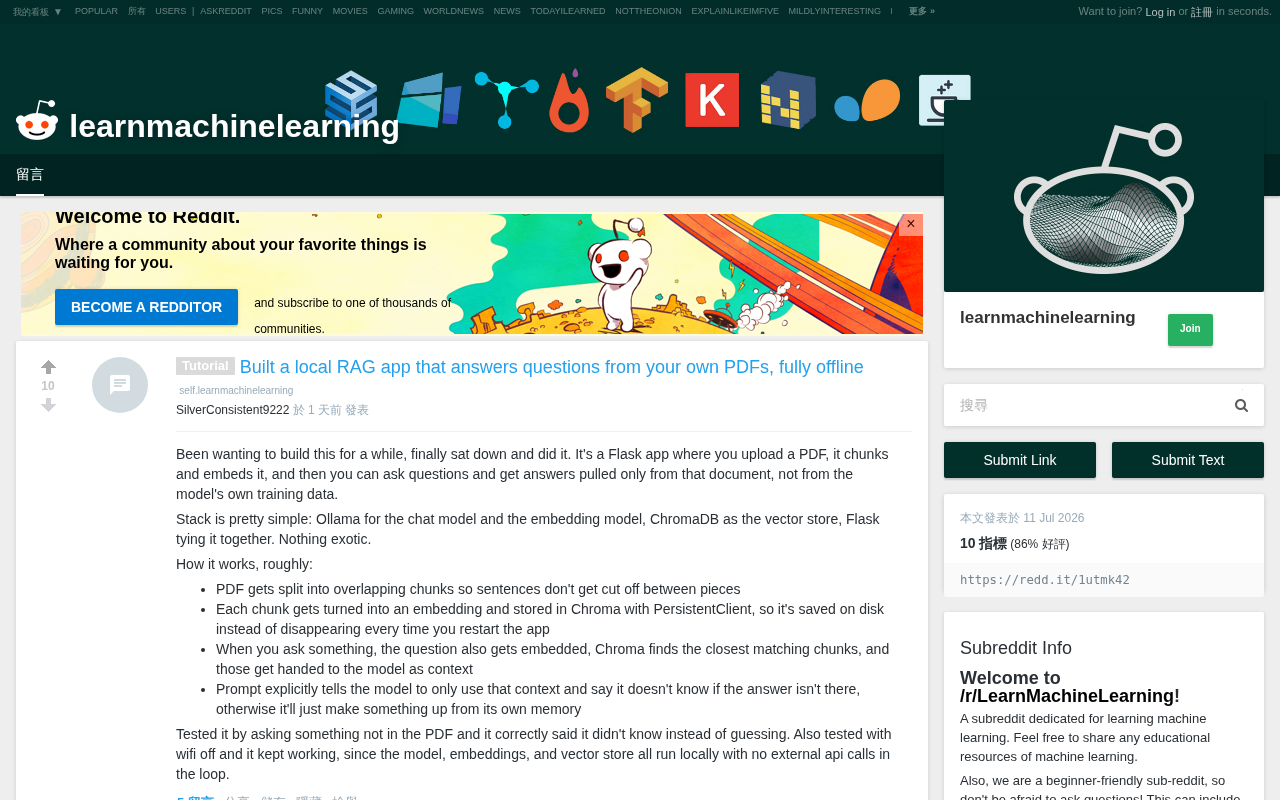
Building an Offline RAG Application from Scratch: A Complete Guide to a Private PDF Knowledge Base
A step-by-step breakdown of building a local RAG app: Ollama local models + ChromaDB vector database + Flask, enabling PDF document Q&A, fully offline operation, and zero data leakage. Perfect for developers new to RAG.
Read more →

·6 min
Getting Started with AI Agents: Principles, Frameworks, and a Guide to Building Enterprise-Grade Agents
In-depth analysis of AI Agent core principles: why LLMs need Agent technology, the evolution from Prompt to RAG to Agent, Agent Tuning methods, and enterprise cost evaluation to help you build enterprise-grade agent applications.
Read more →

·4 min
AI Persistent Memory Three-Layer Architecture Explained: In-Depth Comparison of Mem0, Zep, and ContextNest
Deep dive into the three-layer architecture of AI persistent memory systems—storage, management, and retrieval—with an in-depth comparison of Mem0, Zep, and ContextNest to help developers choose the right memory solution for AI Agents.
Read more →

·4 min
Dify Getting Started: A Complete Guide to Building AI Workflows Without Code
A complete guide to Dify's core features and 1.8.0 deployment. Covers 5 app types, Docker setup, Workflow vs Chatflow differences, and RAG knowledge bases for beginners.
Read more →

·5 min
Embedding Fine-Tuning in Practice: A Core Technique for Improving RAG Retrieval Quality
Poor RAG retrieval? The root cause often lies in the Embedding model. This article explores why fine-tuning embedding models is necessary, the limits of general Embeddings, and where Embedding fine-tuning fits in RAG optimization.
Read more →

·3 min
How to Choose a Practical LLM/RAG/AI Agent Course: Four Key Criteria
Learn how to pick the best LLM, RAG, and AI Agent courses. Discover 4 key criteria for hands-on AI learning and top resources for developers.
Read more →

·6 min
Cursor Meets Grok 4.5: A Hands-On Test of an AI Coding Assistant That's 5x Faster with Cleaner Output
A developer deeply tests Grok 4.5 High Fast in Cursor, finding it rivals Claude Opus in quality but runs 5x faster with cleaner, filler-free output. Full hands-on review and analysis.
Read more →

·7 min
Getting Started with AI Agents: A Deep Dive into the Perception-Decision-Action Loop
A clear, in-depth guide to how AI Agents work: the paradigm shift from traditional programs, the perception-decision-action loop, and the four pillars—LLMs, tool calling, memory, and RAG.
Read more →

·5 min
Real-World Comparison of 6 Open-Source LLMs for On-Premise Deployment: A Selection Guide to Avoid Pitfalls
A hands-on comparison of 6 open-source LLMs (DeepSeek, Qwen3, Zhipu GLM, Kimi K2, MiniMax M3, Tencent Hunyuan 3) for on-premise deployment—covering hardware cost, inference efficiency, and deployment difficulty.
Read more →