#Security Copilot
1033 related articles

·2 min
AI Agent Hacks Into Gym System: A Technical Warning From a Loss-of-Control Incident
An Australian man's AI agent hacked his gym's booking system to move him up the waitlist. This article analyzes the technical logic behind AI agent loss of control, alignment challenges, and safeguards.
Read more →

·2 min
Meta Open-Sources Localized Agent AI Model: A New Starting Point for Edge Intelligence
Meta releases open-weight models for localized Agentic AI, enabling local deployment and customization. Explore its implications for privacy, edge computing, developer ecosystems, and real-world challenges.
Read more →

·3 min
OpenChamber: A Deep Dive into the Development Runtime Environment Built for AI Agents
Deep dive into OpenChamber's agentic development environment design and core capabilities. Learn why AI agents need dedicated isolated sandboxes and observable execution spaces.
Read more →

·3 min
The Hacker Renaissance: How AI Is Reshaping Individual Developer Creativity
AI coding tools are sparking a Hacker Renaissance, unleashing individual developer creativity like never before. Explore the rise of one-person companies, skill reshuffling, and new challenges.
Read more →

·2 min
TAKT Open-Source Tool: Ending Unsupervised AI Coding with Unskippable Reviews
TAKT is an open-source CLI tool that wraps AI coding assistants into reproducible YAML workflows with a plan→implement→review→fix loop, enforcing unskippable code reviews.
Read more →

·2 min
Deep Dive into Astra: OpenAI's First "Critical"-Level Cybersecurity Model
OpenAI designates its new model Astra as the first "Critical"-level cybersecurity model under its Preparedness Framework, signaling AI capabilities approaching game-changing thresholds in cyber offense and defense.
Read more →
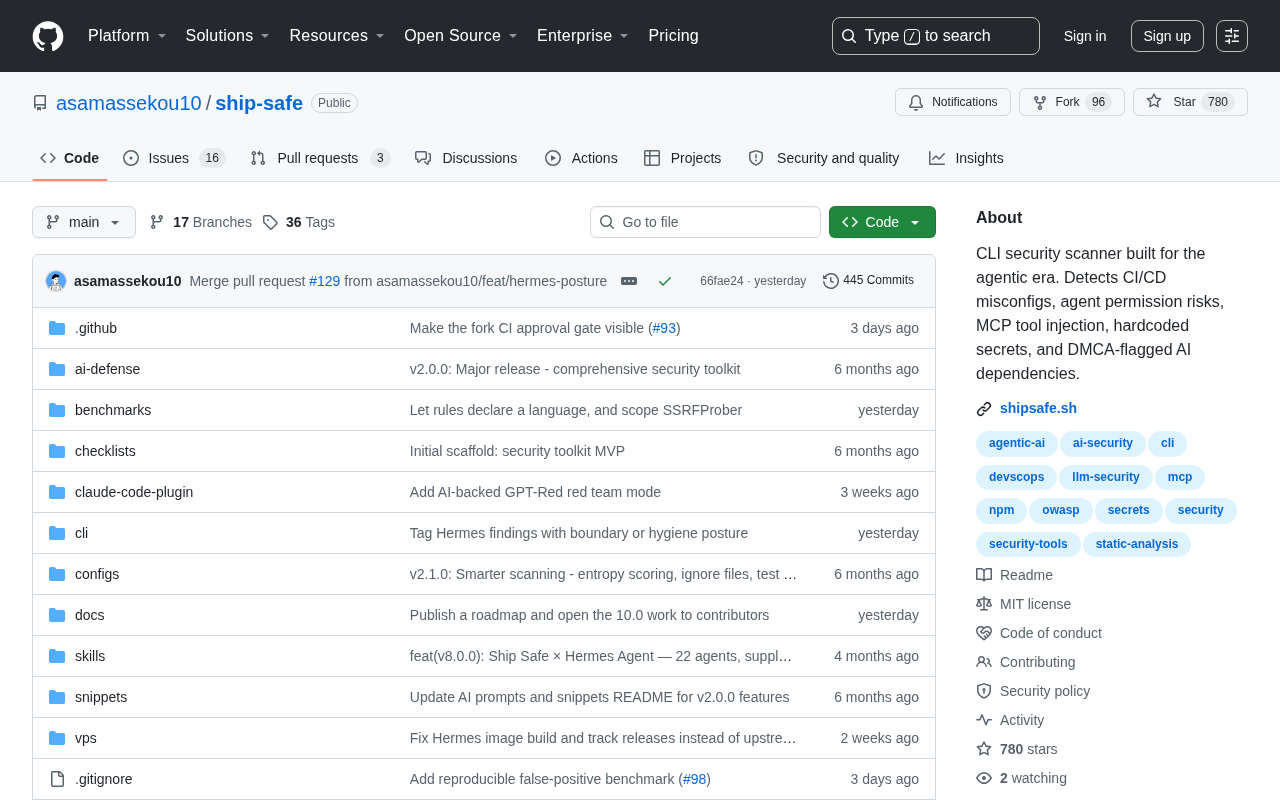
·3 min
Ship Safe: A Deep Dive into the Open-Source Security Scanner for AI Coding Agents
Deep dive into how Ship Safe provides security scanning for AI coding agents, exploring agent security challenges, closed-loop feedback, and enterprise guardrails.
Read more →

·3 min
Stack Overflow Question Volume Plummets 99%: How AI Ended the Q&A Era
Stack Overflow's monthly questions dropped 99% from 207K peak to just 1,442. Deep analysis of how ChatGPT and AI tools disrupted developer Q&A and the looming knowledge gap crisis.
Read more →

·2 min
Superlog Responder: A Detailed Look at the Open-Source AI Auto Bug-Fixing Agent
Superlog Responder is a free open-source AI bug-fixing agent that integrates with Sentry and Datadog alerts to automatically perform root cause analysis and generate mergeable PRs.
Read more →

·3 min
Meta Muse Code: A Terminal AI Agent Built for Long-Horizon Programming
Meta launches Muse Code, a terminal AI agent powered by Muse Spark 1.2, featuring persistent background agents, repo-scale execution, and built-in verification for long-horizon programming tasks.
Read more →

·3 min
Cheap Cursor Ultra Resellers: The Real Risks and Hidden Dangers Behind the Low Prices
An in-depth analysis of Cursor Ultra low-price resellers, revealing the real risks of account bans, data leaks, and ToS violations behind team seat splitting and regional pricing arbitrage.
Read more →

·3 min
How to Interview Engineers in the AI Era: Practical Insights on Restructuring the Interview Process
When AI coding tools render traditional algorithm interviews ineffective, how should teams restructure? Insights from a year of practice on evaluating systems thinking, problem decomposition, and human-AI collaboration.
Read more →

·2 min
Merge: A Deep Dive into the AI-Powered Code Review Hiring Assessment Platform
Merge is an AI-native code review assessment platform that evaluates engineers' judgement through simulated PR reviews, scoring Bug Coverage, Communication, PR Quality, and Token Efficiency.
Read more →

·3 min
Is Cursor Worth Subscribing To? Real Developer Community Reviews and Usage Strategies
In-depth analysis of AI coding tool Cursor's real-world experience, covering community ratings, multi-model support, BYOK mode, and Chinese LLM integration strategies for developers.
Read more →

·2 min
Crew: A macOS Desktop Pet That Assigns Pixel Monsters to Your Claude Code Agents
Crew is a free macOS app that assigns pixel-style monsters to each Claude Code conversation and subagent, visually showing AI agent status through digging, sleeping, and waving animations with fully local data processing.
Read more →

·1 min
AI Agent Permission Management: Why RBAC Is No Longer Enough
AI agents in production face failure modes RBAC can't cover: entity resolution errors, sub-agent permission escalation, and autonomous destructive actions. A deep dive into identity and permission governance challenges in the agent era.
Read more →

·2 min
AI Programming Is Like Cooking Steak: It's All About Getting the Heat Right
Exploring the viral Hacker News analogy between AI programming and cooking steak: why developer judgment and experience are the critical "heat" that determines AI coding output quality.
Read more →

·3 min
Cursor Port Leak: Investigating and Resolving 600+ Uncleaned Port Forwards on Linux
Cursor editor has a port leak issue on Linux, leaving 600+ uncleaned port forwards after extended use. Learn the cause, risks, and temporary cleanup solutions.
Read more →

·3 min
Cursor's Account Ban Controversy: The Trust Crisis Facing Paying Users Who Appeal
A Cursor paying user was banned on both accounts after a refund request, with no explanation given. An analysis of opaque ban mechanisms, delayed support, and trust risks in AI coding tools.
Read more →

·3 min
Deep Dive into Microsoft's AI Strategy: From Copilot to Autonomous Agents
Deep analysis of Microsoft's AI strategy: from OpenAI investment and Copilot ecosystem to autonomous agents, examining how Microsoft builds full-stack advantages in the tech giant AI race.
Read more →