#Semantic Kernel
270 related articles

·4 min
Agent Draw: An AI Whiteboard That Draws While You Talk
Agent Draw is an AI whiteboard built on TLDraw that lets you speak or type to have an AI agent draw flowcharts and diagrams in real time. A deep dive into its tech, design, and use cases.
Read more →
·5 min
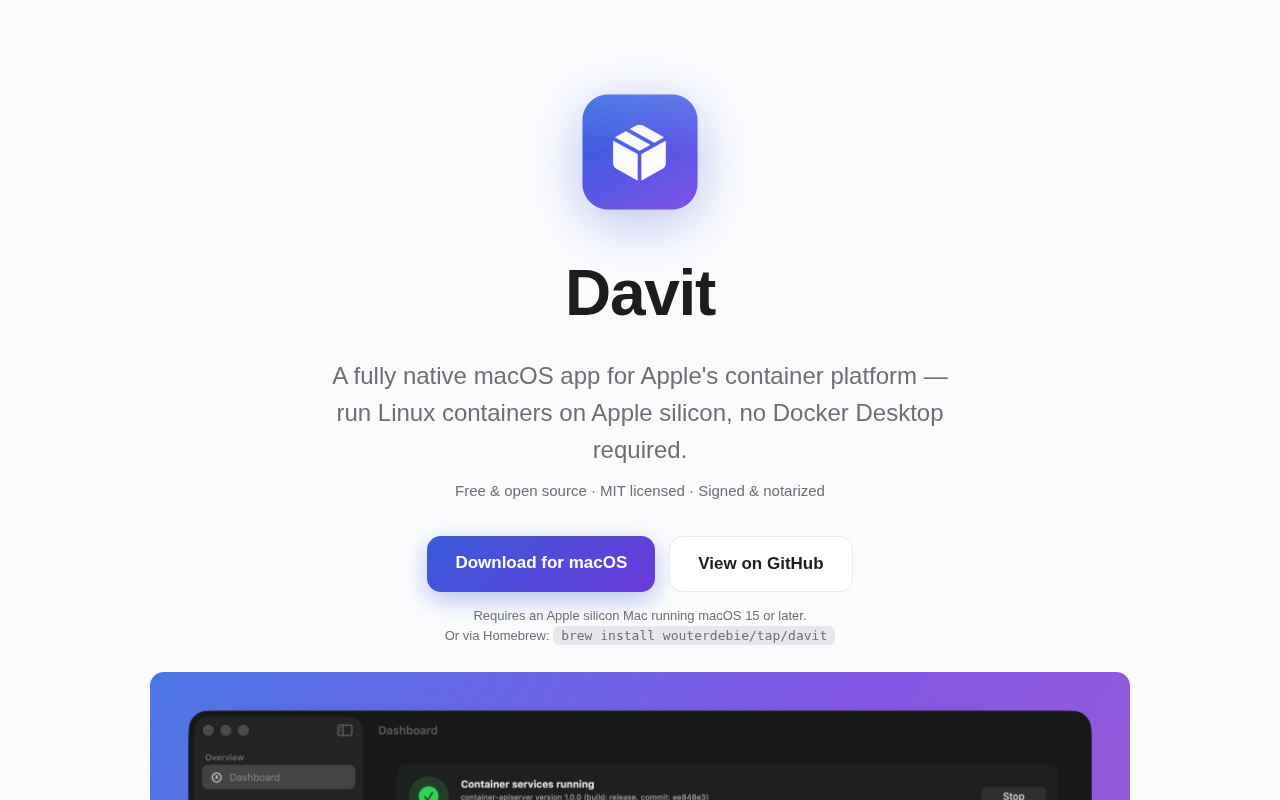
Davit: A Native GUI Management Tool Built Specifically for Apple Containers
Davit is an open-source native macOS UI tool built for Apple Containers, offering graphical container status management, image viewing, and log monitoring.
Read more →

·2 min
Microsoft Open-Sources Flint: A Deep Dive into the AI Agent Behavior Visualization Language
Microsoft open-sources Flint, a visualization language for AI agents that helps developers understand decision paths, multi-step reasoning, and collaboration flows to improve debugging and observability.
Read more →

·7 min
Getting Started with Dify: A Complete Guide from Local Deployment to Building Enterprise-Grade AI Applications
A detailed guide to Dify, the open-source LLM app development platform, covering its core features and full local deployment via VMware + Ubuntu + aaPanel + Docker. Supports 100+ models like DeepSeek and ChatGPT to build enterprise AI apps fast.
Read more →

·6 min
Getting Started with Dify: A Complete Guide to Deployment, Configuration, and Workflow Practice
A systematic guide to Dify's three deployment methods (Docker/source/online), five application types, and hands-on workflow nodes—covering LLM integration, MySQL config, and app publishing.
Read more →
·7 min
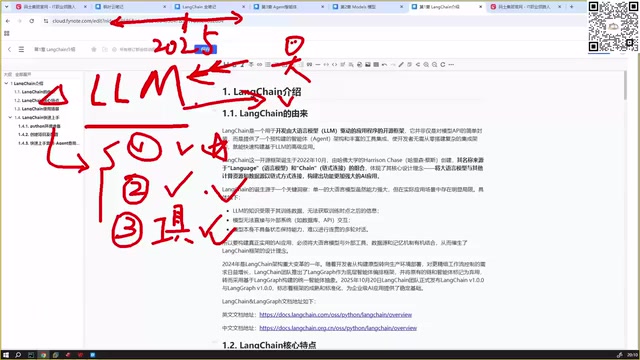
LangChain Hands-On Guide: From LLM Calls to Agent Development
Master LangChain from scratch: the three limitations of LLMs, init_chat_model unified interface config, the Message type system, and the path from LLM calls to Agent development.
Read more →

·6 min
Skill vs MCP: The Essential Difference Between Two Types of AI Agent Capabilities and How They Work Together
Skill and MCP are two core concepts for building AI Agents. Skill encapsulates task execution methodology, while MCP provides a standardized protocol for connecting external tools. This article breaks down their core differences, abstraction levels, and collaboration.
Read more →

·5 min
Embedded Linux vs. AI Agent Development: A Comprehensive Comparison of Salary, Job Availability, and Career Stability
Embedded Linux or AI Agent development? This in-depth comparison covers salary, job availability, and career stability to help developers pick the right path.
Read more →

·6 min
AMD Ryzen AI Halo Dev Kit: A $4,000 Local LLM Powerhouse Taking on Apple and NVIDIA
AMD officially unveils the Ryzen AI Halo local AI dev kit, priced around $4,000 with 128GB unified memory, capable of running 70B LLMs locally. An in-depth look at its specs, pricing, and market competition.
Read more →
·5 min
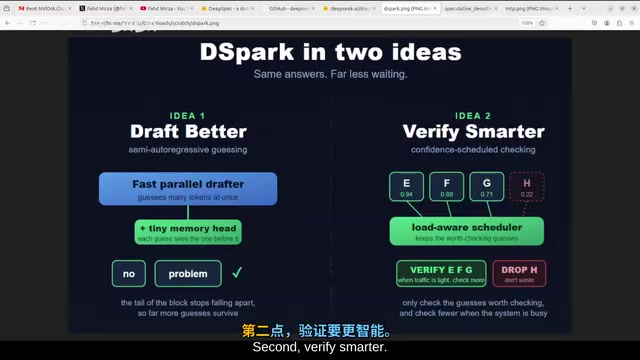
DeepSeek DSpec Hands-On: How Speculative Decoding Accelerates LLM Inference by 6x
Hands-on report on DeepSeek's open-source inference acceleration toolkit DSpec: draft model + smart scheduling delivers lossless speedup, hitting acceptance length 6 on GSM8K and reproducing official data.
Read more →

·7 min
In-Depth Analysis of the GitLost Vulnerability: How GitHub AI Agents Were Tricked into Leaking Private Repositories
Security researchers disclose the GitLost attack, which uses prompt injection to trick GitHub AI agents into leaking private repository source code. An in-depth analysis of the attack principle, AI agent security risks, and developer defense recommendations.
Read more →

·7 min
Fable AI Coding in Practice: Optimizing Reasoning Levels and Multi-Model Collaboration to Cut Costs
How developer Theo used Anthropic's Fable model to rebuild his AI coding workflow — controlling reasoning levels, multi-model routing with Codex, and sub-agent orchestration to cut costs from thousands to $150.
Read more →

·7 min
Fable AI Coding in Practice: Optimizing Reasoning Levels and Multi-Model Collaboration to Save Money
Hands-on guide: Use Anthropic's Fable model to optimize AI coding workflows — control reasoning levels, leverage Claude-Codex multi-model collaboration, and cut costs from thousands to $150.
Read more →

·4 min
24 Hours, No AI, Zero to Rust: Building a Game from Scratch — A Full Account
A YouTuber spent 24 hours learning Rust from zero with no AI tools, mastering ownership, borrowing, and a game engine to build a complete Brick Breaker game. Full account of every challenge.
Read more →

·7 min
LangSmith Engine: An Intelligent Operations Tool That Automatically Diagnoses and Fixes Agent Failures
LangChain's LangSmith Engine is an intelligent agent tool for tracking Agent failures, prioritizing issues, and auto-drafting fixes. Deep dive into its core capabilities, sandbox isolation, sub-Agent architecture, and continuous evaluation challenges.
Read more →

·7 min
Discord Wrongfully Bans 8,000 Accounts: Why an AI Moderation System Mistook Chessboards for Violating Content
Discord admits a safety-system bug wrongfully banned over 8,000 accounts, triggered by chessboards, Minecraft screenshots and other grid images. A deep dive into AI moderation false positives and the efficiency-vs-accuracy dilemma.
Read more →
C++ Asymmetric Memory Barriers: Princi…
·4 min
C++ Asymmetric Memory Barriers: Principles, Implementation, and Engineering Applications
A deep dive into C++ asymmetric memory barriers: core principles, Linux membarrier syscall, compiler vs hardware fences, and engineering applications in RCU and lock-free data structures.
Read more →
·5 min
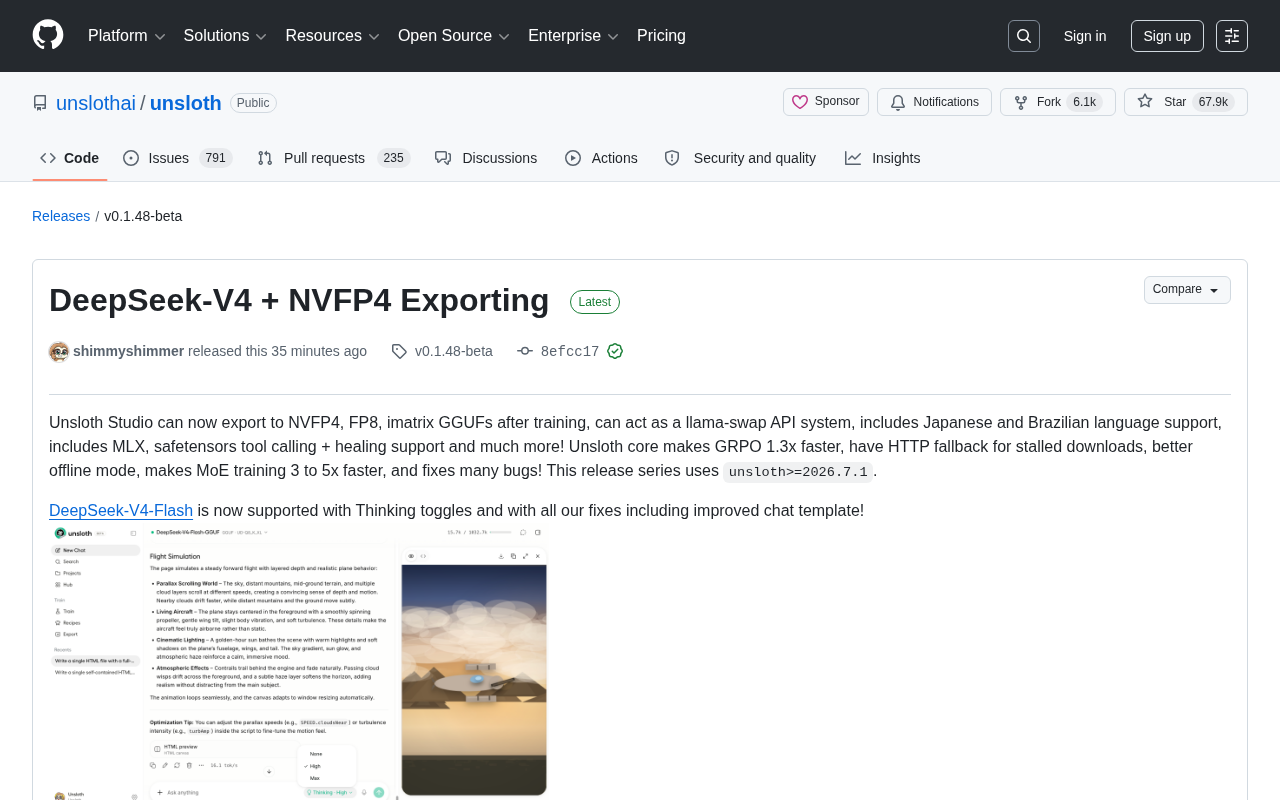
Major Unsloth Update: NVFP4 Quantization Export and DeepSeek-V4 Training Support
Unsloth v0.1.48-beta released, adding NVFP4/FP8 quantization export, OpenAI-compatible API hot-swapping, 3-5x faster MoE training, and 1.3x faster GRPO, covering the full LLM fine-tuning, quantization, and local deployment pipeline.
Read more →

·6 min
Hands-On with Mixar: An AI-Native Blender Fork That Handles Baking and LOD with a Single Prompt
Mixar is an AI-native fork of Blender 5.0 that embeds AI into the kernel layer. This hands-on review tests texture baking, LOD generation, mood boards, image-to-3D, and more, comparing it to MCP. Fully open source and free.
Read more →

·7 min
The Birth of Claude Code: Design Philosophy from Internal Tool to AI Programming Assistant
An in-depth look at Claude Code's development and design philosophy: why the CLI form, how the "minimal scaffolding" architecture works, and how it balances safety with autonomy in AI programming.
Read more →