#Top-p sampling
50 related articles
·3 min
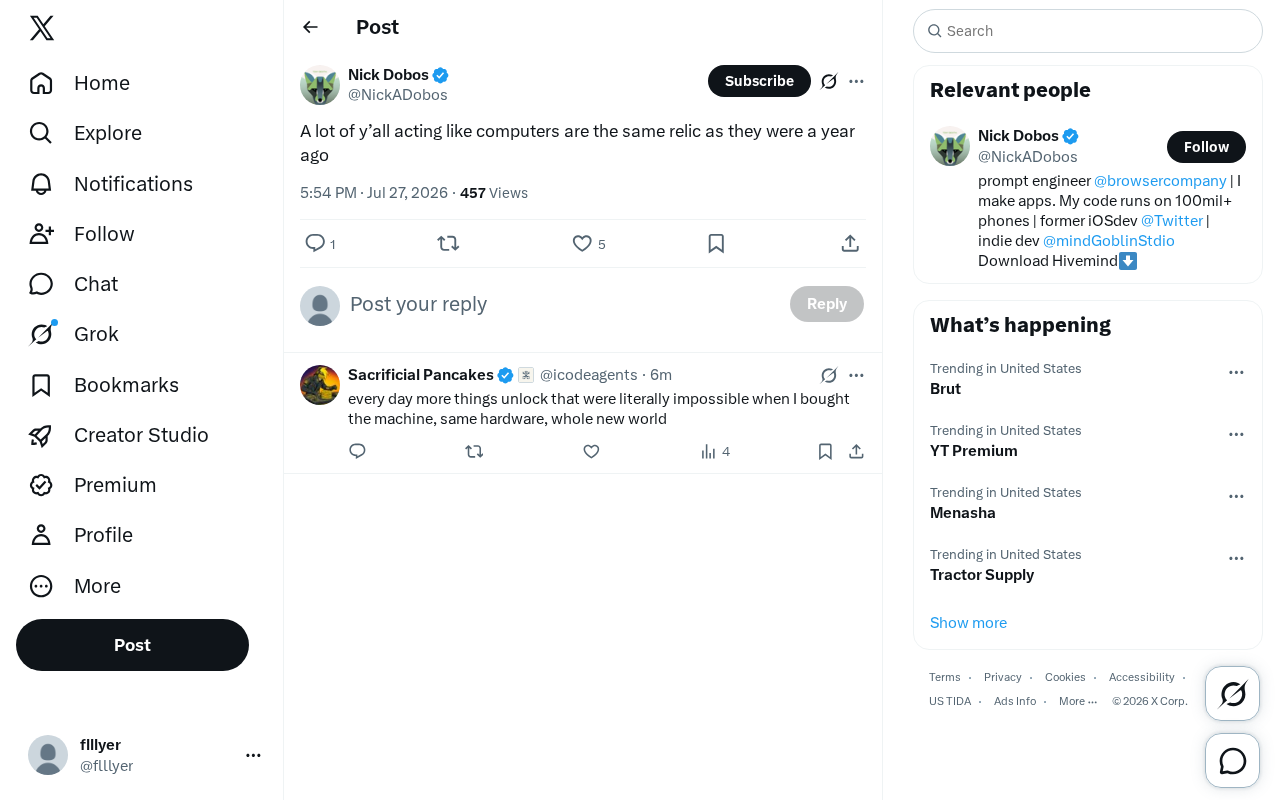
The Computer Is Being Redefined in the AI Era — Has Your Understanding Kept Up?
Generative AI is profoundly redefining the personal computer — from passive tool to intelligent collaborator. This article examines the core shifts of the AI PC era and the productivity gap created by cognitive lag.
Read more →

·3 min
Gemini Can Generate a PDF One Moment but Claims It Can't the Next? Here's Why
Analysis of why Gemini and other AI LLMs exhibit capability drift, including tool-calling mechanisms, context window limits, and safety policy triggers, plus practical strategies for PDF generation failures.
Read more →

·5 min
The Complete Guide to AI Agent Development: A Four-Stage Progressive Roadmap
A systematic guide to AI Agent development across four stages: LLM fundamentals, ReAct paradigm, memory & tools, and multi-agent collaboration for developers.
Read more →
·3 min
Computers Are Being Redefined in the AI Era — Has Your Understanding Kept Up?
Generative AI is profoundly redefining personal computers — from passive tools to intelligent collaborators, from deterministic computation to probabilistic reasoning. Explore the core shifts of the AI PC era.
Read more →

·3 min
API Mock vs. Sandbox in Agent Testing: A Detailed Layered Strategy Guide
API Mock is fast but misses bugs; Sandbox is realistic but costly. This article analyzes their core differences and provides a layered testing strategy for building reliable Agent test systems.
Read more →

·5 min
Multiway Turing Machines: A New Paradigm from Single Computation to Multiple Possibilities
An in-depth analysis of Wolfram's multiway Turing machines, exploring how computation expands from single paths to multiway graph structures, and deep connections to AI search algorithms and quantum computing.
Read more →
·4 min
Hands-On Skill Writing and Agent Testing: A Guide to AI Testing Transformation
An in-depth look at AI testing challenges. Learn to write reusable Skill packs and master Agent testing and LLM evaluation—covering the SKILL.md six-dimensional rule, skill-creator, EvalScope, and dataset selection.
Read more →

·6 min
Hands-On with Qwen 3.8 Max: How an Open-Source Model Closes In on Top-Tier Closed Models
Qwen 3.8 Max has 2.4 trillion parameters and will be open-sourced. In KingBench testing it scored 81.25%, ranking second, beating Claude Opus 4.8 and trailing only Fable 5. A deep dive into its performance across 8 tests.
Read more →

·3 min
Agent Infinite Loop Engineering Guide: Detection, Breaking, and Root Cause Analysis
How to handle Agent infinite loops? This guide covers three-layer loop detection, four strategy-switching techniques, root cause analysis, and multi-layer fallbacks for building stable, production-grade Agent systems.
Read more →
·2 min
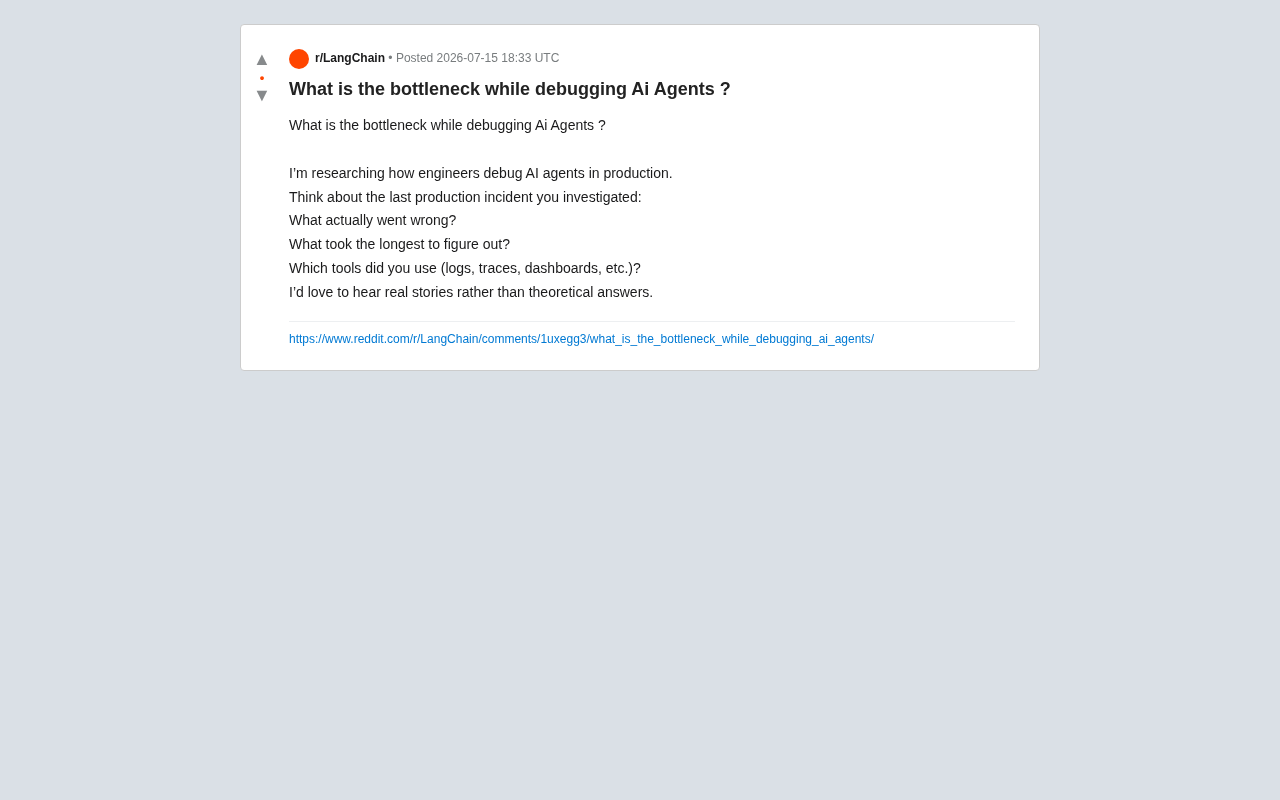
AI Agent Debugging Bottlenecks: A Practical Guide to Production Observability
Explore core AI Agent debugging challenges in production: non-determinism, multi-step error propagation, and observability gaps — with practical guidance on LangSmith and tracing tools.
Read more →

·2 min
Forge: Adding Reliability Guardrails to Local Model Tool Calling
Forge is an open-source Python middleware for local models (Ollama, llama.cpp, vLLM) that boosts tool-calling reliability via three-layer guardrails: validation, rescue parsing, and retry.
Read more →
5,000+ Kagglers Reveal What Actually W…
·2 min
5,000+ Kagglers Reveal What Actually Works for Improving AI Reasoning
5,000+ Kaggle participants in NVIDIA's Nemotron challenge validate test-time compute, self-consistency, and chain-of-thought as key techniques for boosting AI reasoning without bigger models.
Read more →
shadcn/helpers Open-Sourced: createCha…
·2 min
shadcn/helpers Open-Sourced: createChat Makes AI Component Testing More Efficient
shadcn open-sources @shadcn/helpers with createChat — a utility for AI SDK and TanStack AI that enables scripted conversations, tool calls, and deterministic testing.
Read more →
How DSLs Make LLM Outputs More Reliabl…
·3 min
How DSLs Make LLM Outputs More Reliable: Principles and Practice
LLM output instability is a core production challenge. This article analyzes how DSLs improve LLM reliability through verifiability, semantic convergence, and structural constraints.
Read more →

·4 min
Running Qwen3.6 27B Locally on a Single RTX 3090: A Complete Guide to Cloud-Rivaling Performance
One used RTX 3090, one 16.8GB GGUF file, and Qwen3.6 27B runs locally offline. SWE-bench score of 77 rivals Claude Sonnet. MTP boosts speed to 59 tok/s. Full local AI coding assistant deployment guide.
Read more →
Running Gemma LLM in Godot with GDScri…
·2 min
Running Gemma LLM in Godot with GDScript and Vulkan: An Experimental Deep Dive
A developer runs the Gemma LLM inside Godot 4 using only GDScript and Vulkan compute shaders — no llama.cpp or external dependencies. A technical breakdown of how it works.
Read more →

·1 min
Verbalized Sampling Lands at ICML: Does Prompt Engineering Belong at Top Conferences?
A prompt engineering paper on "verbalized sampling" accepted at ICML sparked fierce Reddit debate: does a prompting trick that mitigates mode collapse belong at a top ML conference?
Read more →

·3 min
How to Evaluate AI Agents in Production: Four Online Evaluation Methods Explained
Offline tests passing doesn't mean production reliability. This guide breaks down Online Evals for AI Agents: rule checks, LLM-as-a-Judge, user feedback, and human review.
Read more →

·2 min
15-Year-Old Trains 200M MoE Language Model from Scratch: Full Architecture & Hands-On Breakdown
A 15-year-old trained Tiny-MoE, a 200M-parameter MoE language model from scratch using free Kaggle GPUs, featuring MLA attention, RoPE+YaRN, and native PyTorch.
Read more →

·4 min
From Enter to First Token: Decrypting the Full LLM Inference Pipeline (Autoregression, KV Cache & Decoding Strategies)
From pressing Enter to the first character appearing, what happens inside an LLM? This article breaks down autoregressive generation, KV cache acceleration, and decoding strategies like temperature, Top-k, and Top-p.
Read more →