#UK LLM
71 related articles

·3 min
Xiaomi Smart Home Screen 10 In-Depth Review: An AI-Powered Whole-Home Smart Control Hub
Xiaomi Smart Home Screen 10 review: a 10.1-inch display with AI-powered Xiao Ai, compatible with 3,000 smart devices and 261 IoT platforms. Supports scene automation, video calls, IR control, and privacy protection.
Read more →

·5 min
GPT-5.6 In-Depth Review: Crushing Competitors on Value, But Its Jailbreak Vulnerabilities Can't Be Ignored
OpenAI's GPT-5.6 Soul, Terra & Luna are priced at one-third of Claude, leading Anthropic Fable on many benchmarks. We analyze its value, reasoning, and jailbreak risks.
Read more →
OpenAI Targets the Home Market: How Ch…
·5 min
OpenAI Targets the Home Market: How ChatGPT Aims to Become the Whole Family's AI Assistant
OpenAI is recruiting a family product manager, targeting older adults and caregiver scenarios. An in-depth analysis of ChatGPT's shift from productivity tool to home digital assistant.
Read more →

·5 min
DCTS: A Deep Dive into an Open-Source Self-Hosted E2EE Encrypted Communication Platform
DCTS is an open-source, self-hosted instant messaging platform led by an individual developer, integrating E2EE and decentralized architecture across desktop and mobile.
Read more →

·5 min
Zero-Dependency AI Decision Record Auditor: A Practical Guide to Building Traceable AI Systems
An in-depth analysis of the zero-dependency decision record auditor: from AI compliance and incident postmortems to human-AI accountability, exploring how 'Governance as Code' enables traceable, transparent AI decision-making.
Read more →

·6 min
Nothing Phone 4B Announced: The First B-Series Phone, Once Again Skipping the US Market
Nothing officially launches its first B-series phone, the Phone 4B, blending 4A and 4A Pro design elements for the entry-level market. It continues the strategy of skipping the US, focusing on price-sensitive markets like India and Europe.
Read more →

·3 min
AI Art Prompt Deconstruction: Multi-Style Fusion Techniques Behind "The Last Ember"
A deep dive into the prompt logic behind AI artwork "The Last Ember" — covering Art Nouveau meets Egyptian mural fusion, Midjourney parameter settings, and structured prompt methodology.
Read more →

·7 min
50 AI Research Job Applications to FAANG, 0 Replies? Unpacking the Truth Behind the Job Search Struggle
An AI research engineer with 3 years of experience sent 50 applications to FAANG with zero replies. This article breaks down the hidden barriers of top-tech AI roles, the truth about LinkedIn ghost jobs, and the MLE vs. Research Engineer divide.
Read more →

·5 min
Has Apple Lost the AI Race? The Battle Between Software Setbacks and the Hardware Moat
After Apple failed to deliver on its new Siri promise for two years running, many ask: has Apple lost the AI race? We break down two AI tracks—software models vs. on-device hardware.
Read more →

·8 min
GPT-5.6 Hands-On: Farm Automation, Mathematical Breakthroughs, and End-to-End AI Execution
GPT-5.6 (Sol, Terra, Luna) hands-on testing: a Hokkaido farmer controls a greenhouse with AI, a NYC small business builds custom software, and a Polish mathematician breaks a 3-year problem. A deep dive into end-to-end autonomous execution.
Read more →

·6 min
Is AI Dream Interpretation Really Accurate? Unpacking the Technical Limits and the Truth Behind Psychological Suggestion
AI dream interpretation and personality analysis are trending on social media, but can AI really understand you? This article unpacks the technical limits and hidden risks—from the Barnum Effect to LLMs.
Read more →
·6 min
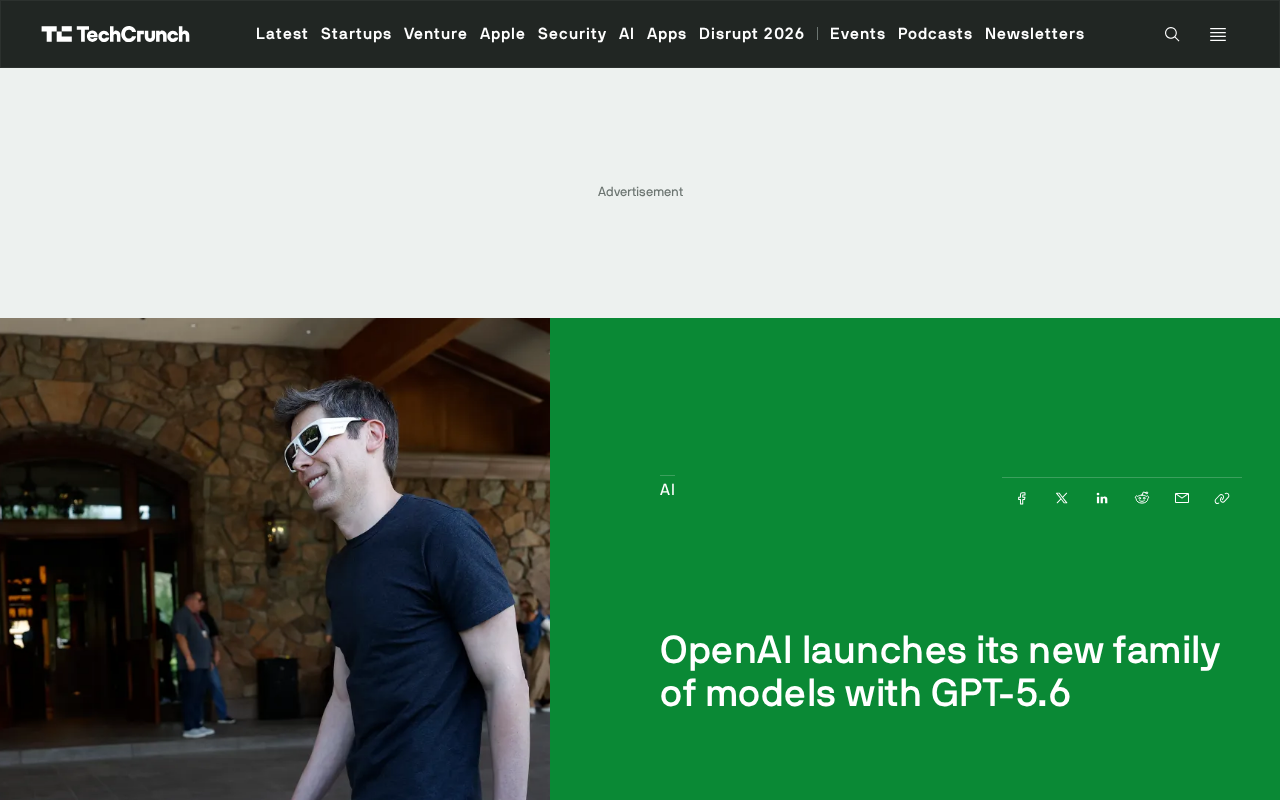
OpenAI Releases GPT-5.6: Cybersecurity Capabilities Take Center Stage
OpenAI launches the GPT-5.6 model family with cybersecurity as its biggest highlight. A deep analysis of GPT-5.6's differentiation, double-edged-sword effect, and enterprise strategy.
Read more →

·6 min
Tencent Hunyuan HY3 Official Version Open-Sourced: The Strongest Under 300B, at 1 Yuan per Million Tokens
Tencent Hunyuan HY3 official version is open-sourced under Apache 2.0, priced as low as 1 yuan per million input tokens, with major gains in agents, reasoning, coding, and long context. On the same day, Meituan open-sourced its trillion-parameter LongCat 2.0.
Read more →

·7 min
GPT-5.6 In-Depth Hands-On Review: How Do Soul, Tara, and Luna Really Perform?
OpenAI releases GPT-5.6 preview with three models: flagship Soul, balanced Tara, and lightweight Luna. Based on real KingBench 3 testing, this article breaks down each model's performance on math, front-end, and agentic tasks, and compares them with Anthropic Fable.
Read more →

·6 min
Why Can't AI Understand British Political Farce? The Cultural Comprehension Dilemma of Algorithms
A political news story about British satirical candidate 'Count Binface' sparked debate in the tech community: why does AI struggle to understand sarcasm, contrast humor, and cultural context? An in-depth analysis of LLM limitations.
Read more →

·6 min
AMD Ryzen AI Halo Dev Kit: A $4,000 Local LLM Powerhouse Taking on Apple and NVIDIA
AMD officially unveils the Ryzen AI Halo local AI dev kit, priced around $4,000 with 128GB unified memory, capable of running 70B LLMs locally. An in-depth look at its specs, pricing, and market competition.
Read more →

·3 min
16GB VRAM Showdown: Ornith 35B vs Qwen 35B — Full Benchmark Comparison
Ornith 35B vs Qwen 3.6 35B on 16GB VRAM: 24+ hours of benchmarks covering inference speed, 256K context, tool calling, HumanEval, and real coding challenges.
Read more →

·6 min
The Transparency Crisis in AI Public Procurement: What the Palantir Controversy Means for Government AI Strategy
The Palantir procurement controversy reveals hidden risks in government AI strategy: opaque contracts, vendor lock-in, and oversight gaps. A deep analysis of AI public governance challenges.
Read more →

·8 min
Fable 5 Opens to All Paid Users: How AI Storytelling Tools Are Reshaping Content Production
Fable 5, an AI storytelling platform, opens to all paid users and sparks debate on Hacker News. We analyze AI creation tools' practicalization trend across product positioning, competition, and access strategy.
Read more →

·6 min
Chat Control Explained: The EU's Chat Monitoring Legislation vs. Encryption Privacy
An in-depth analysis of the EU's Chat Control legislative proposals: from 1.0 voluntary scanning to 2.0 mandatory detection orders, revealing the threat of client-side scanning to end-to-end encryption and the privacy vs. child protection debate.
Read more →