#UK LLM
92 related articles

·5 min
Has Apple Lost the AI Race? The Battle Between Software Setbacks and the Hardware Moat
After Apple failed to deliver on its new Siri promise for two years running, many ask: has Apple lost the AI race? We break down two AI tracks—software models vs. on-device hardware.
Read more →

·8 min
GPT-5.6 Hands-On: Farm Automation, Mathematical Breakthroughs, and End-to-End AI Execution
GPT-5.6 (Sol, Terra, Luna) hands-on testing: a Hokkaido farmer controls a greenhouse with AI, a NYC small business builds custom software, and a Polish mathematician breaks a 3-year problem. A deep dive into end-to-end autonomous execution.
Read more →

·6 min
Is AI Dream Interpretation Really Accurate? Unpacking the Technical Limits and the Truth Behind Psychological Suggestion
AI dream interpretation and personality analysis are trending on social media, but can AI really understand you? This article unpacks the technical limits and hidden risks—from the Barnum Effect to LLMs.
Read more →
·6 min
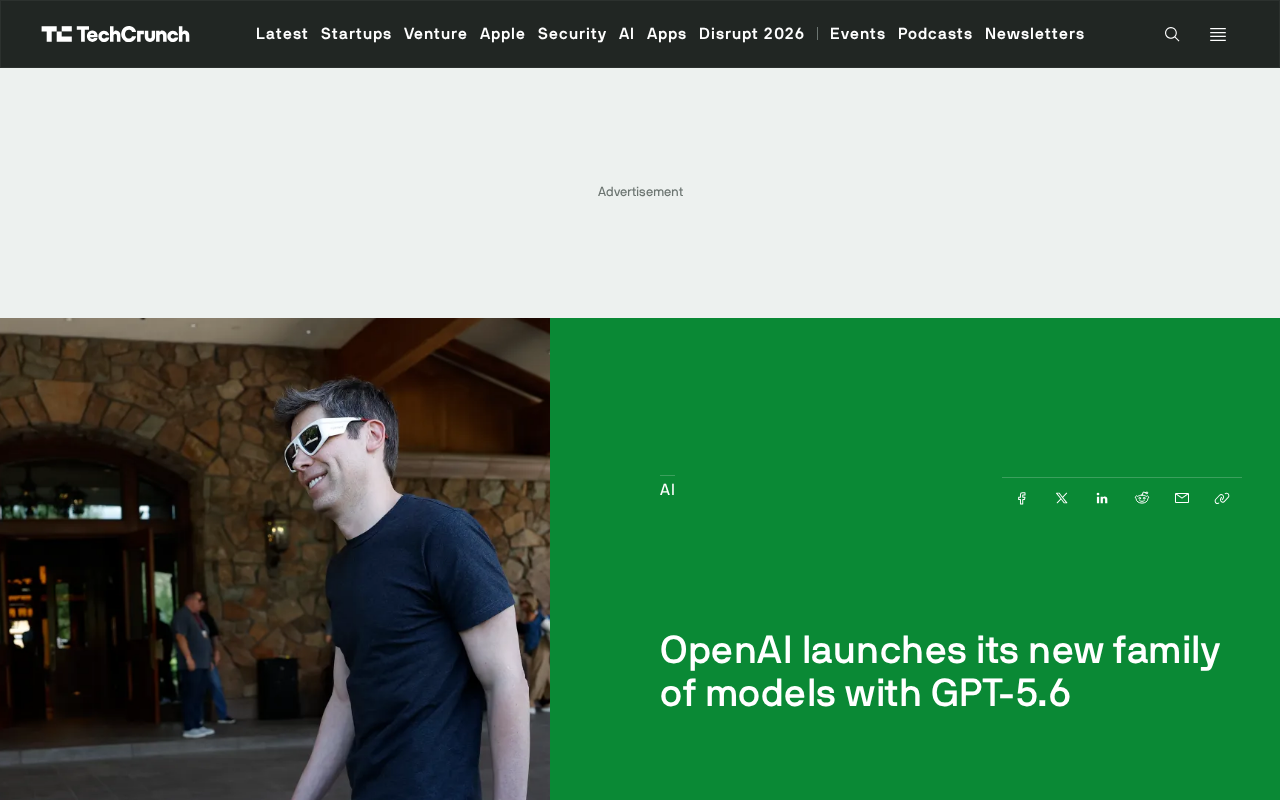
OpenAI Releases GPT-5.6: Cybersecurity Capabilities Take Center Stage
OpenAI launches the GPT-5.6 model family with cybersecurity as its biggest highlight. A deep analysis of GPT-5.6's differentiation, double-edged-sword effect, and enterprise strategy.
Read more →

·6 min
Tencent Hunyuan HY3 Official Version Open-Sourced: The Strongest Under 300B, at 1 Yuan per Million Tokens
Tencent Hunyuan HY3 official version is open-sourced under Apache 2.0, priced as low as 1 yuan per million input tokens, with major gains in agents, reasoning, coding, and long context. On the same day, Meituan open-sourced its trillion-parameter LongCat 2.0.
Read more →

·7 min
GPT-5.6 In-Depth Hands-On Review: How Do Soul, Tara, and Luna Really Perform?
OpenAI releases GPT-5.6 preview with three models: flagship Soul, balanced Tara, and lightweight Luna. Based on real KingBench 3 testing, this article breaks down each model's performance on math, front-end, and agentic tasks, and compares them with Anthropic Fable.
Read more →

·6 min
Why Can't AI Understand British Political Farce? The Cultural Comprehension Dilemma of Algorithms
A political news story about British satirical candidate 'Count Binface' sparked debate in the tech community: why does AI struggle to understand sarcasm, contrast humor, and cultural context? An in-depth analysis of LLM limitations.
Read more →

·6 min
AMD Ryzen AI Halo Dev Kit: A $4,000 Local LLM Powerhouse Taking on Apple and NVIDIA
AMD officially unveils the Ryzen AI Halo local AI dev kit, priced around $4,000 with 128GB unified memory, capable of running 70B LLMs locally. An in-depth look at its specs, pricing, and market competition.
Read more →

·3 min
16GB VRAM Showdown: Ornith 35B vs Qwen 35B — Full Benchmark Comparison
Ornith 35B vs Qwen 3.6 35B on 16GB VRAM: 24+ hours of benchmarks covering inference speed, 256K context, tool calling, HumanEval, and real coding challenges.
Read more →

·6 min
The Transparency Crisis in AI Public Procurement: What the Palantir Controversy Means for Government AI Strategy
The Palantir procurement controversy reveals hidden risks in government AI strategy: opaque contracts, vendor lock-in, and oversight gaps. A deep analysis of AI public governance challenges.
Read more →

·8 min
Fable 5 Opens to All Paid Users: How AI Storytelling Tools Are Reshaping Content Production
Fable 5, an AI storytelling platform, opens to all paid users and sparks debate on Hacker News. We analyze AI creation tools' practicalization trend across product positioning, competition, and access strategy.
Read more →

·6 min
Chat Control Explained: The EU's Chat Monitoring Legislation vs. Encryption Privacy
An in-depth analysis of the EU's Chat Control legislative proposals: from 1.0 voluntary scanning to 2.0 mandatory detection orders, revealing the threat of client-side scanning to end-to-end encryption and the privacy vs. child protection debate.
Read more →

·4 min
Google UK Report: How AI Can Solve the Productivity Puzzle and Build a Nation of AI Trailblazers
Google UK's Economic Impact Report argues AI could be the key to breaking the UK's productivity puzzle, focusing on skills access, SME enablement, and public-private collaboration.
Read more →

·6 min
GPT-5.6 Explained: Three Variants and OpenAI's First Government Review of an AI Model
OpenAI released GPT-5.6 with three variants—Soul, Terra, Luna—and for the first time notified and submitted the model to U.S. government review before full release. A deep dive into the variants, Max/Ultra upgrades, and cybersecurity defenses.
Read more →

·4 min
Ideogram 4 Local Deployment Test: Cinematic Quality on 8GB VRAM
Ideogram 4 open-source image model tested: runs locally on 8GB VRAM + 32GB RAM, Midjourney-level aesthetics, stable text rendering. Learn the 3-part prompt structure and automated ComfyUI workflow with Qwen3 VL.
Read more →

·6 min
Can AI Antivirus Cure the Chronic Pop-Up Problem? An In-Depth Hands-On Review of Wukong Security
Struggling with Windows pop-ups and rogue software? This in-depth review of Wukong Security reveals how AI antivirus breaks past traditional virus-database limits, blocking ads and bundleware in real time, plus a comparison of five repair shops.
Read more →

·7 min
Agentic AI Reshapes Genomic Interpretation: A SOTA Case Study in Interstitial Lung Disease Diagnosis
How Agentic AI achieves SOTA performance in interstitial lung disease (ILD) genomic interpretation through autonomous planning, multi-step reasoning, and tool calling—and its clinical impact.
Read more →

·6 min
TechCrunch Startup Battlefield Australia: Applications Close July 6
TechCrunch Startup Battlefield Australia applications close July 6. Seize this premier startup competition for global investor exposure, capital connections, and brand endorsement.
Read more →
·6 min
TechCrunch Startup Battlefield Australia: Applications Close July 6
TechCrunch Startup Battlefield Australia applications close July 6. Seize this top-tier competition opportunity for global investor exposure, capital connections, and brand endorsement.
Read more →

·6 min
Inside the AI Workday of Thomson Reuters' CEO: How Leaders Drive Enterprise Transformation by Example
Thomson Reuters CEO Steve Hasker shares his personal AI routine: analyzing documents, managing his calendar, and gaining insights every Monday. A look at how leaders drive real enterprise AI transformation through practice and continuous learning.
Read more →