#Ultra multi-agent
180 related articles
 Tutorials
·3 min
BMad-Method: Building an AI Agile Development Team with a Multi-Agent Framework
Deep dive into BMad-Method, an open-source multi-agent framework simulating a full agile team—from business analysis to QA—supporting Claude Code, Cursor, and more.
Read more →
 Tutorials
·3 min
Claude Code Source Code Study Guide: Efficiently Mastering Core AI Agent Development Architecture
Learn AI Agent development from Claude Code's 510K lines of source code, covering Agent Loop, context compression, multi-Agent orchestration, and two efficient study methods.
Read more →
 Tutorials
·3 min
Harness Engineering: A Practical Guide to AI Programming — From Prompts to Mastery
Explore the three stages of AI programming evolution: from Prompt Engineering to Context Engineering to Harness Engineering. Master enterprise-grade AI coding with Cloud Code + VS Code.
Read more →
 Deep Dives
·3 min
Single-Agent vs Multi-Agent: A Three-Step Decision Framework for Choosing the Right Architecture
Based on Anthropic's engineering practices, a detailed three-step decision framework for single-agent vs multi-agent architecture: bottleneck identification, technical feasibility, and business value filtering.
Read more →
 Tutorials
·2 min
Claude Code Sub-Agent: A Practical Guide to Multi-Agent Collaboration for Enhanced Development Efficiency
Deep dive into Claude Code Sub-Agent mechanism with a practical blog writing + Git commit case study, showing how multi-agent collaboration solves instruction loss and context bloat issues.
Read more →
 Tutorials
·2 min
LangGraph vs LangChain: How to Choose Your Agent Development Framework
In-depth comparison of LangGraph vs LangChain: controllability, extensibility, and FastAPI-powered performance. Covers storage, enterprise private deployment, and migration guidance for agent developers.
Read more →
 Product Reviews
·2 min
Kimi K2.6 In-Depth Review: Comprehensive Evaluation of Coding, Multi-Agent, and Frontend Development Capabilities
In-depth review of Kimi K2.6 open-source model across frontend development, multi-agent collaboration, and long-horizon tasks, covering four professional modes, 3D/SVG generation, and pricing analysis.
Read more →
 Product Reviews
·2 min
The Big Four AI Coding CLIs Compared: Claude Code vs. Copilot vs. Gemini vs. Codex — How to Choose
In-depth comparison of Claude Code, Copilot CLI, Gemini CLI, and Codex CLI — covering MCP support, context windows, open-source status, pricing, and a decision tree for choosing the right tool.
Read more →
 Tech Frontiers
·3 min
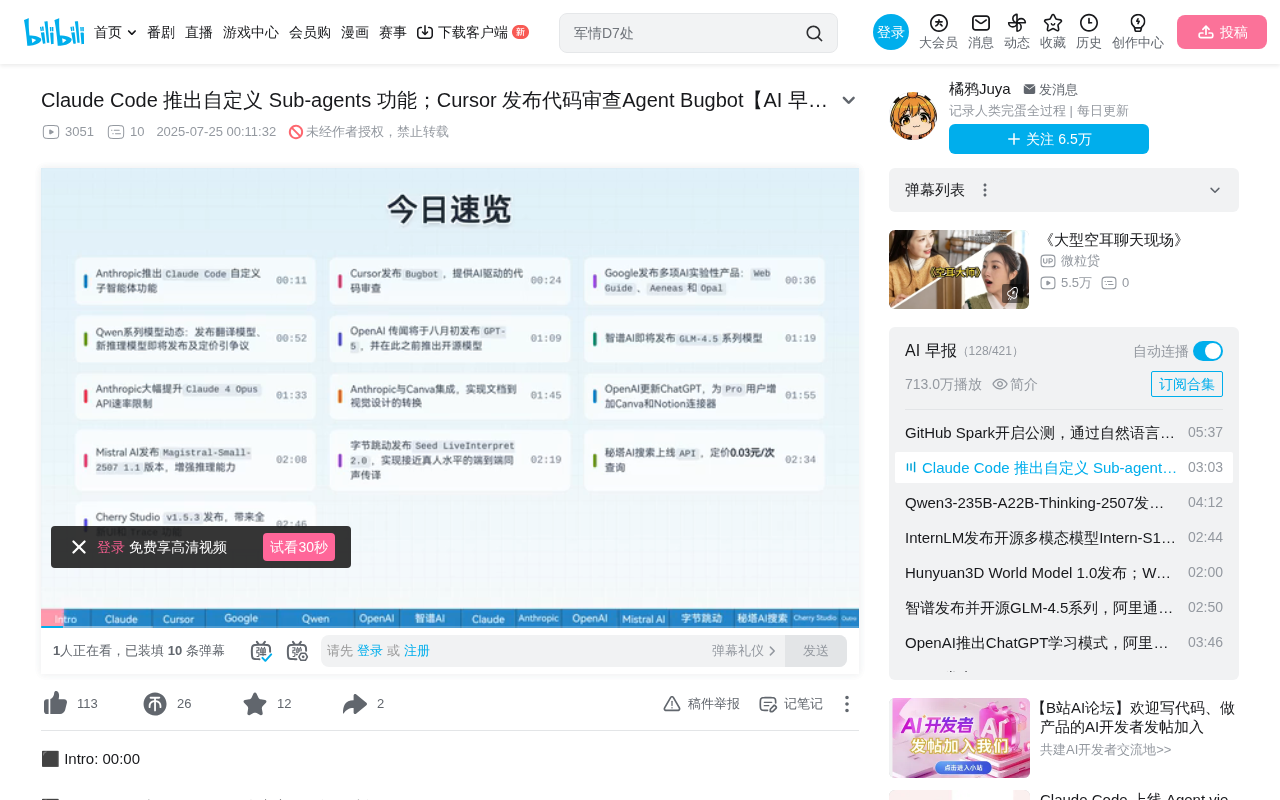
Claude Code Sub-Agents and Cursor BugBot Launch: AI Programming Tools Get Major Upgrades
Anthropic adds custom sub-agents to Claude Code, Cursor launches code review Agent BugBot, Qwen releases 92-language translation model, and Google unveils three experimental AI products.
Read more →
 Product Reviews
·3 min
Kimi K2.6 In-Depth Review: A Complete Breakdown of Its Coding and Agent Capabilities
In-depth review of Kimi K2.6's coding, Agent collaboration, and visual development capabilities. #1 open-source on SWE-Bench Pro, 300 parallel sub-agents, API priced at 1/3 of competitors.
Read more →
 Tutorials
·2 min
Huawei Hermes Agent Manual Explained: Five-Layer Memory Architecture and Multi-Agent Collaboration in Practice
Deep dive into Huawei's 100-page Hermes Agent manual: five-layer memory architecture solving AI amnesia, self-evolution loops for continuous optimization, and multi-agent collaboration engineering.
Read more →
 Tech Frontiers
·1 min
Google Anti-Gravity 2.0 Explained: The Multi-Agent Development Platform Replacing Gemini CLI
Google Anti-Gravity 2.0 officially replaces Gemini CLI with a desktop app, CLI terminal, and SDK. Powered by Gemini 3.5 Flash, it supports multi-Agent parallel collaboration and one-click Managed Agents deployment.
Read more →
 Product Reviews
·2 min
Claude Code vs Codex Hands-On Comparison: What 100 Hours of Deep Testing Reveals
100+ hours of hands-on testing comparing Claude Code and ChatGPT Codex across customization, performance, token usage, and cost with real-world benchmarks.
Read more →
 Tutorials
·1 min
Claude Code Workflow Practical Guide: Multi-Agent Workflow Orchestration Driven by JS Scripts
A detailed guide to Claude Code's new Workflow feature: use JavaScript scripts for precise multi-Agent orchestration. Covers setup, workflow patterns, SubAgents comparison, and reusable scripts.
Read more →
 Tutorials
·2 min
AI Creates a Budget Meal Plan for $1.20/Day: DeepSeek and Doubao Cross-Validate a Nutritionally Balanced Menu
Using DeepSeek and Doubao for cross-validation to create a $1.20/day nutritionally balanced meal plan. Learn the multi-model review methodology with just 6 ingredients.
Read more →
 Research
·2 min
Google Antigravity Uses 93 AI Agents to Build a Complete Operating System from Scratch
Google Antigravity built a complete OS from scratch using 93 AI agents and a single prompt—including kernel, drivers, and all components—for under $1,000.
Read more →
 Tech Frontiers
·2 min
Google Antigravity 2.0 Full Breakdown: AI Agent Ecosystem Platform Launch
Google I/O 2026 launches Antigravity 2.0 with desktop app, CLI, API, and SDK, powered by Gemini 3.5 Flash, supporting multi-Agent collaboration and scheduled tasks.
Read more →
 Industry Insights
·2 min
Google vs Codex vs Claude Code: A Deep Comparison of Three AI Coding CLI Approaches
Deep comparison of Google Gemini CLI, OpenAI Codex, and Claude Code — three AI coding tools taking divergent paths: platform OS, task queue command center, and UNIX toolchain.
Read more →
 Tech Frontiers
·2 min
AI Weekly: GPT-6 Codenamed Spud Revealed, Claude Conway Agent, DeepSeek V4 Shifts to Huawei Chips
This week in AI: OpenAI's next-gen base model Spud (GPT-6) targets Spring 2026, Anthropic builds persistent agent Conway, Cursor 3 rebuilds the IDE for agents, DeepSeek V4 runs natively on Huawei chips, and Qwen 3.6 and Gemma 4 lead open-source.
Read more →
 Tech Frontiers
·1 min
Google I/O 2026 Deep Dive: Gemini 3.5 Flash, Antigravity 2.0, and the New Subscription Tiers Explained
Deep dive into Google I/O 2026's three core updates: Gemini 3.5 Flash with tripled pricing but mixed performance, Antigravity 2.0 expanding into a four-product matrix, and new Google One Ultra 5X/20X tiers filling the subscription gap.
Read more →