#Unix philosophy AI
282 related articles
sqlite-utils 4.1 Released: The --code …
·7 min
sqlite-utils 4.1 Released: The --code Option, Type Overrides, and AI-Assisted Development in Practice
sqlite-utils 4.1 brings practical new features: the --code option for generating rows with Python, field type overrides fixing leading-zero ZIP codes, STRICT table mode switching, drop-index, and more. A deep dive into each design and the AI-assisted dev workflow.
Read more →

·7 min
Getting Started with Claude Code: Five Dimensions to Understand Why It Outperforms Regular AI
Claude Code isn't just a chat AI—it can directly read projects, modify code, and run commands. This article compares Claude Code with regular AI across five dimensions to help you decide if it's worth trying.
Read more →

·7 min
Getting Started with Claude Code: Five Dimensions That Show Why It Outperforms Ordinary AI
Claude Code isn't just a chat AI—it can directly read projects, modify code, and run commands. This article compares Claude Code with ordinary AI across five dimensions: interaction, context, execution, memory, and tool calling.
Read more →

·2 min
Getting Started with LangGraph: Graph Orchestration and State Machines for AI Agents
A comprehensive guide to LangGraph's core concepts: Graph API vs Functional API, three-layer architecture, and workflow visualization methods for building AI Agents.
Read more →

·7 min
Harness Engineering: Why a Powerful Model Isn't Enough — Here's What Really Matters
A data-deletion disaster reveals the biggest AI Agent risk: the problem isn't the model, it's Harness design. Learn context management, process standards, and permission isolation.
Read more →
Hyprland: A Dynamic Tiling Wayland Com…
·2 min
Hyprland: A Dynamic Tiling Wayland Compositor That Doesn't Sacrifice Beauty for Efficiency
Hyprland is a highly customizable dynamic tiling Wayland compositor with smooth animations, rounded windows, and blur effects. 36k+ GitHub stars.
Read more →

·5 min
The Complete Claude Code Guide: Installation, Core Features, and Advanced Workflows
An in-depth guide to Anthropic's Claude Code agentic coding tool, covering installation, pricing plans, model selection, token management, CLAUDE.md global memory, MCP integration, Subagents, and more.
Read more →
Windows Terminal: A Modern Command-Lin…
·2 min
Windows Terminal: A Modern Command-Line Experience Guide for Microsoft's Open-Source Terminal
A deep dive into Windows Terminal, Microsoft's open-source project featuring GPU-accelerated rendering, multi-tab panes, JSON customization, and WSL integration.
Read more →
Microsoft's Two-Track AI Coding Strate…
·3 min
Microsoft's Two-Track AI Coding Strategy: A Deep Dive into Claude Code and GitHub Copilot CLI
Microsoft plans to launch Claude Code and GitHub Copilot CLI, making the terminal the new frontier for AI coding. A deep dive into Microsoft's multi-model strategy and its impact on developer workflows.
Read more →

·4 min
Claude Code Getting Started: Environment Setup, Core Commands, and Git Workflow Automation
A practical guide to Claude Code covering installation, Chinese LLM switching, project analysis, key commands, and conversational Git workflow automation for developers.
Read more →

·3 min
lx: 72 Local CLI Tools That Bring Ollama Models Into Your Terminal
lx is a set of 72 single-purpose CLI tools running on local Ollama models — no API key, fully offline. Supports git commit generation, log debugging, and more. Rust binaries with <15ms cold start; 7–8B models work great.
Read more →
DCG: A Rust-Powered Safety Guard That …
·2 min
DCG: A Rust-Powered Safety Guard That Intercepts Dangerous AI Agent Commands
DCG is an open-source Rust tool that intercepts dangerous shell and git commands for AI agents like Claude Code and Cursor, enabling zero-trust execution environments.
Read more →
Brainless: An AI-Native UI Component L…
·2 min
Brainless: An AI-Native UI Component Library Built on Shadcn for Replicating Claude Code's Interface Style
Brainless is an open-source UI component library built on Shadcn/ui, offering Claude Code, OpenAI Codex, and Grok-style components to help developers quickly build AI-native chat and CLI interfaces.
Read more →
Why Cursor Should Be Split Into Two Se…
·2 min
Why Cursor Should Be Split Into Two Separate Apps: Editor and Agent
Why developers want Cursor split into Editor and Agent apps — an analysis of the core tension, the value of separation, and where AI coding tools are headed.
Read more →
The Grepathy Incident: The Risks of AI…
·2 min
The Grepathy Incident: The Risks of AI Acting Unilaterally and Where to Draw the Line
The Grepathy incident on Hacker News reveals the risks of AI agents acting without approval. A deep dive into autonomous AI decision-making, Human-in-the-Loop design, and where to draw the line.
Read more →

·3 min
ShunCode In-Depth Review: Local Agent Execution + Bridge Mode Turns ChatGPT into Your Programming Brain
ShunCode is a VS Code-based AI code editor that connects ChatGPT to a local Agent execution system via Bridge Mode, enabling full-loop code reading, editing, and testing with Diff approval and MCP support.
Read more →

·6 min
A Deep Dive into OpenAI Codex: How AI Engineers Are Reimagining Software Development with Agents
OpenAI Codex is redefining how AI engineers work: from code completion to autonomous Agents, from single-threaded to parallel Value Maxing. A deep dive into the Codex App architecture, open ecosystem, and Manager of Agents practice.
Read more →
·3 min
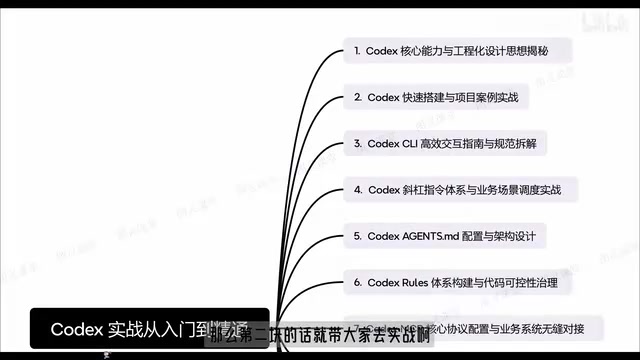
The Complete OpenAI Codex Practical Guide: From Installation to Enterprise Deployment
A complete guide to OpenAI Codex: CLI setup, slash commands, AGENTS.md, MCP integration, multi-agent collaboration, and a RAG customer service project walkthrough.
Read more →

·3 min
Multi-Repo Microservice Development: The Workspace-Level Configuration Gap in AI Agents
Explore why AI agent tools (Codex, Claude Code, Gemini) lack workspace-level config for multi-repo microservice dev, and discover practical solutions like symlinks, custom paths, and cascading config.
Read more →

·2 min
State Machine Voice Agents in Practice: Balancing Latency and Accuracy with Pipecat and Vapi
A deep dive into state machine-based voice AI agent architecture, comparing Pipecat Flows and Vapi Squad, and exploring the latency vs. accuracy trade-offs in agentic handoffs.
Read more →