#VS Code extension
649 related articles

·5 min
Getting Started with Codex: Four Product Forms Explained & How to Choose Between Cursor, Claude Code, and Codex
In-depth analysis of OpenAI Codex's four forms (CLI, web, plugin, app), comparing Codex, Claude Code, and Cursor on price, stability, and use cases to help developers choose the right tool.
Read more →

·2 min
Qoder vs Cursor: A Hands-On Comparison of AI Coding Tools
Which is better, Qoder or Cursor? This article compares both AI coding tools through real development scenarios across context understanding, code quality, and Agent autonomy to help you choose the best fit.
Read more →

·2 min
Canvas Technology Explained: AI Moves from Chat Mode to Interactive Workspaces
A deep dive into how Canvas technology upgrades AI from traditional Q&A into interactive workspaces, covering visualization, workflow exploration, and actionable AI — plus its impact on developer workflows via GitHub Copilot.
Read more →

·2 min
Canvas Technology Explained: How AI Is Moving from Chat Mode to Interactive Workspaces
Explore how Canvas technology transforms AI from traditional Q&A into interactive workspaces, covering visualization, workflow exploration, and actionable collaboration for developers.
Read more →

·3 min
Understand Anything: The AI Skill That Turns Code into Interactive Knowledge Graphs
Understand Anything is a high-star open-source GitHub skill that runs static analysis on any codebase and generates interactive knowledge graphs. It supports Claude Code, Cursor, Copilot and other agents, letting engineers ask questions in natural language with path references.
Read more →

·3 min
Understand Anything: The AI Skill That Turns Code into an Interactive Knowledge Graph
Understand Anything is a high-star open-source GitHub skill that performs static analysis on any codebase to generate an interactive knowledge graph, supporting Claude Code, Cursor, Copilot and more.
Read more →
·3 min
Understand Anything: The AI Skill That Turns Code into an Interactive Knowledge Graph
Understand Anything is a high-star open-source GitHub skill that performs static analysis on any codebase to generate interactive knowledge graphs, supporting Claude Code, Cursor, Copilot and more.
Read more →

·3 min
Cursor + Claude in Action: Building a Python Student Management System from Scratch with AI
A step-by-step guide to building a Python student management system from scratch using the AI editor Cursor with Claude. Covers Agent, Ask, and Manual modes, model selection, and the full workflow.
Read more →

·3 min
Sub-Second Code Search: Building an Indexing Plugin with Cursor + Codex
How to achieve millisecond-level code search in massive repositories with hundreds of thousands of files? A hands-on look at building a code search plugin with Cursor + Codex, powered by Lucene inverted indexing and BM25 ranking.
Read more →

·3 min
Sub-Second Code Search: Building an Indexing Plugin with Cursor + Codex
How to achieve millisecond-level code search in a repo with hundreds of thousands of files? Building a search plugin with Cursor + Codex, powered by Lucene inverted indexing and BM25 ranking.
Read more →

·3 min
Coze Agent Development in Practice: From Beginner to Multi-Agent Collaboration
Coze is ByteDance's homegrown agent-building platform. This article covers getting started with Coze, its comparison with Dify, skill system, workflow orchestration, and multi-agent collaboration.
Read more →

·3 min
Rust and Mojo Are Quietly Replacing Python's Low-Level Engine
Python tops the language rankings again, but AI teams are quietly swapping its internals for Rust and Mojo. A look at Python's speed and GIL pains, the two-language problem, and the rise of Rust tooling and Mojo on GPUs.
Read more →

·4 min
Claude Code from Scratch: A Complete Guide from Installation to Enterprise-Grade Development
A complete guide to Claude Code from beginner to enterprise practice: covering CLI installation, connecting domestic LLMs via CC Switch, basic commands, Git workflow integration, automated bug fixing, and engineering capabilities like MCP and SubAgents.
Read more →

·3 min
Pi Agent Configuration Guide: Building Your Own AI Coding Assistant
A step-by-step Pi Agent configuration tutorial covering installation, LLM connection, extension ecosystem, MCP setup, and Token-saving tips. Learn to build a truly controllable AI coding assistant.
Read more →
·2 min
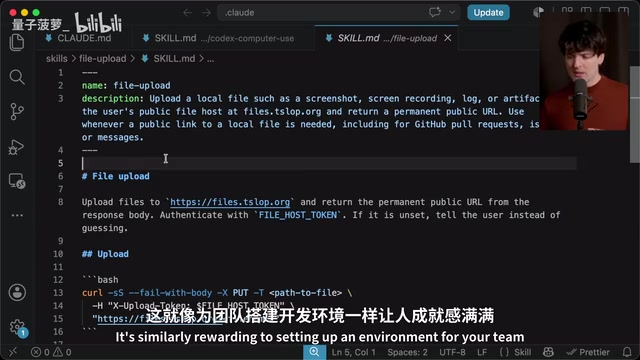
The Age of AI Coding: Why Tinkering Engineers Are Worth More Than Ever
Claude Code creator Boris and developer Theo reveal: in the AI Agent era, tinkering habits like automation, building small tools, and writing CLAUDE.md are becoming the core edge for reaching Staff engineer level.
Read more →

·2 min
OpenCode: The Complete Guide to the Open-Source Coding Agent Chosen by 8 Million Developers
OpenCode has become the world's most popular open-source coding agent—8M monthly active developers, 75+ model providers, and custom sub-agent routing. This deep dive covers its core features, config tips, and business model.
Read more →

·1 min
The Complete Guide to Claude Code: How Does an AI Coding Assistant Differ from a Regular Chat AI?
An in-depth look at Claude Code's core features and advantages: auto-reading project context, direct code execution, remembering coding preferences, and connecting external services via MCP. Compared with Cursor and ChatGPT to help developers choose.
Read more →

·3 min
The AI Coding Landscape: Model Tiers, Tool Camps, and a Deep Dive into MCP/Skills/CLI
A systematic map of today's AI coding landscape: the evolution from ChatGPT to Claude Code, LLM capability tiers, tool camps like Cursor/Copilot, and the three key weapons of the Agent era — MCP, Skills, and CLI.
Read more →

·1 min
AI Agents Rebuild the Entire Testing Workflow: A Paradigm Revolution from LLMs to Agents
An in-depth look at how AI Agents are disrupting traditional software testing: the core differences between LLMs and Agents, four capability dimensions (planning/memory/tools/skills), and how test engineers can achieve 10x efficiency gains in test case generation.
Read more →

·1 min
AI Agents Reshape the Testing Workflow: A Paradigm Revolution from LLMs to Agents
An in-depth look at how AI Agents disrupt traditional software testing: the core differences between LLMs and Agents, four capability dimensions (planning/memory/tools/skills), and how testers achieve 10x efficiency gains.
Read more →