#WebAssembly LLM
53 related articles
Goku: A Browser-Based LLM Inference En…
·2 min
Goku: A Browser-Based LLM Inference Engine and Model Manager Built on WebAssembly
Goku is a browser-based LLM inference engine built on WebAssembly and wllama, enabling local AI inference, model management, and offline use — no cloud API needed.
Read more →

·2 min
General Agents Are Essentially Coding Agents: The Paradigm Shift from Tool Calling to Code Execution
Explore why general AI agents are essentially coding agents. From Turing completeness to composability and verifiability, discover the paradigm shift from Function Calling to Code as Action.
Read more →

·2 min
Tally: A Browser-Based Spreadsheet Data Provenance and Verification Tool
Tally is a browser-based spreadsheet verification tool that automatically checks numbers against original sources like PDFs. This article analyzes its core features, technical architecture, and value for financial auditing and data validation.
Read more →

·4 min
G.I.A.ac: An AI Architect That Generates Working Apps from a Single Sentence
G.I.A.ac (General Intelligence Architect) is an AI architect tool that generates runnable apps from a single sentence. Deep dive into its positioning, competitive landscape, target users, and core challenges.
Read more →
·4 min
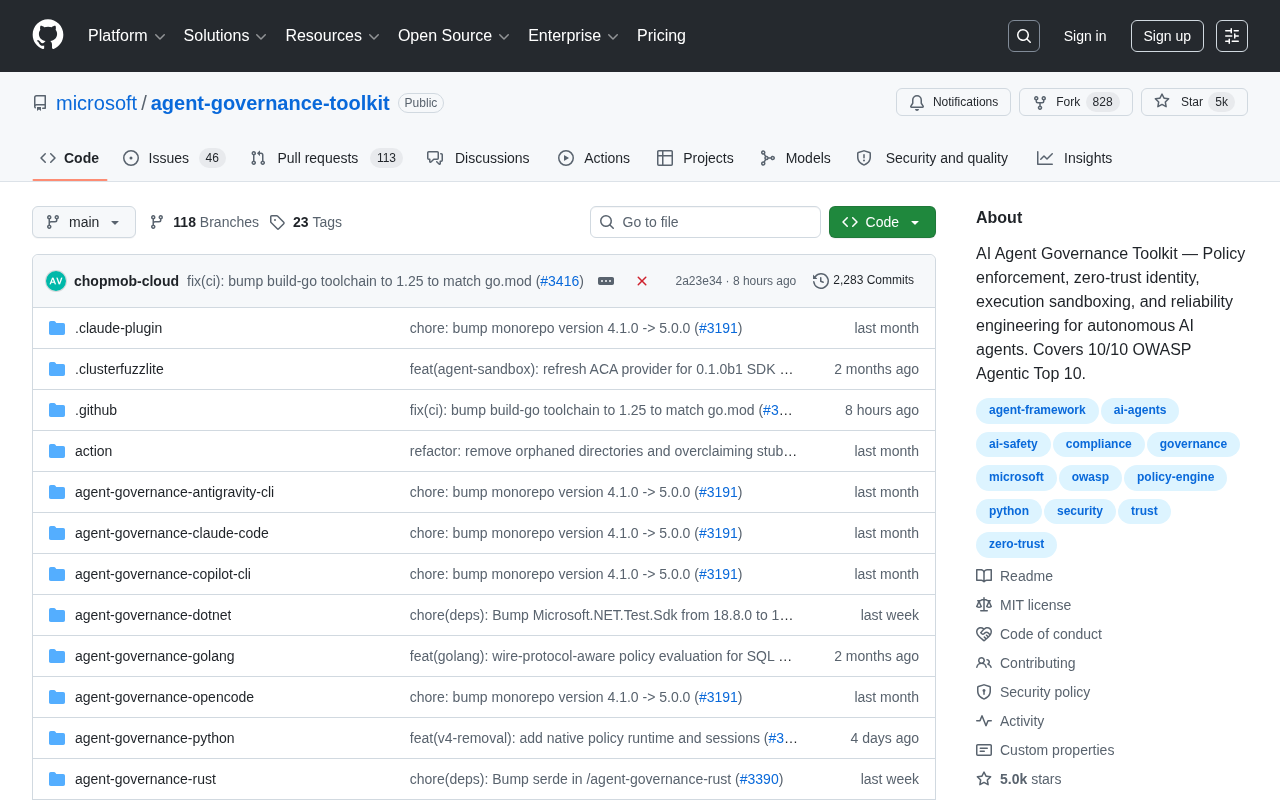
Microsoft Open-Sources AI Agent Governance Toolkit: Comprehensive Coverage of OWASP Top 10 Risks
Microsoft open-sources agent-governance-toolkit covering all OWASP Agentic Top 10 risks through policy enforcement, zero-trust identity, execution sandboxing, and reliability engineering for production AI Agent deployment.
Read more →

·2 min
DeepAgents in Practice: A Deep Dive into Sandbox Backends and Agent Skills
A deep dive into DeepAgents' sandbox backend and Agent Skills: why Agents need sandbox isolation to run code, how Skills enable modular capability reuse, and how the two combine to build reliable AI Agent systems.
Read more →

·2 min
DeepAgents in Practice: A Deep Dive into Sandbox Backends and Agent Skills
A deep dive into DeepAgents' sandbox backend and Agent Skills: why Agents need sandboxes to isolate code execution, how Skills enable modular capability reuse, and how the two work together to build reliable AI Agent systems.
Read more →

·7 min
Harness Engineering: Why a Powerful Model Isn't Enough — Here's What Really Matters
A data-deletion disaster reveals the biggest AI Agent risk: the problem isn't the model, it's Harness design. Learn context management, process standards, and permission isolation.
Read more →
Microsoft Open-Sources Ontology Playgr…
·2 min
Microsoft Open-Sources Ontology Playground: A Free Tool for Learning Ontology Visually
Microsoft's open-source Ontology Playground is a zero-backend static web app for visually designing ontologies, with RDF/XML export and Microsoft Fabric IQ integration.
Read more →

·3 min
AI Toolchain-Driven Development: A Guide to Rebuilding Programmer Core Competencies
AI is driving software development's third tool revolution. Explore how MasterGo AI, Cursor, and similar tools span design to code, and learn the future competitiveness formula: full-stack skills + AI proficiency + real-world experience.
Read more →

·4 min
Self-Healing Agent Loops: Using AI to Automatically Discover and Fix Programming Language Bugs
How Boundary built a self-healing AI Agent loop that automatically writes BAML code, discovers bugs, and generates fix PRs — a practical software factory with deduplication, human-in-the-loop leverage points, and extensible multi-loop design.
Read more →

·4 min
AI Agents Automating JS Reverse Engineering: A Deep Dive into the New Paradigm for Web Scraping
AI agents are revolutionizing JS reverse engineering. This deep dive covers built-in tool chains, automation modes, prompt engineering for e-commerce, and full pipeline automation from parameter extraction to database storage.
Read more →
Cdbx.ai Review: Build and Deploy Apps …
·2 min
Cdbx.ai Review: Build and Deploy Apps in the Browser with Natural Language
Cdbx.ai is an AI-powered browser IDE that generates full-stack code from natural language and deploys in one click. Read our in-depth review and comparison with v0, Replit, and Bolt.new.
Read more →
AI Agents Accelerate Lightweight USD R…
·3 min
AI Agents Accelerate Lightweight USD Runtime Development: A New Paradigm for Physical AI Infrastructure
How AI agents accelerate lightweight OpenUSD runtime development for physical AI — covering spec understanding, code generation, and iterative optimization for robotics and digital twins.
Read more →
·3 min
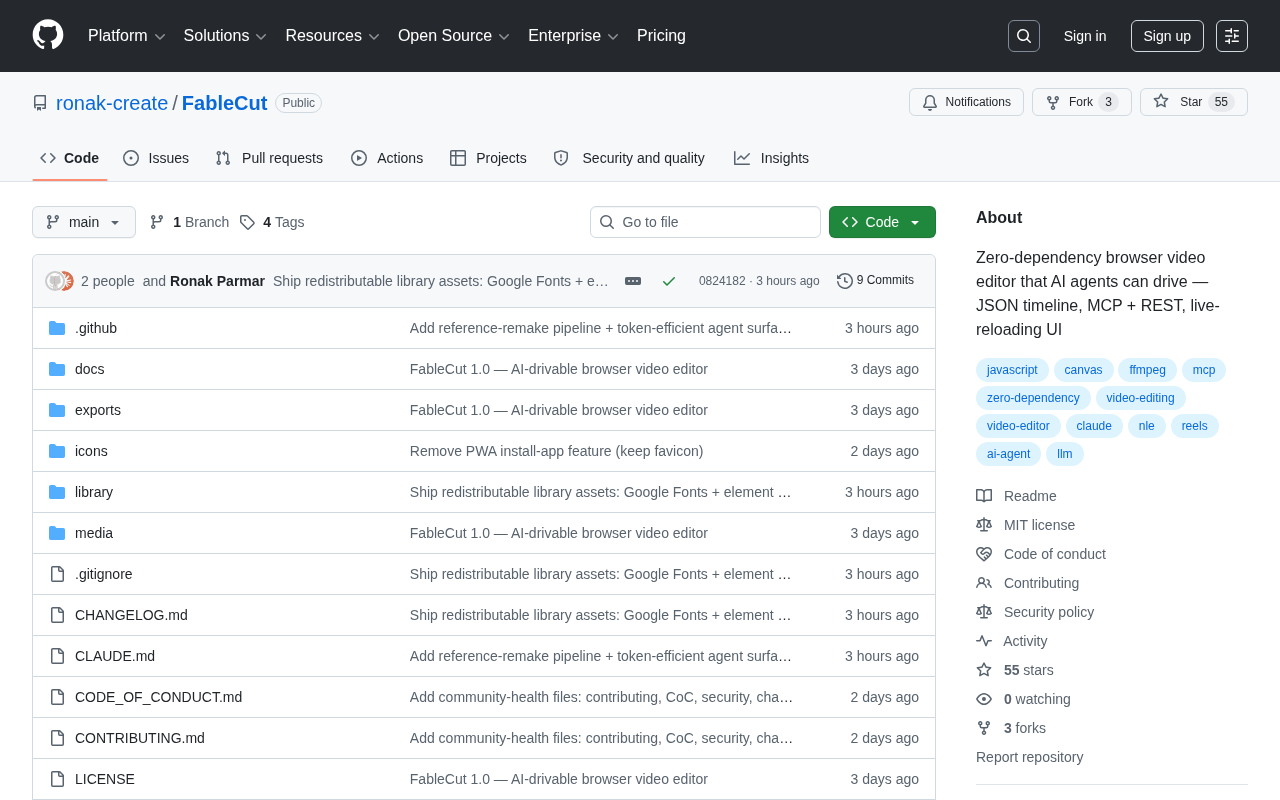
FableCut: A Zero-Dependency Browser Video Editor Built for AI Agents
FableCut is an open-source browser video editor built on a zero-dependency architecture and programmable AI-agent-driven design. A deep dive for AI automation developers.
Read more →

·2 min
WisprGemma: Fully Local In-Browser Voice Input — Your Audio Never Leaves Your Device
WisprGemma is an open-source, browser-local voice input tool built on WebGPU and Transformers.js. One Gemma model handles speech recognition and text polish — your voice never leaves your device.
Read more →

·6 min
Grok 4.5 Hands-On: A Faster, Cheaper Coding Dark Horse — Can It Replace Opus and GPT?
In-depth Grok 4.5 hands-on review: priced at a fraction of Opus 4.8, twice the token efficiency of peers, and coding ability in the top tier. A real-project breakdown of its strengths, highlights, and shortcomings.
Read more →

·6 min
GPT-5.6 Now Widely Available: The Era of Three-Tier Models and Multi-Agent Orchestration Arrives
OpenAI releases GPT-5.6 (SOUL/TERRA/LUNA), with Ultra mode running four agents in parallel; Meta launches Muse Spark 1.1 with million-token context; ChatGPT desktop unifies Chat, Work, and Codex.
Read more →

·4 min
Ternlight: A 7MB Browser-Side Embedding Model for Server-Free Semantic Search
Ternlight is a 7MB WebAssembly-based browser-side text embedding model requiring no server or GPU. Explore its tech, use cases, and tradeoffs for private, offline semantic search.
Read more →

·7 min
The C Readability Crisis: Engineering Reflections Behind Clever Tricks
Why do C programmers keep creating readability disasters? An in-depth look at macro abuse, fancy pointer tricks, and over-nesting—and how coding standards, static analysis, and code review protect maintainability.
Read more →