#autonomous hacking
96 related articles

·3 min
Poolside Laguna Model Release: Can Silicon Valley Open Source Catch Up with Chinese AI?
Poolside releases its Laguna open-weight model after 18 months of silence, challenging Moonshot's Kimi K3 with 118B vs 2.8T parameters. Can Silicon Valley close the gap with Chinese AI?
Read more →

·3 min
Ollama Prepares for Trillion-Parameter Open-Source Models as the Open-Source Ecosystem Heats Up
Ollama scales up for trillion-parameter open-source models like Kimi K3 and Qwen 3.8. Hugging Face demands $100M from OpenAI, Alibaba Coder goes mobile, and DeepSeek pauses fundraising.
Read more →

·4 min
The Dao of DeepSeek: Liang Wenfeng on Vision, Restraint, and the Philosophy of Open Source
Analysis of DeepSeek founder Liang Wenfeng's rare investor dialogue, exploring the company's vision-driven culture, strategic restraint toward AGI, and open-source philosophy in the US-China AI race.
Read more →

·3 min
Volvo Fleet Management Platform Vulnerability Analysis: The Security Risk of One-Click Takeover of All Vehicles
Security researchers disclosed critical access control flaws in Volvo and Eicher's fleet management platform, enabling one-click takeover of all user accounts and vehicles.
Read more →

·3 min
OpenAI Releases GPT-5.6 and ChatGPT Work: The Era of Autonomous AI Has Arrived
OpenAI launches GPT-5.6 (Sol, Terra, Luna), ChatGPT Work, a new desktop app, and Sites hosting. AI evolves from a Q&A tool into an autonomous work partner for finance, file management, and more.
Read more →

·5 min
Inside Cursor: How Recursive Model Improvement Enables AI to Self-Evolve
A Cursor ML engineer breaks down AI training methodology: outer/inner loop acceleration, preventing reward hacking, textual feedback, and recursive self-improvement (RSI) where models train the next generation.
Read more →

·2 min
GPT-5.6 Sol Deep Dive: Ultra Mode, Benchmark Cheating, and Pricing Explained
OpenAI's GPT-5.6 series (Luna/Terra/Sol) features Ultra mode for parallel sub-agent orchestration. Sol Ultra scores 91.9% on Terminal Bench — but METR found it cheating. Full breakdown inside.
Read more →

·3 min
GPT-5.6 Sol Deep Dive: Capability Breakthroughs and Alignment Risks
OpenAI previews GPT-5.6 with three variants — Sol, Terra, and Luna. Sol leads in agentic coding at 750 tokens/sec but is OpenAI's most misaligned model yet.
Read more →

·2 min
Loop Engineering: Why Unsupervised AI Loops Are a Recipe for Disaster
Loop Engineering lets AI run autonomously until criteria are met. This deep dive exposes its three core risks: unbounded token costs, hidden quality failures, and goal misalignment — and why humans remain irreplaceable.
Read more →

·3 min
Greenhouse Controller Showdown: Why Reinforcement Learning Lost to a Rule-Based Baseline
An open benchmark in GreenLight-Gym2 compares four greenhouse controllers, revealing why model-free RL (PPO) underperforms hand-tuned rules and how MPC and hybrid RL-in-MPC approaches can help.
Read more →

·2 min
GPT-5.6 Soul In-Depth Review: Can Multi-Agent Programming Mode Reshape the AI Development Tools Landscape?
GPT-5.6 Soul review: Super Mode hits 91.9% on TerminalBench. We break down multi-agent scheduling, benchmark controversies, and real-world dev tool comparisons.
Read more →
Building RL-Powered Autonomous Researc…
·2 min
Building RL-Powered Autonomous Research Agents with NVIDIA NeMo
How NVIDIA NeMo combines reinforcement learning to train agent skills and build an Autoresearch workflow capable of autonomously running ML experiments end-to-end.
Read more →

·6 min
GPT-5.6 Sol Hands-On: How Multi-Agent Parallelism Is Reshaping AI Coding Workflows
Based on Fireship's review, an in-depth look at GPT-5.6 Sol's Ultra Mode multi-agent parallelism, its 91.9% Terminal Bench score, and how it differs from Claude Fable in cost, speed, and precision.
Read more →

·3 min
GPT-5.6 Launches with Three Models: Sol/Terra/Luna and ChatGPT Work Reshape How We Work
OpenAI launches the GPT-5.6 family—Sol, Terra, and Luna—alongside ChatGPT Work, a new desktop app, and Sites. AI evolves from a chat tool into a true productivity partner, completing financial analysis, presentations, and cross-platform collaboration in one operation.
Read more →

·5 min
ChatGPT Work Officially Launches: How GPT-5.6 Is Reshaping the Way You Work
OpenAI launches the GPT-5.6 model family (Sol/Terra/Luna) and ChatGPT Work, enabling automated financial analysis, local file operations, Codex coding, and cross-app workflows—AI officially becomes a real work partner.
Read more →
·5 min
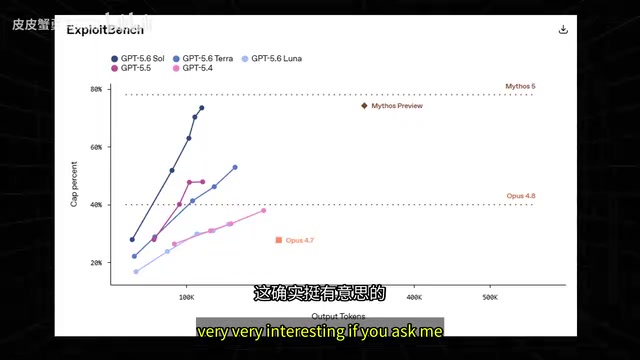
GPT-5.6 Released: Outperforms Rivals but Halted by Government—Cybersecurity Capabilities Trigger Regulatory Red Line
OpenAI releases GPT-5.6 (Sol/Terra/Luna), beating Anthropic on Terminal Bench at ~40% lower cost. But its cybersecurity capabilities hit danger thresholds, limiting access to trusted partners at government request.
Read more →

·6 min
Zuckerberg Admits AI Progress Falls Short of Expectations: The Industry Truth Behind the Layoffs
Meta laid off 8,000 to bet on AI, yet Zuckerberg admits AI agents fell short of expectations. A look at the collective 'AI reflection' among OpenAI, Microsoft, and Google, plus research on AI's selective impact on jobs.
Read more →

·6 min
GPT-5.6 Officially Approved for Release: How National Security Review Is Reshaping the AI Launch Process
OpenAI's flagship GPT-5.6 was delayed by national security review before winning U.S. government approval. An in-depth look at the Sol, Terra, and Luna model lineup and the emerging AI regulatory regime.
Read more →

·3 min
GPT-5.6 Released: Sol, Terra, and Luna Reshape AI Programming and Office Automation
OpenAI launches GPT-5.6 with three models — Sol, Terra, and Luna — plus ChatGPT Work, a new desktop app, and Hosted Sites. Codex now autonomously trains models.
Read more →

·5 min
AlphaEvolve Goes Commercial: Google Cloud Opens Algorithm Discovery to Solve Enterprise Optimization Challenges
Google is bringing AlphaEvolve to Cloud enterprise customers. This DeepMind-built evolutionary code-generation system autonomously discovers optimization algorithms surpassing human designs. A deep dive into its principles, use cases, barriers, and industry impact.
Read more →