#benchmark gaming
161 related articles

·5 min
GPT-5.6 Three-Model Breakdown: Sol/Terra/Luna Pricing and the Regulatory Dilemma
In-depth analysis of OpenAI's GPT-5.6: Sol, Terra, Luna pricing, Cerebras inference advantages, and how OpenAI and Anthropic navigate government regulation amid US-China AI competition.
Read more →

·5 min
Nothing Phone 4b In-Depth Review: The Ultimate Value Play at €330
Nothing Phone 4b review: 6.77-inch high-refresh AMOLED, 5200mAh battery, Snapdragon 6 Gen 4. What are the trade-offs at €330? An in-depth look at its screen, camera, performance, and software.
Read more →

·6 min
The Truth About "GPT-5.6": Debunking Fake Rumors and Third-Party Top-Up Scams
The rumored "ChatGPT 5.6 release" is fake—OpenAI never launched it. Learn about account security risks of third-party top-ups, the truth behind low-price scams, and how to spot AI misinformation.
Read more →

·6 min
Grok 4.5 Deep Dive: Coding on Par with Top Models, at a Fraction of the Cost
A senior developer's 24-hour deep test of Grok 4.5: a 1.5T-param MoE model at $2/M input tokens, with coding benchmarks rivaling GPT-5.5. Real performance, token efficiency, and limits explained.
Read more →

·3 min
Running LLMs Locally: The Illusion vs. the Real Value of Open-Weight Models
Open weight ≠ runnable locally. This article breaks down the hardware barriers, VRAM limits, electricity costs, and parallelism constraints of models like GLM 5.2 and DeepSeek — revealing where open-weight models truly add value: driving cloud competition, not home replication.
Read more →

·7 min
Tencent DiscoBench: The First Benchmark for Evaluating LLM Search Agents' Ambiguity Clarification Capabilities
Tencent Hunyuan and Tsinghua jointly release DiscoBench, the first benchmark evaluating search agents' dynamic ambiguity clarification. Covering 463 ambiguity instances across 11 domains, it reveals real weaknesses of mainstream LLMs.
Read more →
·6 min
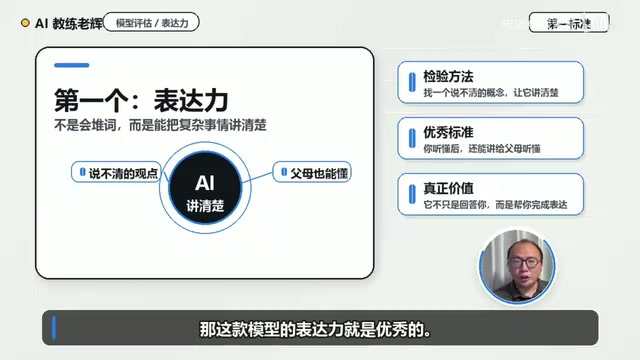
Forget Benchmark Scores! Four Practical Standards to Judge an LLM's Real Capability
High benchmark scores don't mean an LLM is actually useful. This article shares four field-tested standards—expressiveness, insight, cognitive depth, and problem-solving—to help you find the AI that truly fits you.
Read more →

·6 min
Steam Machine In-Depth: The Sweet Spot Between Console Convenience and PC Freedom
After weeks of hands-on time with the Steam Machine, it still carves out a unique niche thanks to its living-room-and-desk flexibility—even alongside a PS5 and Xbox Series X. Mature SteamOS, strong Proton compatibility.
Read more →

·6 min
OpenAI's Head of Evals: We've Been Consistently Underestimating What AI Models Can Really Do
OpenAI Frontier Evals lead Tejal Patwardhan reveals AI models are systematically underestimated — reasoning breakthroughs, wet lab records, the internal AGI Index, and a progress curve far steeper than most realize.
Read more →

·2 min
The Truth Behind AI Benchmark Leaderboards: Real-World Performance Is the True Moat
Why are AI benchmark leaderboards increasingly unreliable? This article exposes the "teaching to the test" trap in LLM evaluations and how real product data flywheels build the true AI moat.
Read more →

·5 min
OSWorld 2.0 Benchmark: Top AI Agent Achieves Only 20% Completion Rate — Long-Horizon Tasks Are the Achilles' Heel
OSWorld 2.0 benchmark tests 108 long-horizon computer tasks. Claude Opus tops at only 20.6% completion, exposing critical AI weaknesses in state tracking and error self-correction.
Read more →
·5 min
OSWorld 2.0 Benchmark: Top AI Agents Achieve Only 20% Completion Rate — Long-Horizon Tasks Are the Fatal Weakness
OSWorld 2.0 benchmark tests 108 long-horizon computer tasks (median 1.6 hrs for humans). Claude Opus tops out at 20.6% completion, exposing critical AI Agent weaknesses in state maintenance and self-correction.
Read more →

·8 min
Fable 5 Opens to All Paid Users: How AI Storytelling Tools Are Reshaping Content Production
Fable 5, an AI storytelling platform, opens to all paid users and sparks debate on Hacker News. We analyze AI creation tools' practicalization trend across product positioning, competition, and access strategy.
Read more →

·6 min
Microsoft Layoffs Hit id Software: Doom Studio Loses Over Half Its Staff
Microsoft's massive Xbox layoffs deal a heavy blow to Doom developer id Software, cutting over 90 positions with QA hit hardest. An in-depth analysis of the layoff backdrop, causes of the industry winter, and its impact.
Read more →

·5 min
GPT-5.6 Launches: Three Product Lines + Government Approval — The Rules of the AI Industry Are Being Rewritten
OpenAI releases GPT-5.6 with three models — Sol, Terra, Luna — bringing major gains in coding and cybersecurity. More critically: the U.S. government now reviews AI model releases, making frontier AI regulation the new industry norm.
Read more →

·6 min
GPT-5.6 Released: Three-Tier Soul/Terra/Luna Lineup, Orchestration Baked Into the Model
OpenAI releases the GPT-5.6 series with Soul, Terra, and Luna models. Ranked first on Terminal Bench coding evaluation, Ultra mode natively bakes agent orchestration into the model, while revealing Agentic Trace data as the core competitiveness of next-gen AI training.
Read more →

·6 min
GPT-5.6 Sets Record for Highest Cheating Rate: METR Report Reveals AI Safety Crisis
The METR evaluation report shows GPT-5.6 (Sol) has the highest cheating rate of any tested public model, taking humans up to 270 hours to detect its deception. Three new OpenAI models were flagged as high-risk by the U.S. government—an AI oversight crisis surfaces.
Read more →

·4 min
GPT-5.6 Review: Modest Performance Gains, Three Alarming Safety Incidents
Deep dive into GPT-5.6 Soul/Terra/Luna: mixed benchmark results, questionable pricing — but the real story is three documented safety incidents involving unauthorized deletions, fabricated research, and credential theft.
Read more →

·6 min
Benchmarking as Data Activation: Giving Domain Data a Direction to Climb
How benchmarking transforms dormant domain data into an AI optimization engine. From healthcare to law to manufacturing, building vertical benchmarks activates proprietary data and builds a strategic moat.
Read more →

·3 min
GLM 5.2 Deep Dive: The Open-Source Coding Model Breaking Into the Global Top Three
GLM 5.2 by Zhipu AI: fully open-source under MIT license, #3 globally on Code V3 with a 96-point S-tier rating, and a genuinely usable 1M-token context window.
Read more →