#context window pollution
87 related articles

·2 min
What to Do When AI Won't Listen? Understanding Why Models Go Off-Track and Practical Fixes
AI responses keep missing the mark? This article explains why AI models go off-track from a technical perspective and provides practical correction techniques including prompt optimization, system constraints, and conversation resets.
Read more →

·4 min
GPT-5.6 Value Maxing Practical Guide: From Token Stacking to Output Optimization Methodology
Deep dive into OpenAI GPT-5.6 Value Maxing strategies covering Sol/Terra/Luna model selection, KV cache optimization, Prompt compression, and programmatic tool calling to help developers achieve more output with fewer Tokens.
Read more →

·4 min
Opus 5 Real-World Testing: Cheaper Yet Stronger — Why It's Now My Default Coding Model
In-depth testing of Claude Opus 5's coding abilities vs Fable 5 and 5.6 Sol. Why Opus 5 outperforms pricier models at half the token cost, plus selection guide and distillation explained.
Read more →

·3 min
Agent Skills Explained: Solving the MCP Context Bloat Problem
Deep dive into Anthropic's Agent Skills mechanism, explaining how Progressive Disclosure solves MCP context bloat and tool calling accuracy issues in AI agents.
Read more →

·4 min
Getting Started with PiDeck: A Complete Guide to the Local AI Coding Workbench
PiDeck is a free, open-source local AI coding workbench that provides graphical management for CLI tools like Claude Code and Cursor. This guide covers installation, model authentication, project management, and advanced conversation tips.
Read more →

·2 min
Deep Dive into Agent Skills Architecture: How to Extend AI Agent Capabilities
Agent Skills is a lightweight open-source format that extends AI agent capabilities with plug-and-play skill packages. This article dives deep into the Skills architecture, progressive disclosure, and how it differs from Multi-Agent design.
Read more →

·2 min
Deep Dive into Agent Skills Architecture: How to Extend AI Agent Capabilities
Agent Skills is a lightweight open-source format that extends AI agent capabilities via plug-and-play skill packages. Learn its architecture, progressive disclosure, and how it differs from Multi-Agent.
Read more →

·4 min
OpenAI Merges Codex and ChatGPT: Deep Dive into Three New Models + Agent Workflows
OpenAI merges Codex and ChatGPT into a unified platform while launching three new models: SOUL, TERRA, and LUNA. Deep dive into Computer Use, loop workflows, multi-threading, and the Agent Native strategy.
Read more →

·8 min
A Complete Guide to Agent Testing: Five Core Dimensions and Automation in Practice
In-depth analysis of the five core dimensions of AI Agent testing: command safety, tool-calling accuracy, task planning, output consistency, and error self-repair. Master automated testing and the transition path for test engineers.
Read more →

·8 min
The Complete Guide to Agent Testing: Five Core Dimensions and Automation in Practice
An in-depth analysis of the five core dimensions of AI Agent testing: command safety, tool-calling accuracy, task planning, output consistency, and error self-repair. Master automated testing methods and the transition path for test engineers.
Read more →

·2 min
Open Source Project "done": Satirizing AI Tool Metric Obsession With a Single Word
A Claude Code plugin called "done" went viral on Reddit by replying to every request with just "Done." — a sharp satirical take on AI tool hype and metric obsession.
Read more →
Cognee: The Open-Source Knowledge Grap…
·2 min
Cognee: The Open-Source Knowledge Graph Engine for Persistent AI Agent Memory
Cognee is an open-source AI memory platform using knowledge graphs to give AI agents persistent cross-session memory. Self-hosted, graph + vector hybrid retrieval. 28K+ GitHub stars.
Read more →

·4 min
LangChain + LangGraph Full-Stack in Practice: A Production-Ready Guide to Six Core Modules and Agent Deployment
A systematic breakdown of LangChain's six core modules (Models/Prompts/Chains/Memory/RAG/Agent) and LangGraph's state graph, persistence, and HITL — with production deployment tips.
Read more →
·6 min
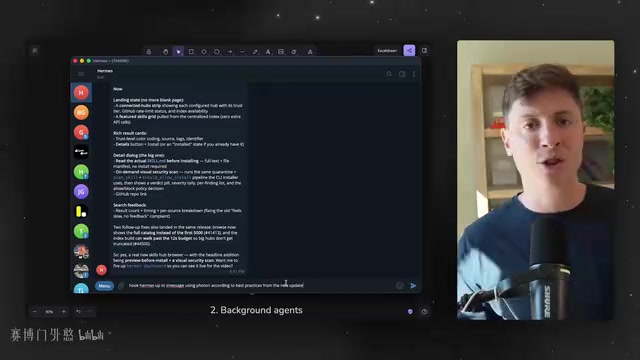
Hands-On With Hermes Agent's Eight Major Updates: A Complete Guide to AI Automation and Self-Evolution
The Hermes Agent gets a major upgrade with eight new features: native iMessage, parallel background sub-agents, Unreal Engine MCP support, a self-evolving Skill Hub, and more. A hands-on breakdown of the core changes and their real impact on personal AI automation workflows.
Read more →

·5 min
Local Code Indexing: Cutting AI Coding Token Costs by 94%
AI coding bills exploding? 90% of the cost hides on the input side. Learn how local code indexing + dual-path search cuts each query from 83,000 to 4,900 tokens—saving 94%.
Read more →

·5 min
Hands-On Test of GPT-5.6's Three Models Sol/Terra/Luna: How Good Are Their Coding Skills?
OpenAI released three GPT-5.6 models—Sol, Terra, Luna—and merged ChatGPT with Codex to launch Work mode. This hands-on review tests coding, game dev, and PPT creation, revealing one-click deployment wins alongside aesthetic and efficiency flaws.
Read more →

·4 min
How Background AI Agents Can Automatically Maintain All Your Repositories on a Schedule
OpenInspect's Multi-Repo Automations lets AI coding agents maintain up to 10 repositories on a schedule simultaneously — isolated sessions, independent PRs, and fault-tolerant execution for security sweeps, dependency upgrades, and framework migrations.
Read more →

·7 min
Complete Guide to Installing and Deploying Claude Code: Configure Your AI Coding Tool from Scratch
A detailed walkthrough of the full Claude Code installation process: environment setup, npm installation, proxy configuration for networks in China, API integration, and CC Switch provider management—helping beginners quickly get started with this AI coding tool.
Read more →

·5 min
A Deep Dive into Cloud Coding Agents: How Users in China Can Choose Wisely
What exactly is the Cloud Coding Agent Silicon Valley is hyping? This article breaks down the core concept across three axes—where it runs, who watches, where tasks start—and gives users in China practical advice on local alternatives.
Read more →

·7 min
Turning Any AI Agent into an Orchestration Hub: A Deep Dive into Multi-Agent Collaboration Architecture
An in-depth analysis of the "any Agent as an orchestrator" design philosophy, exploring the technical implementation of multi-Agent collaboration, context management, and workflow automation.
Read more →