#contributor recognition
72 related articles
GitHub Daily · July 20: AI Agent Infra…
·3 min
GitHub Daily · July 20: AI Agent Infrastructure Explodes Across the Board
AI Agent infrastructure explodes across GitHub Trending: OmniRoute unifies 268+ providers, cognee adds long-term memory, and self-hosted openship tops growth with +1719 stars.
Read more →
Kimi CLI Open-Sourced: Moonshot AI's C…
·2 min
Kimi CLI Open-Sourced: Moonshot AI's Command-Line AI Coding Agent
Moonshot AI open-sources Kimi CLI, a command-line AI coding agent for code generation, debugging & refactoring. Hits 9K+ GitHub Stars, competing with Claude Code and Gemini CLI.
Read more →
Apache Ossie: The Open Metadata Exchan…
·2 min
Apache Ossie: The Open Metadata Exchange Standard Breaking Down Semantic Silos
Apache Ossie is a vendor-neutral industry specification standardizing semantic metadata exchange across analytics, BI, and AI platforms — solving inconsistent metric definitions in enterprise data stacks.
Read more →

·3 min
Waku Agent Deep Dive: The Four Core Pillars of a Local-First AI Assistant
A deep dive into Waku Agent's four pillars: Loop Engineering, three-tier Memory system, Eval assessment, and the Harness scaffold. Full walkthrough of a local-first AI assistant from task execution to memory consolidation.
Read more →
·2 min
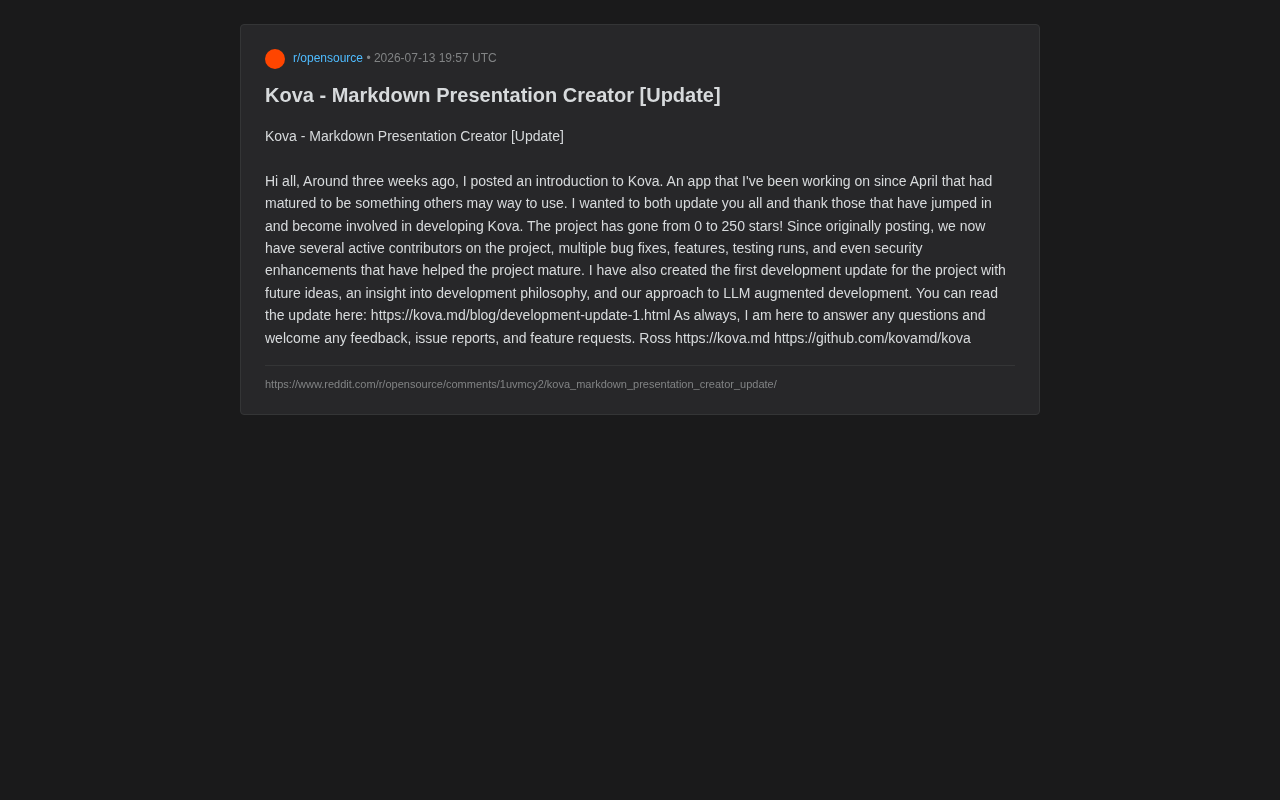
Kova: The Open-Source Tool for Building Presentations with Markdown
Kova is an open-source Markdown presentation tool for developers. With Git support and content-style separation, it hit 250 GitHub Stars in just three weeks.
Read more →
Recruiting Testers for a Master's Thes…
·2 min
Recruiting Testers for a Master's Thesis: How Academic Research Leverages Community Users for Validation
A Reddit post recruiting thesis testers reflects the growing trend of academic research relying on real user validation. Explore why it matters and how to participate.
Read more →
The Quiet Drop: GitHub's Culture of Si…
·2 min
The Quiet Drop: GitHub's Culture of Silent Releases and Why Developers Love It
A tweet reveals GitHub's 'quiet drop' culture — releasing code silently and waiting for the community to notice. Explore why developers go low-key and whether it works.
Read more →

·4 min
Home Assistant: The Local-First Open Source Smart Home Platform That Puts Privacy and Freedom First
Home Assistant is the most mature open source smart home hub, prioritizing local control and privacy, supporting thousands of devices across ecosystems with 88,000+ GitHub stars.
Read more →

·6 min
An Efficient Learning Guide for Data Science: Study Partnerships and Hands-On ML in Practice
Struggling to learn data science alone? This article explores the value of study partnerships and pairs them with the classic Hands-On ML textbook to offer a phased learning plan from math foundations to deep learning.
Read more →

·4 min
Legal Risks of Unfilled Copyright Notices in Open Source Licenses and a Compliance Guide
Copyright notices in many open source LICENSE files are never filled in—how big is the legal risk? A deep dive into the validity of blank copyright lines in Apache-2.0 and other licenses, why compliance tools stay silent, and practical advice.
Read more →

·6 min
Home Self-Hosting Server Setup Guide: Building a Private Cloud Ecosystem from Scratch
One 32GB server, 8 hours to build a complete home self-hosting ecosystem. This article details the selection logic behind core services like Jellyfin, Forgejo, Immich, and Ollama, plus infrastructure setup essentials for Nginx Proxy Manager and Podman Compose.
Read more →

·4 min
Four Major LangChain Updates: OpenWiki, Voice Agents, and Sub-Agent Orchestration Explained
LangChain releases four major updates: OpenWiki for auto-generating codebase docs, voice agent tutorials, Harbor evaluation integration, and deepagents programmable sub-agents.
Read more →

·2 min
Open Source as Critical Infrastructure: How Should Governments Spend Their Money Effectively?
Governments frequently label open source software as critical infrastructure, but the real test is whether budgets flow to maintainer time, infrastructure, and incident response—not just surface-level audit reports.
Read more →

·6 min
GPT-5.6 Now Widely Available: The Era of Three-Tier Models and Multi-Agent Orchestration Arrives
OpenAI releases GPT-5.6 (SOUL/TERRA/LUNA), with Ultra mode running four agents in parallel; Meta launches Muse Spark 1.1 with million-token context; ChatGPT desktop unifies Chat, Work, and Codex.
Read more →

·5 min
Ollama Raises $65M Series B: 85% of Fortune 500 Have Already Deployed Local LLMs
Local LLM tool Ollama closes a $65M Series B, bringing total funding to $88M. With 9M developers and 85% of Fortune 500 having deployed internally, this deep dive explores why enterprises embrace local LLMs: compliance, Agent cost savings, and open-source ecosystem.
Read more →

·4 min
SparkyFitness: The Rise of an Open-Source, Self-Hosted Health Tracking App
SparkyFitness is an open-source, self-hosted alternative to MyFitnessPal and Flo. In one year: 4,500 users, 73 contributors, covering nutrition, sleep, women's health, GLP-1 tracking, and more.
Read more →

·5 min
Runs on Low VRAM! A Hands-On Look at the ID LoRA Face-to-Video Workflow
A face-to-video workflow built on GGUF quantized models and ID LoRA runs on just an RTX 3060 with 6GB VRAM. This article breaks down its core principles, four-step process, and how it tackles facial consistency in AI video.
Read more →

·4 min
The Age of AI Agents: How Version Control Must Adapt to a Paradigm Shift
AI agents are breaking Git's core assumptions. Explore the three key challenges—concurrent conflicts, history readability, and code review—and where version control is headed next.
Read more →
·7 min
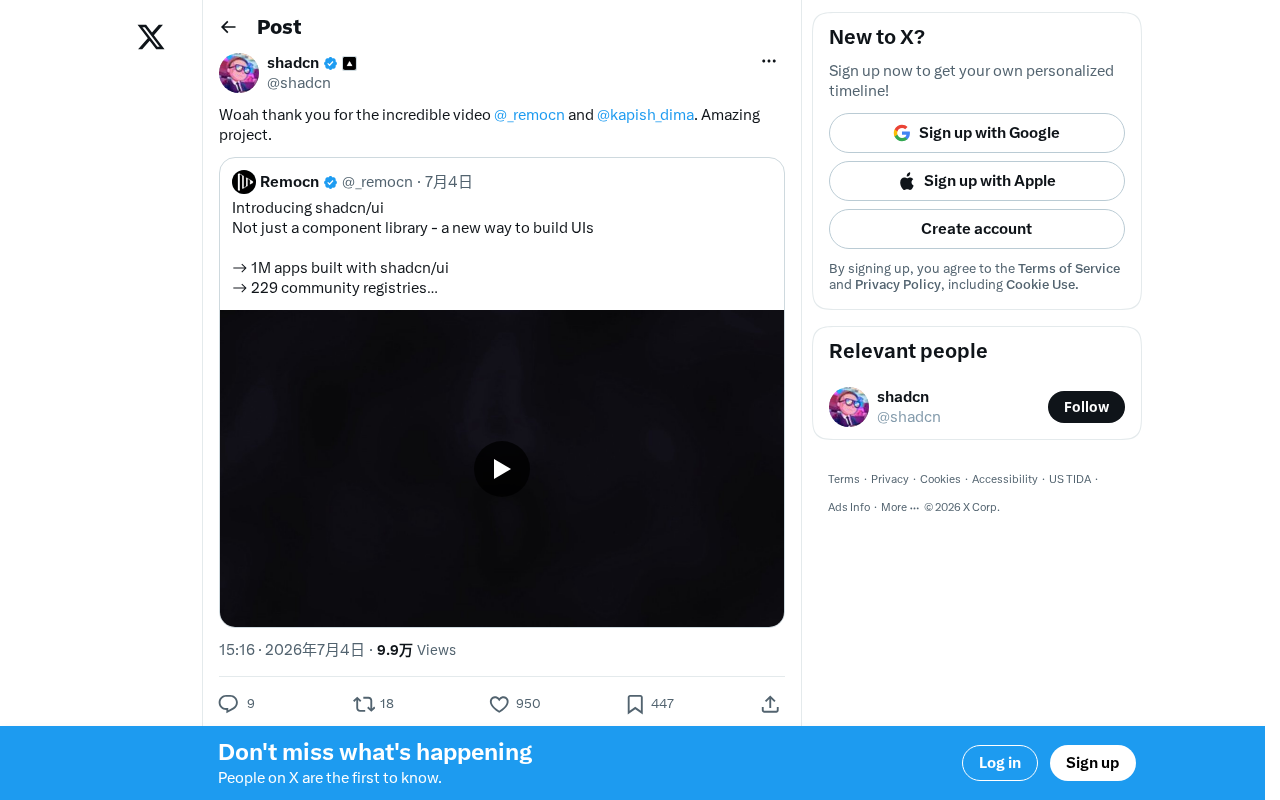
Open Source Community Collaboration Culture: How a Single Tweet Amplifies Technical Impact
Starting from a brief thank-you tweet, this article explores content co-creation in AI and open source communities—how video demos become a new dissemination medium and how creators and developers build trust networks together.
Read more →

·7 min
Gemini CLI: The AI Development Powerhouse in Your Terminal, Ending Tool Fragmentation
Gemini CLI is Google's open-source AI terminal tool that deeply integrates Gemini model capabilities into the command line—supporting code generation, file operations, Shell execution, and MCP protocol extensions, with 1,000 free daily requests.
Read more →