#cross-agent memory
25 related articles
 Expert Opinions
·2 min
Cross-Agent State Sharing: A More Practical Context Solution Than Memory Management
Analysis of context fragmentation in multi-Agent collaboration, comparing memory vs. state management approaches, and how tools like Opal Bridge enable seamless switching between Claude Code, Codex, and other Agents.
Read more →

·2 min
MemoryCustodian: A Repo-Native Persistent Memory Store for Coding AIs
MemoryCustodian is an open-source tool that stores AI memory as Markdown files in your code repo, solving cross-session amnesia for Claude Code, Codex, and other coding assistants.
Read more →

·2 min
Peekinduck: Dual AI Voice Agents with Shared Memory Bridging the Entire B2B Customer Journey
Peekinduck uses two AI voice agents—Demo Duck and Guide Goose—sharing customer memory to unify pre-sales demos, onboarding, and post-sales support for B2B SaaS teams.
Read more →

·4 min
Zero-Code AI Voice Agents with Claude Code: 5 Real-World Business Scenarios Unpacked
Build a production AI voice agent with Claude Code + Telnyx single-stack — no code needed, live phone number in 5 minutes. Covers 5 business scenarios including appointment booking, lead qualification, and support triage.
Read more →

·2 min
Forge: Adding Reliability Guardrails to Local Model Tool Calling
Forge is an open-source Python middleware for local models (Ollama, llama.cpp, vLLM) that boosts tool-calling reliability via three-layer guardrails: validation, rescue parsing, and retry.
Read more →

·5 min
The Definitive Guide to Claude Code: Core Methodology and Best Practices for Agentic Programming
A deep dive into Claude Code, the definitive course from DeepLearning.AI and Anthropic: from agentic principles and context optimization to three hands-on cases—RAG chatbot, Figma-to-frontend, and data analysis. Master AI-assisted coding methodology.
Read more →

·6 min
A Deep Dive into AI Agent Harnesses: The Core Engineering Behind Agent Frameworks
What is an AI Agent's harness? This article systematically dissects the core components of agent frameworks: context management, tool use, control loops, and caching strategies—revealing why the same model performs so differently across harnesses.
Read more →

·7 min
Harness Engineering: Core Methodology and Practical Guide for Enterprise-Level AI Programming
Can AI really replace programmers? This article explains Harness Engineering principles and its three evolutionary stages, revealing real pain points of enterprise AI programming.
Read more →

·3 min
GitHub Daily · July 6: The Agent Skill Ecosystem Explodes — AI Evolves from 'Capable' to 'Expert'
GitHub Trending July 6: Agent skill ecosystem explodes with taste-skill, marketingskills, dotnet/skills; multi-Agent orchestration matures; privacy-first projects thrive.
Read more →

·3 min
GitHub Daily · July 5: The Dual Narrative of Skill Ecosystem Explosion and Local-First AI
GitHub Trending July 5: Claude Code Skill ecosystem explodes, AI pen-testing tool Strix gains +2137 Stars, and local-first privacy apps surge.
Read more →

·7 min
AI Agent Development: A Four-Stage Competency Model from 15K to 40K RMB Salary Growth Path
A detailed four-stage competency model for AI Agent development: from Python/RAG basics (15K) to workflow orchestration (20K), inference optimization (30K), and Agent cluster governance (40K RMB).
Read more →

·3 min
Core Analysis of Agent Skill: Progressive Disclosure & Middleware Practical Guide
Deep dive into Agent Skill's core design—Progressive Disclosure—with detailed middleware and dynamic tool implementation, Multi-Agent comparison, and practical tips.
Read more →

·3 min
Headroom: The Open-Source Compression Tool That Cuts AI Agent Token Costs by 10x
Headroom is an open-source token compression tool by a Netflix engineer that achieves 60%-95% token savings for AI coding tools through intelligent category-based compression.
Read more →
·3 min
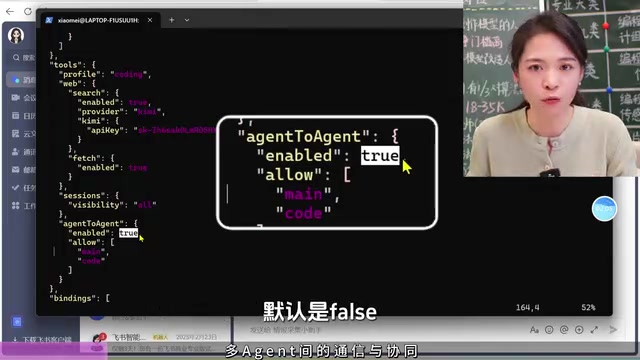
Multi-Agent Communication & Collaboration in Feishu: A Complete Guide to Configuration and Group Chat Orchestration
Learn how to configure Open Cloud for multi-Agent communication, including session_visibility, agent_to_agent toggle, and whitelist setup, plus Feishu group chat orchestration for AI team collaboration.
Read more →
·3 min
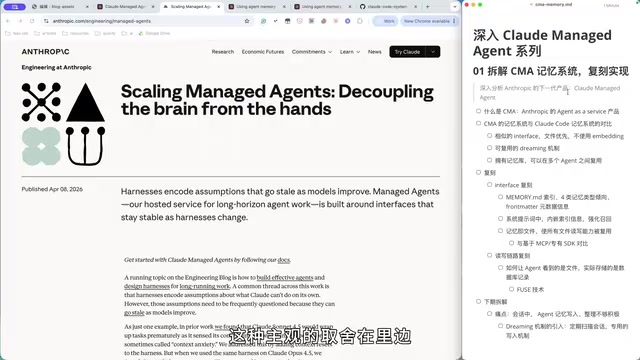
Deep Dive into Claude Cloud Agent Memory System Architecture: CMA Design Philosophy and Technical Choices
Deep analysis of Anthropic's Cloud Managed Agents memory architecture, covering file-first strategy, memory store reuse, Dreaming async consolidation, and key differences from Claude Code's memory system.
Read more →

·2 min
Hermes Agent Seven-Layer Configuration Guide: From VPS Deployment to MCP Server — A Complete Tutorial
A detailed guide to Hermes Agent's seven-layer configuration: VPS deployment, Discord integration, scheduled backups, Kanban management, holographic memory, and MCP server setup.
Read more →

·3 min
Save 80% Tokens with Claude Code: Headroom vs RTK vs LinCTX Deep Comparison
Deep comparison of Headroom, RTK, and LinCTX—three open-source context compression tools. Real tests show 80% token savings in Claude Code sessions.
Read more →
 Product Reviews
·3 min
Zenflow Hands-On Review: Spec-Driven AI Coding vs. Pure Prompt-Based Development
In-depth review of Zenflow's spec-driven AI coding vs Google AI Studio's prompt-based approach. Covers multi-agent execution, automated validation, version rollback, and the paradigm shift in AI programming.
Read more →
 Tutorials
·2 min
Claude Code Multi-Agent Collaboration in Practice: Subagent Division of Labor and a Lite TARS Concept
Explore Claude Code multi-Agent collaboration with Planner+Packager Subagents for semi-automated project iteration, plus a lite TARS orchestration concept revealing Agent inter-calling limits.
Read more →
 Tutorials
·2 min
Career Progression in AI/LLM Application Development: Four Stages from Beginner to 40K Monthly Salary
A systematic four-stage career path for AI/LLM application development: from RAG and Agent fundamentals to architecture design, helping developers transition to AI roles targeting 40K+ monthly salary.
Read more →