#debugging methodology
411 related articles

·8 min
Quick Start with SpringBoot for Beginners: From a Java Project to a Real Enterprise Application
Discover why beginners study SpringBoot for six months without getting started. Learn the 'focus on the big' methodology, and evolve a simple Java project step by step into a runnable enterprise application with IDEA.
Read more →

·8 min
LangChain Crash Course: A Complete Roadmap from Zero to Agent Development
A systematic roadmap from LangChain and LangGraph to multi-agent development, covering RAG, Tool Calling, MCP, and more, helping developers break into AI app development.
Read more →
The Rise of Claude Skills Ecosystem: A…
·2 min
The Rise of Claude Skills Ecosystem: A Modular New Paradigm for Custom AI Workflows
Explore the Claude Skills ecosystem: from prompt engineering to modular skills, covering skill libraries, MCP integrations, and dev frameworks. The awesome-claude-skills list has 68K+ Stars.
Read more →

·6 min
Vue3 from Scratch: A Hands-On Journey to Building an AI Health Monitoring System
A Vue3 beginner tutorial centered on "learn just enough, apply immediately." A three-stage path covers reactivity, Composition API, Element Plus, and data visualization, culminating in an enterprise-grade AI health monitoring system with blood sugar management, RAG consultation, and doctor-patient collaboration.
Read more →

·3 min
AI-Assisted GeeTest Four-Image CAPTCHA Reverse Engineering: A Complete Efficiency Guide
A complete walkthrough of AI-assisted GeeTest four-image CAPTCHA reverse engineering: from capturing the w parameter to AI analyzing obfuscated code and generating runnable scripts in minutes.
Read more →

·7 min
The Complete Guide to LLM Application Engineer Interviews: Six High-Frequency Topics in the Agent Domain
A focused guide to the core interview topics for LLM application engineers, covering agent architecture, Multi-Agent, Langfuse evaluation & tracing, security, and RAG optimization.
Read more →

·7 min
The Complete Guide to LLM Application Engineer Interviews: Six High-Frequency Agent Topics
A focused guide to core LLM application engineer interview topics, covering agent architecture, Multi-Agent, Langfuse evaluation, security, and RAG optimization.
Read more →

·4 min
Was Claude Nerfed After Coming Back Online? The Truth Behind Safety Classifier Routing
Did Claude drop ~10 benchmark points after redeployment? We dig into the safety classifier routing mechanism, Arena voting data, and developer feedback to reveal the truth.
Read more →

·6 min
The Boundaries of AI Coding: When Should You Show Yourself a Red Card?
As AI coding assistants like Codex become standard, the risks of overreliance grow too. Learn when developers should "show a red card," reclaim control, and safeguard code quality and responsibility.
Read more →

·7 min
Harness Engineering: Why a Powerful Model Isn't Enough — Here's What Really Matters
A data-deletion disaster reveals the biggest AI Agent risk: the problem isn't the model, it's Harness design. Learn context management, process standards, and permission isolation.
Read more →

·6 min
The Complete Codex Guide: From Beginner to Pro with the All-in-One AI Assistant
OpenAI Codex is more than a coding tool—it's an AI agent that writes code, makes slides, and operates browsers. This guide covers its four versions, permission modes, plugins, automation, and six best practices.
Read more →

·3 min
AI Agent Development Landscape: From Architecture Design to Production Deployment
A systematic overview of the AI Agent tech stack: RAG retrieval, Agent planning, MCP protocol, AI Gateway, and observability — helping developers build production-grade AI systems.
Read more →

·3 min
Kimi K3 Hands-On: How a 2.8-Trillion-Parameter Open-Source Model Beat Fable5
A US engineer's live test of Kimi K3: 2.8T parameters, 1M token context, 87% audience vote over Fable5 in game generation. Full report covering benchmarks, speed, and code debugging.
Read more →

·2 min
Vibe Coding: A Beginner's Guide to Building Software with AI — No Coding Required
Vibe Coding is a new AI-driven approach to software development — no coding required. Just express your intent and let AI build it. Here's what it is and why it matters.
Read more →
·3 min
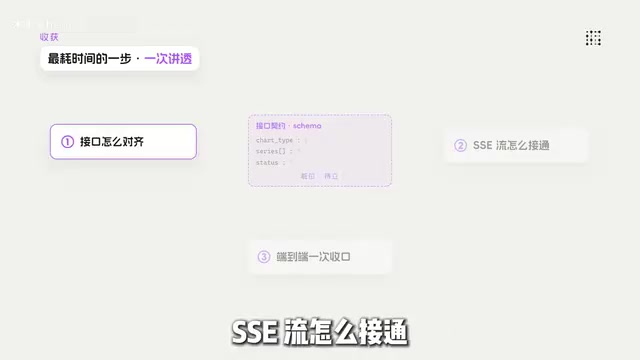
Building an Intelligent Data Analysis Agent: A Complete Guide to Interface Alignment and SSE Streaming Response Integration
A practical guide to interface alignment, SSE streaming integration, and end-to-end testing for enterprise AI Agent projects — eliminate wasted debugging and ship faster.
Read more →

·3 min
14 Days of AI Programming: From Zero to Product with Vibe Coding
A zero-to-product AI coding bootcamp by Guo Ke: 14 live sessions, 6 real projects, covering Cursor, Trae, and Codex. Full walkthrough from setup to deployment.
Read more →

·2 min
Deterministic Attention Transformer: H100 Benchmark Achieves Just 0.63 Joules Per Token
Researchers propose the Deterministic Attention-Transformer, measuring just 0.63 J/token on NVIDIA H100 GPUs. Explore the tech behind it and its green AI implications.
Read more →

·2 min
AI Skills in Practice: How Test Engineers Can Automate API Testing and Generate Test Cases at Scale
Learn how AI Skills are transforming software testing. This guide covers Skill architecture, learning paths, and real-world applications in API automation and WebApp testing.
Read more →

·3 min
AI-Accelerated Reverse Engineering: Cracking SM2/SM4 Encrypted Freelance Jobs in 30 Minutes
Real freelance case study: how to use DeepSeek and LLMs to reverse-engineer SM2/SM4 encrypted API parameters in 30 minutes, covering anti-debug bypass, call stack backtrace, and AI-assisted deobfuscation.
Read more →

·3 min
Zero-Code Xianxia Game Development: A Head-to-Head Comparison of Four Major AI Models
A Bilibili creator built a 2D xianxia game using zero code via Vibe Coding, testing GPT, Claude, Grok, and Doubao with the same 3,000-line prompt. Full workflow breakdown and rankings inside.
Read more →