#decentralized apps
41 related articles

·7 min
Why Does WhatsApp Drain So Much Battery? A Deep Dive into the Technical Causes and a Power-Saving Guide
An in-depth analysis of the core technical reasons behind WhatsApp's battery drain—covering persistent connection heartbeats, background tasks, media processing, E2E encryption, and iOS/Android differences—plus 4 practical power-saving tips.
Read more →

·4 min
UK Real-Time Railway Map: Technical Insights from an Open Data Visualization Project
A deep dive into the UK real-time railway map project: open data integration, position interpolation, WebSocket push, and WebGL rendering for live transit visualization.
Read more →

·2 min
AI Agent Keyboard: Redefining the Next Interaction Layer on Mobile
Active's Agent keyboard adds an ActiveBar that lets users search and call tools without switching apps. A deep dive into how AI Agent keyboards are redefining mobile interaction.
Read more →

·2 min
Apple Opens Its First European Developer Center in Berlin, Expanding Global Footprint to Five Cities
Apple announces its first European Apple Developer Center in Berlin, offering multilingual expert consultations, labs, and workshops. Learn about the strategic significance and Apple's five-city global layout.
Read more →
 Tutorials
·3 min
Java + UniApp in Practice: Full-Stack Development of a Stray Pet Rescue Mini Program
A detailed guide on building a stray pet rescue WeChat Mini Program with Spring Boot and UniApp, covering C2C adoption flow, WebSocket chat, and review mechanisms.
Read more →
 Industry Insights
·2 min
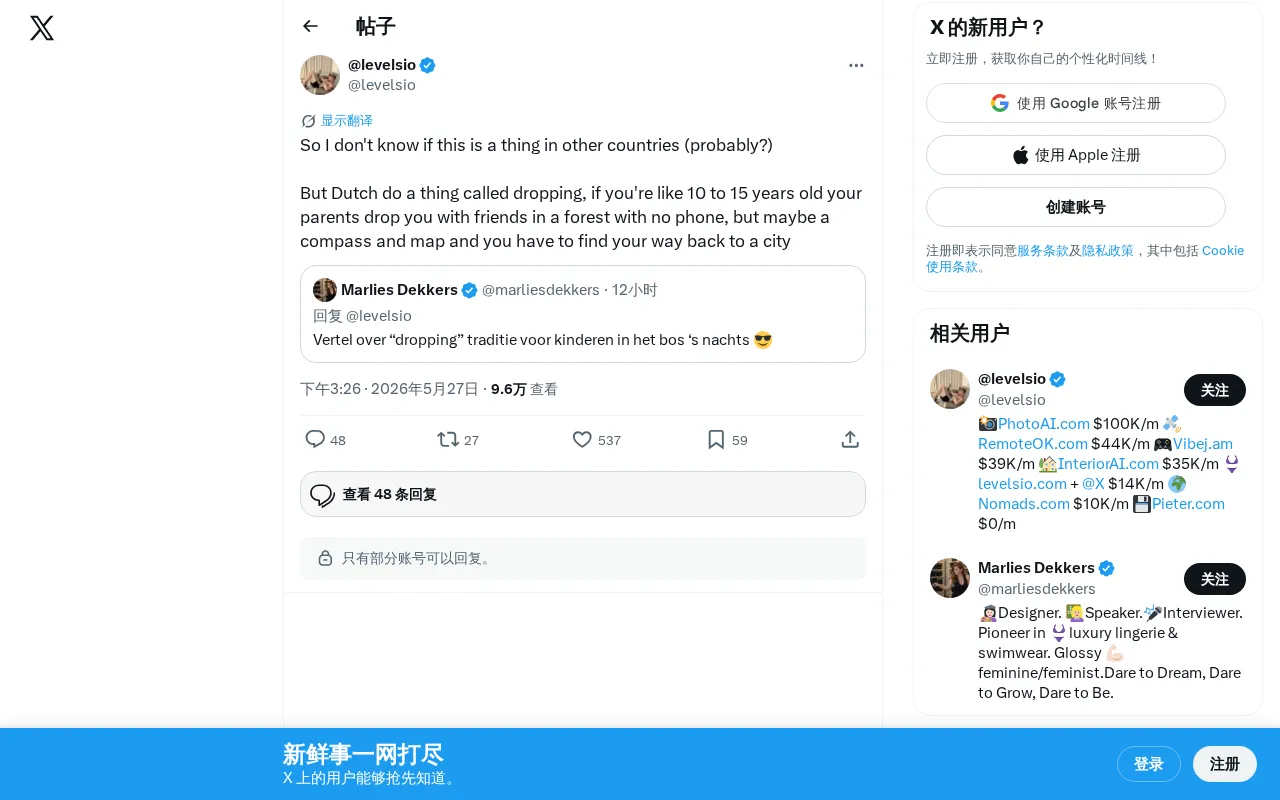
The Dutch Dropping Tradition: Leaving Kids in the Forest to Teach a Lesson for the Digital Age
The Dutch tradition of Dropping has teens navigate forests without phones or GPS. This seemingly hardcore approach reveals deep lessons about offline survival skills, spatial cognition, and teamwork in the AI age.
Read more →
 Product Reviews
·2 min
MultiChat Review: Can One Inbox Really Manage All Your Chat Apps?
MultiChat aggregates WeChat, Telegram, WhatsApp, Slack and more into one unified inbox. We analyze its core features, competitive landscape, and privacy concerns to help you decide if it's worth trying.
Read more →
 Product Reviews
·2 min
Tencent's Toast Platform Review: Generate a Standalone App from a Single Sentence — No Code Required
A deep dive into Tencent's Toast AI app generation platform — describe your idea in plain language and generate an installable Android APK in 3 minutes, no coding required.
Read more →
 Tech Frontiers
·4 min
X Platform Pledges to Combat Illegal Hate and Terror Content for UK's Ofcom: What Are the Implications?
X (formerly Twitter) reached an agreement with UK regulator Ofcom to restrict illegal terrorist and hate content in the UK. Analysis of the deal's core terms, motivations, and global implications.
Read more →
 Product Reviews
·3 min
Gemma 4 Deep Dive: Running Google's Top-Tier AI Free and Offline
Deep dive into Google's Gemma 4 open-source AI: local deployment tutorial, head-to-head comparison with ChatGPT, and offline phone demo. Four model sizes from mobile to workstation, zero-code setup via LM Studio, fully private and forever free.
Read more →
 Expert Opinions
·4 min
In the Vibe Coding Era, Why Do We Need RSS for Distributing Personal Apps?
Vibe Coding makes building apps as easy as writing blog posts, but personal tools lack good distribution channels. This article explores using RSS as a lightweight app distribution protocol.
Read more →
 Expert Opinions
·2 min
In the Vibe Coding Era, Using RSS to Share and Discover Personal Apps
AI-assisted programming makes building tools as easy as blogging, but how are these personal apps discovered? Matt Webb proposes RSS for vibe-coded apps, and Simon Willison quickly validates the idea.
Read more →
 Expert Opinions
·3 min
In the Vibe Coding Era, Why We Need RSS to Share Personal Apps
AI programming makes building micro-apps as easy as blogging, but distribution is the new bottleneck. Matt Webb proposes RSS for sharing vibe-coded apps, and Simon Willison is already doing it.
Read more →
 Expert Opinions
·2 min
The Vibe Coding Era: Why We Need RSS to Share Personal Micro-Apps
Vibe coding makes AI programming as simple as blogging, driving an explosion of personal micro-apps. Matt Webb proposes RSS for sharing micro-apps, and Simon Willison has already implemented it.
Read more →
 Expert Opinions
·2 min
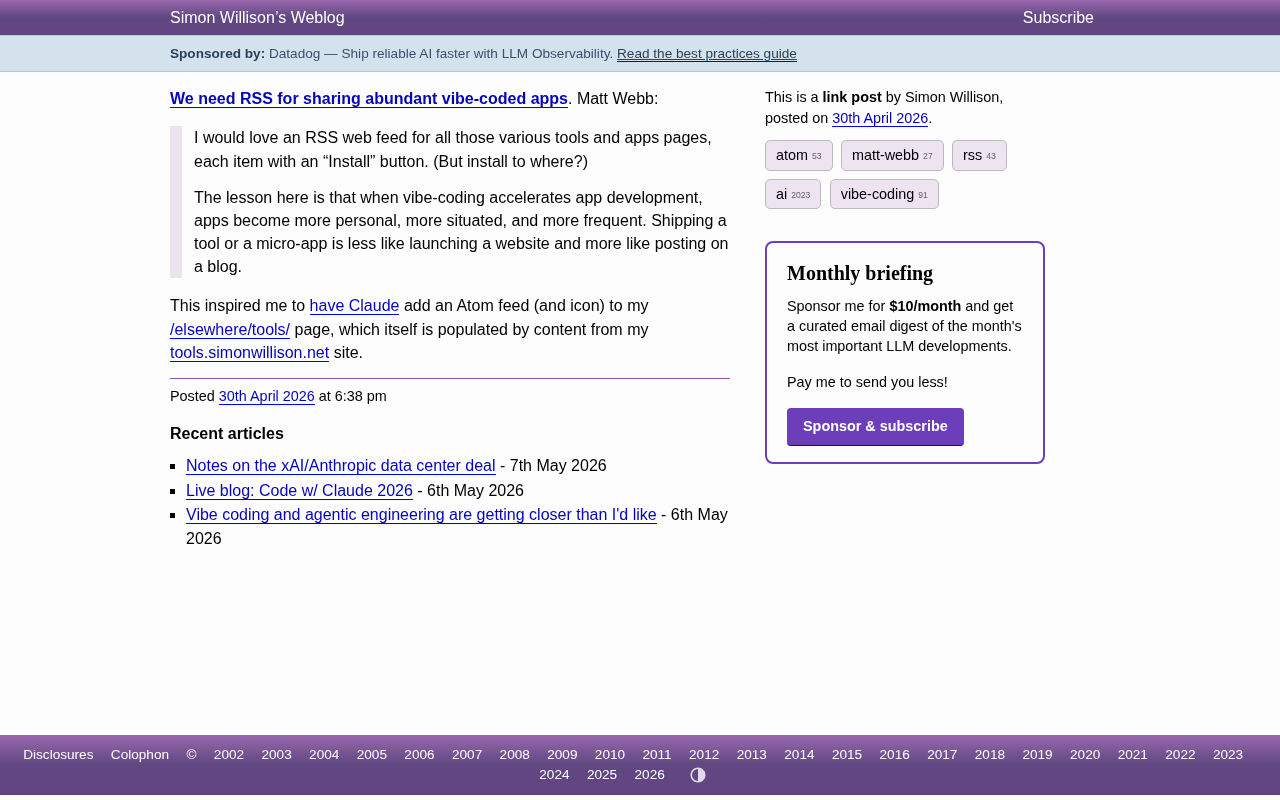
The Vibe Coding Era: Why We Need RSS to Distribute Personal Apps
As vibe coding makes app development as easy as blogging, personalized micro-tools are proliferating. This article explores why RSS/Atom is the ideal solution for app discovery and distribution in the AI-assisted programming era.
Read more →
 Expert Opinions
·2 min
The Vibe Coding Era: Why We Need RSS to Distribute Personal AI Apps
As vibe coding makes app development as frequent as blogging, we need lightweight mechanisms like RSS to discover and share personal AI tools. Exploring the future infrastructure of AI app distribution.
Read more →
 Expert Opinions
·2 min
The Vibe Coding Era: Why We Need RSS to Share Personal Micro-Apps
AI coding makes building micro-apps as easy as blogging, but how do we share them? Matt Webb proposes RSS for distributing vibe coding output, and Simon Willison has already put it into practice.
Read more →
 Expert Opinions
·2 min
In the Vibe Coding Era, Why RSS Is the Best Solution for Sharing Personal Apps
Vibe Coding makes building apps as easy as blogging, but how are these personal micro-apps discovered? Matt Webb proposes RSS for distributing vibe-coded apps, and Simon Willison has already implemented it.
Read more →
 Expert Opinions
·5 min
In the Age of Vibe Coding, How Does RSS Become the Best Distribution Solution for Personal Micro-Apps?
Vibe Coding makes building apps as simple as blogging, but how to distribute the flood of micro-apps? Matt Webb proposes RSS as the ideal protocol for sharing vibe-coded tools. Deep analysis inside.
Read more →
 Expert Opinions
·2 min
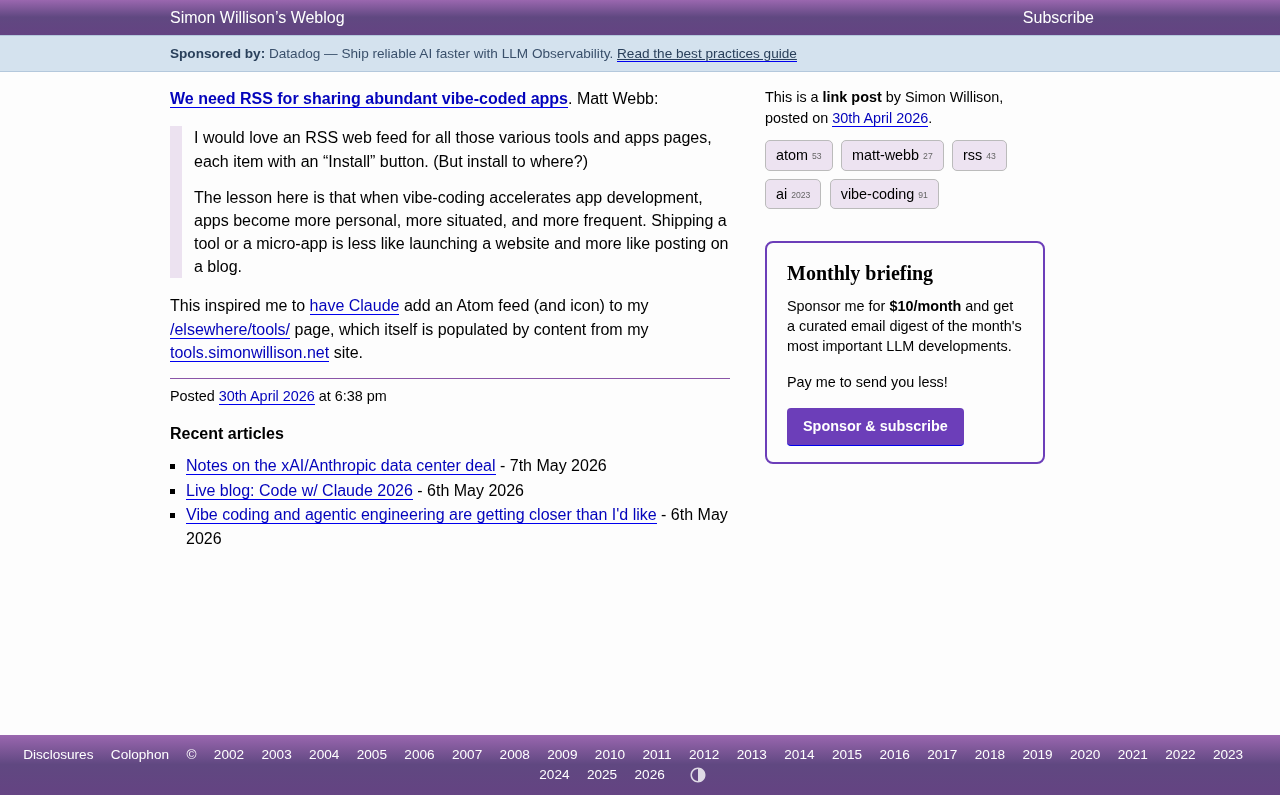
In the Vibe Coding Era, Share Your AI-Built Personal Apps via RSS
Vibe coding makes building apps as simple as blogging. Matt Webb proposes using RSS to distribute vibe-coded micro-apps, and Simon Willison puts it into practice. Exploring open protocols' new potential in the AI programming era.
Read more →