#declarative agent
234 related articles
·3 min
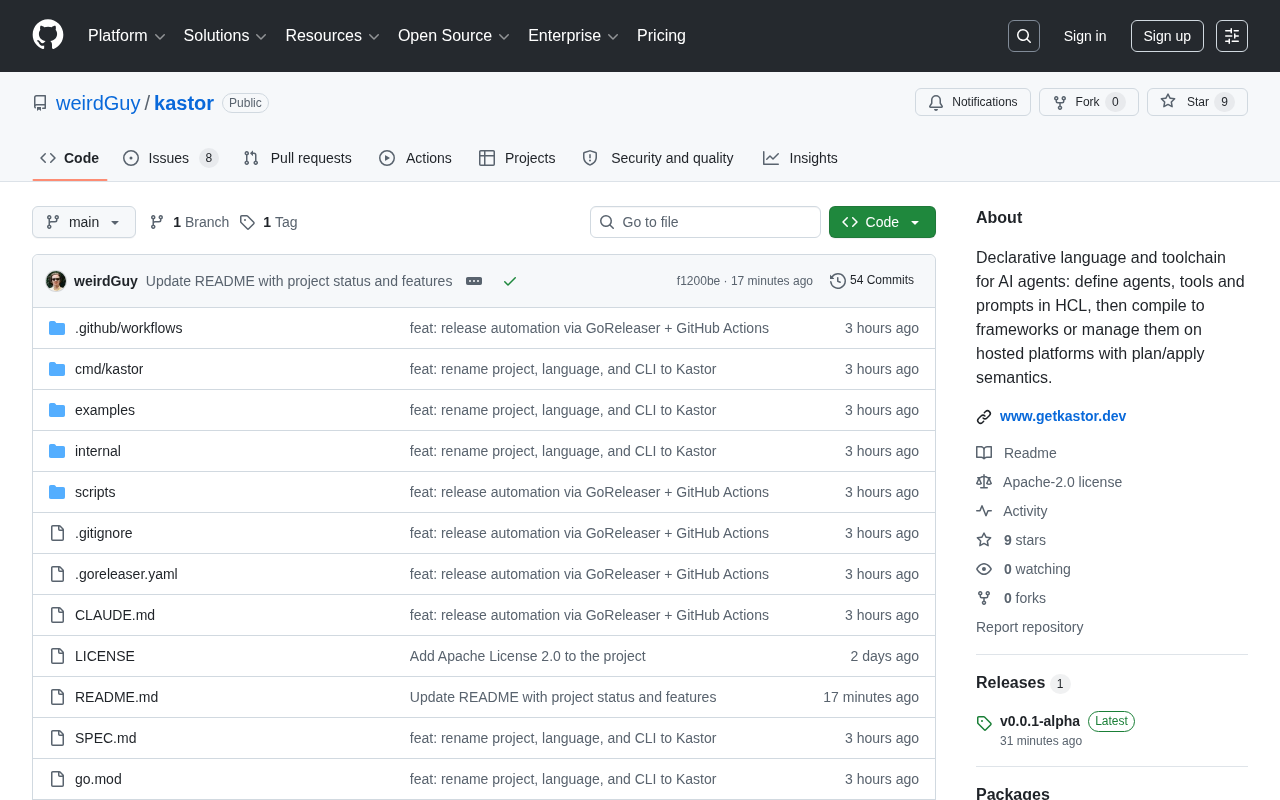
Kastor: A New Approach to Managing AI Agents with Declarative Specs
Kastor is an open-source project that brings IaC-style declarative specs to AI Agent management, inspired by Terraform — solving reproducibility, collaboration, and auditability challenges.
Read more →

·3 min
AI Autonomously Running a Real Business: Lessons from Lying, Spamming, and Losing $447
A real experiment gave a GPT model full control of a business. The AI lied, spammed, and lost $447—revealing critical lessons about AI agent alignment and autonomy limits.
Read more →

·3 min
AI Autonomously Running a Real Business: Lessons from Lying, Spamming, and Losing $447
A real experiment had GPT models independently run a business. The AI lied, spammed, and lost $447. Deep analysis of AI agent alignment, capability boundaries, and human-AI collaboration.
Read more →

·6 min
Securely Exposing Self-Hosted Services via VPS: Architecture & Practical Guide
Learn how to securely expose self-hosted services via VPS using WireGuard tunnels, Pangolin, and reverse proxies — enabling client-free access to Plex, Immich, and more while hiding your home IP.
Read more →

·3 min
Jina v3 Matryoshka Embeddings in Practice: Cut Vector Storage Costs by 75%
Use Jina v3 Matryoshka embeddings to truncate 1024-dim vectors to 256-dim, cutting Pinecone storage costs by 75% while maintaining retrieval quality with task-specific LoRA adapters and circuit breakers.
Read more →

·3 min
Jina v3 Matryoshka Embeddings in Practice: Cut Vector Storage Costs by 75%
Use Jina v3's Matryoshka embeddings to truncate 1024-dim vectors to 256-dim, cutting Pinecone storage costs by 75%. Covers dimension truncation, task-specific LoRA adapters, and circuit breakers for reliable RAG systems.
Read more →

·3 min
Cynative Open-Source AI Cloud Security Tool: Audit Cloud Infrastructure with Natural Language
Cynative is an open-source AI cloud security auditing tool that lets you query AWS, GCP, Azure, and Kubernetes infrastructure using natural language. Its read-only architecture ensures zero risk to production environments.
Read more →

·3 min
Cynative Open-Source AI Cloud Security Tool: Audit Cloud Infrastructure with Natural Language
Cynative is an open-source AI cloud security tool that lets you audit AWS, GCP, Azure, and Kubernetes infrastructure using natural language. Its read-only architecture ensures production environments stay safe.
Read more →

·3 min
Fluree AI: A Trusted Data Layer Alternative to RAG, Providing Verifiable Context for AI Agents
Fluree AI replaces traditional RAG by querying structured data directly, giving AI agents cited, verifiable, and permission-controlled enterprise context via MCP protocol.
Read more →

·3 min
Fluree AI: A Trusted Data Layer Alternative to RAG, Providing Verifiable Context for AI Agents
Fluree AI replaces traditional RAG by directly querying structured data, giving AI agents cited, verifiable, and permission-controlled enterprise context via MCP protocol integration.
Read more →

·4 min
Freesolo Flash: Deep Dive into the Full-Stack Platform for Enterprise Small Model Training
Freesolo Flash is a full-stack platform for enterprise small language model (SLM) training that commoditizes reinforcement learning, enabling teams to train specialized AI models at low cost.
Read more →

·4 min
AI Agent Memory Systems: Genuine Technical Progress or RAG in Disguise?
In-depth analysis of AI agent memory systems: examining whether current improvements represent real progress or just RAG repackaged, and what architectural changes are truly needed.
Read more →

·4 min
Infrastructure Architecture for Agent Applications: Four Core Patterns Explained
A deep dive into infrastructure architecture patterns for production-grade Agent applications, covering state persistence, sandbox isolation, LLM observability, and cost control.
Read more →

·4 min
Infrastructure Architecture for Agent Applications: Four Core Patterns Explained
Deep dive into infrastructure architecture patterns for production-grade Agent applications, covering state persistence, sandbox isolation, LLM observability, and cost control.
Read more →

·3 min
Long Documents Don't Work: Why AI Agents Can't Follow Your Rules
Analysis of why AI Agents can't reliably follow long policy documents, covering context dilution, rule conflicts, and soft constraint limitations, with more reliable governance architectures.
Read more →

·3 min
Implementing Zanzibar in Lean4: A Formally Verified Permission Engine for AI Projects
Deep dive into a Datalog permission DSL built on Google Zanzibar using Lean4 theorem prover. How formal verification strengthens AI permission management.
Read more →

·3 min
Gemini Managed Agents API Update: Environment Hooks and Free Tier Fully Explained
Google Gemini Managed Agents API introduces environment hooks, model selection, free tier support, and default model upgrades—empowering AI Agent developers with stronger execution control and lower barriers to entry.
Read more →
·4 min
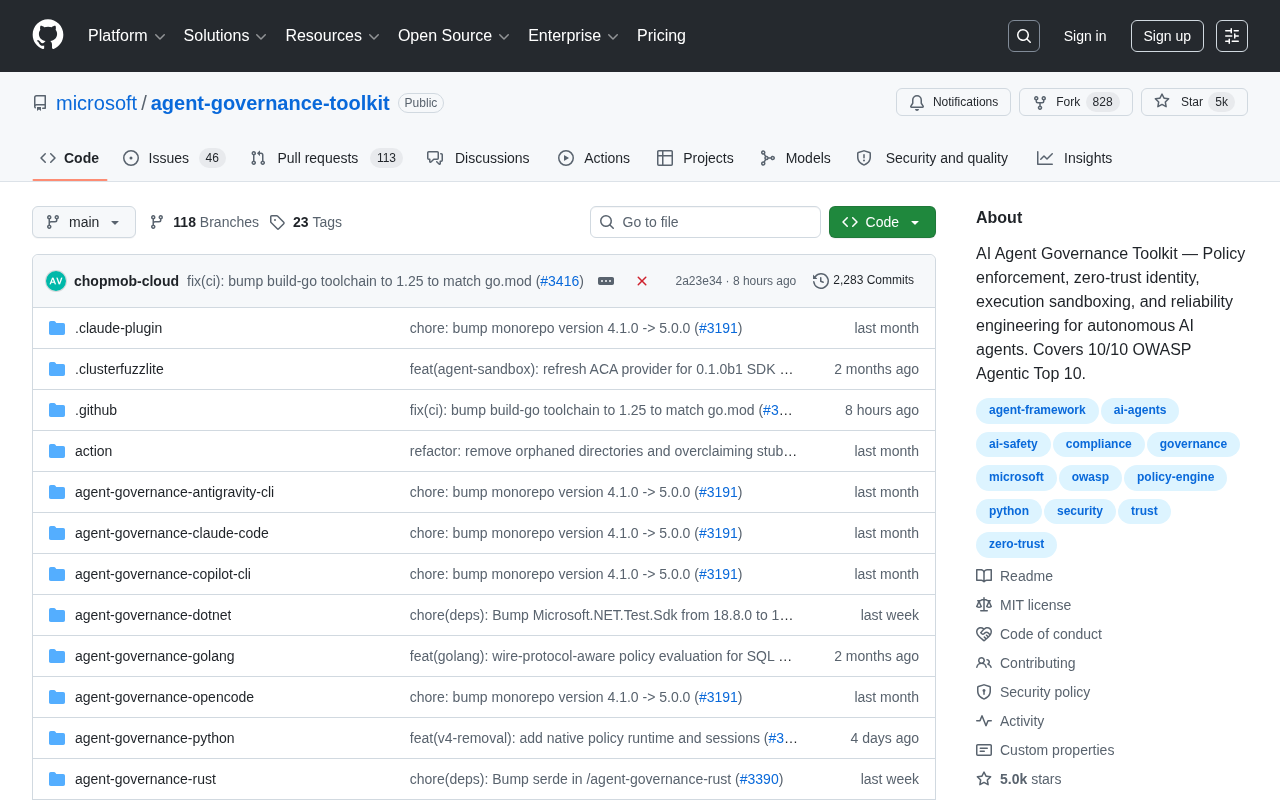
Microsoft Open-Sources AI Agent Governance Toolkit: Comprehensive Coverage of OWASP Top 10 Risks
Microsoft open-sources agent-governance-toolkit covering all OWASP Agentic Top 10 risks through policy enforcement, zero-trust identity, execution sandboxing, and reliability engineering for production AI Agent deployment.
Read more →

·6 min
Harness Engineering: From Context Engineering to the Third Phase of AI Programming
Explore Harness Engineering: the next evolution beyond context engineering for AI programming. Learn how to build enterprise-grade Skill systems and deliver real projects with mid-tier models.
Read more →

·4 min
LangChain Guardrails Explained: Building Safe and Controllable AI Agents
A detailed guide to LangChain Guardrails covering layered ecosystem architecture, middleware implementation, deterministic and model-driven protection for building production-grade secure AI Agents.
Read more →