#declarative agent
248 related articles

·2 min
LangChain Chain & Memory: Building AI Applications with Persistent Memory
Learn how LangChain's Chain and Memory components overcome LLM limitations. Build intelligent AI apps with multi-step workflows and persistent memory.
Read more →
·3 min
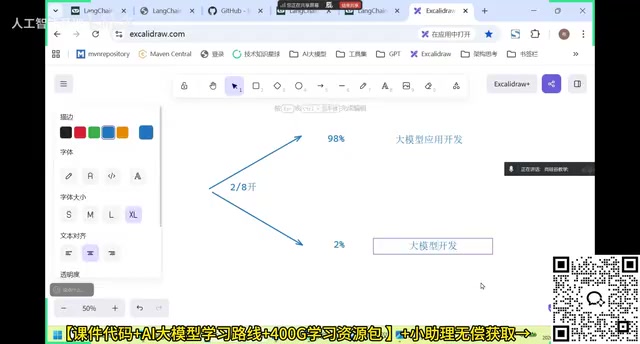
LangChain Practical Guide: From RAG Applications to Intelligent Agent Development
A comprehensive guide to LangChain: core concepts, RAG applications, Agent development, version selection (0.3/1.0), and career opportunities for Java/Python developers entering LLM development.
Read more →
GPT-5.6 Trio Launches: Luna, Terra, an…
·3 min
GPT-5.6 Trio Launches: Luna, Terra, and Sol Built for Long-Running Agentic Tasks
OpenAI officially launches the GPT-5.6 family: Luna, Terra, and Sol, with 1M token context and a focus on long-running agentic performance. A deep dive into three-tier pricing, Agents' Last Exam results, the SWE-Bench Pro controversy, and new API features like programmatic tool calling and native multi-agent support.
Read more →

·2 min
A Deep Dive into Ansible: The Essential Guide to Agentless IT Automation
A comprehensive guide to Ansible, the open-source IT automation platform: core architecture, design philosophy, and use cases. Learn about agentless mode, YAML Playbook syntax, idempotency, and best practices for DevOps and Infrastructure as Code.
Read more →

·7 min
Building a Published App with Zero Code in Four Days: A Complete HarmonyOS Development Journey
A tech blogger with zero programming knowledge built a retro DV app in four days using AI tools like Cursor and Codex, and got it published on Huawei App Gallery. A full vibe coding walkthrough.
Read more →
·6 min
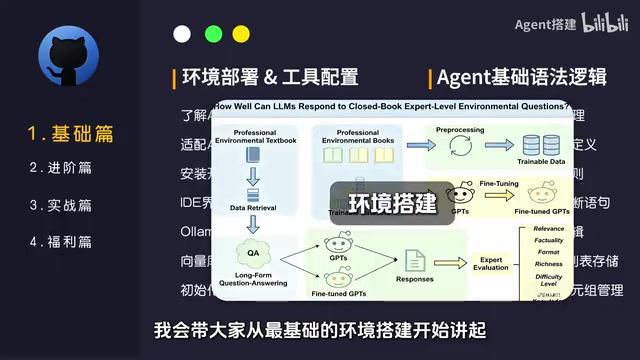
AI Agent Development Learning Path: Four Stages from Zero to Hands-On Projects
A systematic breakdown of the AI agent development learning path, covering four stages: fundamentals, RAG knowledge bases, tool use, multi-agent collaboration, and hands-on projects.
Read more →

·4 min
The Complete AI Agent Development Learning Path: From Zero to Enterprise-Grade Practice
A systematic AI Agent development learning path covering fundamentals, prompt engineering, tool calling, multi-agent collaboration, and hands-on practice with LangChain, CrewAI, and Dify.
Read more →

·7 min
Unity Custom MCP Tool Development Guide: Enabling AI Agents to Precisely Control the Editor
Learn how to develop custom tools based on the Unity MCP Relay Server, enabling AI agents like Cursor to directly control the Unity editor. Covers setup, tool building, parameter validation, and MCP Pro comparison.
Read more →

·6 min
Spec-Driven Development in Practice: The New AI Coding Paradigm from Andrew Ng × JetBrains
Andrew Ng partners with JetBrains to launch a Spec-Driven Development course, teaching how to direct AI coding agents via spec files to boost intent fidelity and build maintainable production apps.
Read more →

·4 min
TigrimOSR: An Open-Source Agent Framework in Rust with Configurable Agent Loops
TigrimOSR is an open-source multi-agent system written in Rust, supporting full agent loop definition via YAML config files with only 250MB memory usage. A deep dive into Loop Engineering, Rust advantages, and self-hosted Agentic AI.
Read more →

·5 min
GPT-5.6 In-Depth Field Test: A Real-World Log After Burning Through $200K
A developer stress-tested GPT-5.6 for six weeks across 67 projects, burning $180K-$240K in inference. Real cases of task persistence, Rust rewrites, autonomous browser control — plus honest frontend and 3D shortfalls.
Read more →

·5 min
Browser Use: A Deep Dive into the Event-Driven Browser AI Agent Framework
Browser Use is an open-source AI Agent framework that lets LLMs autonomously drive browser operations via natural language. This article breaks down its four-layer architecture, core Agent loop, CDP perception layer, dynamic Tools dispatch, and its Skills, Sandbox, and MCP extension capabilities.
Read more →

·5 min
Getting Started with LangGraph: Building AI Agent Workflows with Graph Structures
Master LangGraph core concepts: nodes, edges, and routing functions. Learn StateGraph, MemorySaver, and ToolNode through a weather-query Hello World example, and understand how LangGraph relates to LangChain and powers Agent workflows.
Read more →

·4 min
Why Do AI Agents Crash the Moment They Go Live? A Practical Guide to Harness Engineering for Runtime
A deep dive into the Claude Code source code, systematically analyzing the five-layer Harness Engineering architecture: environment, tool, control, memory, and evaluation. Build a stable runtime system for production AI Agents.
Read more →

·5 min
Hands-On Test of GPT-5.6's Three Models Sol/Terra/Luna: How Good Are Their Coding Skills?
OpenAI released three GPT-5.6 models—Sol, Terra, Luna—and merged ChatGPT with Codex to launch Work mode. This hands-on review tests coding, game dev, and PPT creation, revealing one-click deployment wins alongside aesthetic and efficiency flaws.
Read more →
·7 min
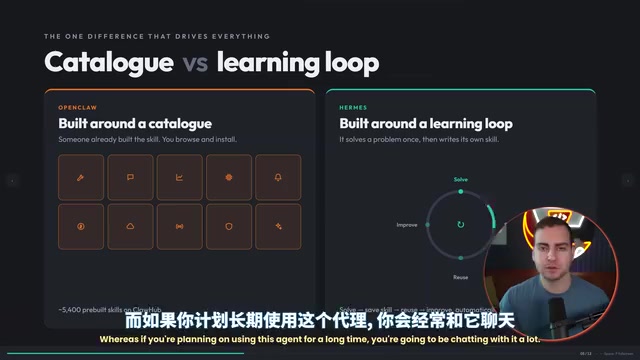
OpenClaw vs Hermes: An In-Depth Comparison and Selection Guide for AI Agent Tools
An in-depth comparison of OpenClaw and Hermes Agent, covering skill management, memory mechanisms, security, and gateway configuration to help you find the right AI agent solution.
Read more →

·5 min
Zero-Dependency AI Decision Record Auditor: A Practical Guide to Building Traceable AI Systems
An in-depth analysis of the zero-dependency decision record auditor: from AI compliance and incident postmortems to human-AI accountability, exploring how 'Governance as Code' enables traceable, transparent AI decision-making.
Read more →
·5 min
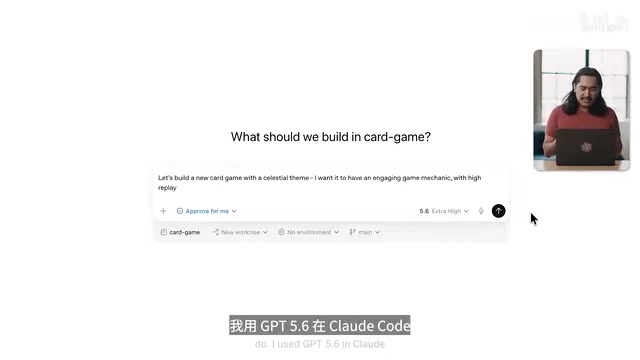
GPT-5.6 Released: Hands-On Analysis of Programmatic Tool Calling and Autonomous Agents
GPT-5.6 is officially released with core upgrades including programmatic tool calling, autonomous subagent delegation, and higher token information density. A hands-on card game build reveals its Agentic power.
Read more →

·6 min
MCP Brings Power Apps Data Seamlessly into M365 Copilot: A Complete Implementation Guide
A Power Platform MVP demonstrates how to use MCP to securely expose Power Apps business data to M365 Copilot. Covers declarative agent creation, custom tool development, and VS Code setup.
Read more →

·3 min
Spending $200K to Test GPT-5.6: Have AI Coding Assistants Reached a Tipping Point?
Developer Theo spent ~$200K over 6 weeks testing GPT-5.6 across 67 projects — from 20-hour autonomous coding runs to fixing boot partitions and Rust rewrites.
Read more →