#developer health
683 related articles

·2 min
If AI Writes All the Code, What's Left for Programmers?
AI coding tools are spreading fast—so where does programmer value lie? This article analyzes three key role shifts: from writer to reviewer, implementer to designer, and lone wolf to coordinator.
Read more →

·2 min
HuggingFace Open-Source Voice Assistant: A Complete Guide to Local Deployment
A deep dive into HuggingFace's speech-to-speech open-source project, covering its modular VAD, STT, LLM, and TTS pipeline architecture and the advantages of local deployment for privacy, cost, and latency.
Read more →

·3 min
GitHub Daily · July 28: From Claude Code Skill-ification to AI Agent Governance, the Toolchain Matures
GitHub Trending July 28: Microsoft's agent-governance-toolkit covers OWASP Agentic Top 10, book-to-skill gains 366 stars showing Claude Code skill ecosystem potential, plus browser-based 3D and GIS tools.
Read more →

·2 min
Google AI Studio Deep Dive: The Ecosystem Ambitions Behind Google's AI Developer Tools
A deep dive into Google AI Studio's core features and strategic positioning, exploring how it competes with OpenAI and Anthropic for the AI developer ecosystem.
Read more →

·3 min
Kimi K3 Reaches 2.5T Parameters, MiniMax M3 Pro Brewing Simultaneously: China's LLM Arms Race Escalates
Kimi K3 adopts new architecture with 2.5T parameters and 1M token context. MiniMax M3 Pro targets 2.7-3T. OpenAI surpasses 7M users, HY-OCR 1.5 achieves SOTA, Amap launches world model.
Read more →

·3 min
AI Game Development Showdown: Claude, Kimi K3, and ChatGPT Recreate Classic Games — Who Wins?
Bilibili creator tests Claude Fable 5, Kimi K3, and ChatGPT Codex recreating Hollow Knight, Cuphead, and Zelda — comparing code quality, collision detection, and Boss design.
Read more →

·2 min
Claude Paid Subscription Down for Over a Week with No Response: The Pain Points of AI Service Support
Claude AI paid subscription down for over a week with no support response, exposing systemic gaps in AI service customer support. Analysis of impact, industry shortcomings, and user strategies.
Read more →
·3 min
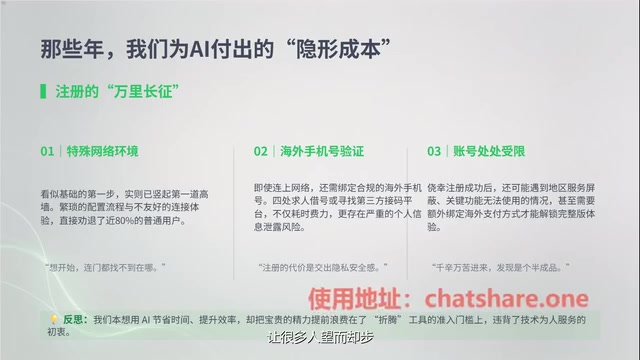
Comparing Ways for Users in China to Access ChatGPT: Are Mirror Platforms Reliable?
An in-depth analysis of the barriers Chinese users face accessing ChatGPT, an honest assessment of third-party mirror platforms' risks, and safer alternatives including official APIs and domestic LLMs.
Read more →

·3 min
Backend Developer Transition to AI/LLM: 4 Core Skills and a Practical Learning Roadmap
Complete guide for backend developers transitioning to AI/LLM engineering. Covers the 4 core skills—Python, RAG, Fine-tuning, and Agents—with a phased learning roadmap and practical project advice.
Read more →

·3 min
OpenAI Academy's European Tour: How SMEs Can Break Through with AI
OpenAI Academy visits six European nations with its SME AI Accelerator and multilingual workshops, helping small businesses overcome AI adoption barriers through real-world training and hands-on use.
Read more →

·4 min
Kimi K3 Deep Dive: 2.8 Trillion Parameter Open-Source Model Closes the Gap with Closed-Source Frontier for the First Time
Moonshot AI releases Kimi K3 open-weight model with 2.8T parameters and 1M token context. Our deep dive covers coding, 3D dev, agent capabilities, and safety concerns.
Read more →

·4 min
Opus 5 Real-World Testing: Cheaper Yet Stronger — Why It's Now My Default Coding Model
In-depth testing of Claude Opus 5's coding abilities vs Fable 5 and 5.6 Sol. Why Opus 5 outperforms pricier models at half the token cost, plus selection guide and distillation explained.
Read more →

·3 min
Apple Silicon LLM Inference Speed Benchmarks: A Complete Guide to Local Large Model Performance on Mac
In-depth analysis of Apple Silicon local LLM inference speed benchmarks covering M-series memory bandwidth, model quantization, MLX framework optimization, and Mac configuration guidance.
Read more →

·3 min
From RAG to Agent Tuning: A Complete Guide to Deploying LLM Agents
A deep dive into LLM Agent frameworks covering RAG, Agent core components (tools, memory, planning), and Agent Tuning workflows with cost considerations for production deployment.
Read more →

·3 min
DeepSeek Ignites Open Source vs. Closed Source Debate in Silicon Valley, Splitting Tech Giants into Rival Camps
DeepSeek's open source model shakes Silicon Valley. OpenAI defends closed source while Microsoft, NVIDIA, and Meta back open ecosystems. Analysis of the AI open/closed source debate, Apple-Micron chip tensions, and AI-driven historical disinformation.
Read more →

·3 min
FeyNoBg: A Deep Dive into the Open-Source Background Removal Model and Training Library
Deep analysis of FeyNoBg, an open-source background removal project with pre-trained models and training library, compared to remove.bg and rembg solutions.
Read more →

·3 min
Is Ollama Pro Worth It? An In-Depth Comparison of the $20 Subscription vs. API Costs
In-depth analysis of Ollama Pro's $20/month subscription value, comparing usage quotas, equivalent API costs, and ZDR privacy policy to help developers decide if it's worth it.
Read more →

·5 min
Complete Breakdown of Core Competencies for AI Agent Engineers: From Demo to Production-Grade Systems
Deep breakdown of 4 core AI Agent engineer competencies: business decomposition, multi-Agent architecture, quantitative evaluation, and engineering delivery—bridging the gap from Demo to production.
Read more →

·3 min
Jensen Huang's First Tweet Backs AI Open Source — But It's Really About NVIDIA's Ecosystem Anxiety
Jensen Huang's first tweet backs AI open source, but behind it lies NVIDIA's deep anxiety over CUDA ecosystem displacement. We analyze why open-source models matter and what's really at stake.
Read more →

·5 min
Will Chinese Open-Source Models Burst the US AI Bubble? A Deep Dive into the Transmission Chain
Chinese open-source models like Kimi K3 and DeepSeek approach US closed-source performance at a fraction of the cost. This deep dive analyzes the transmission chain from price competition to valuation reassessment.
Read more →