#efficient reasoning
1873 related articles

·3 min
How a Senior Data Scientist Navigates Job Hunting After Being Laid Off: A Survival Guide for the AI Job Market
A senior data scientist with a Physics PhD and 4.5 years of experience gets laid off, revealing the AI job market's shift from traditional ML to Agent engineering. Practical advice on bridging skill gaps.
Read more →

·3 min
Claude Writing Style Fatigue: Causes and Solutions for AI Writing Homogenization
Analyzing why Claude's writing style causes user fatigue, the technical causes of AI writing homogenization from RLHF training, and practical strategies including prompt engineering and system prompts to break through default AI style limitations.
Read more →

·3 min
Meta Muse Glimmer: A Deep Dive into the 30B Open-Source Local Coding Model
Deep dive into Meta Muse Glimmer, a 30B open-weight coding model for local deployment. Covers technical specs, use cases, hardware requirements, and comparisons with Code Llama and DeepSeek Coder.
Read more →
·2 min
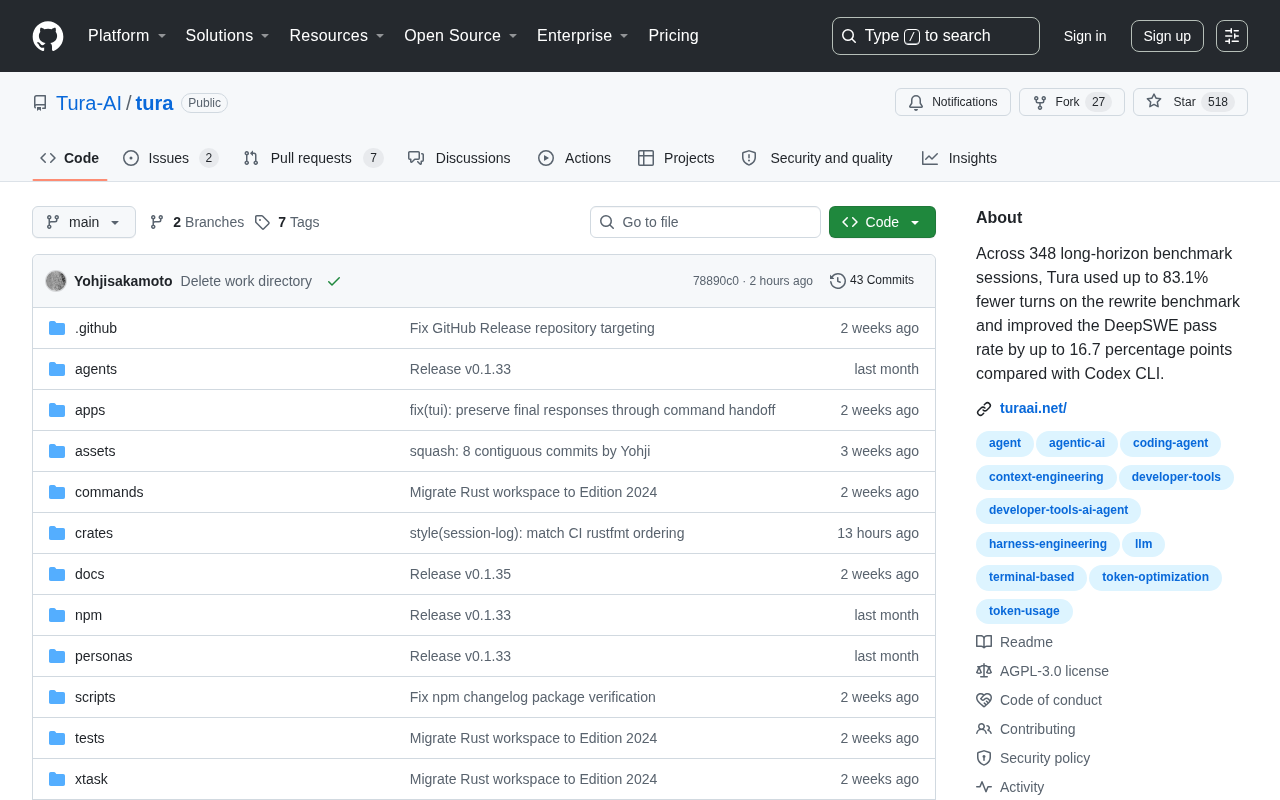
Tura: A New Approach to Saving 80% of Tokens for AI Agents
An in-depth analysis of how the Tura framework helps AI Agents reduce 80% of token consumption while improving task quality through intelligent context management and structured tool calling.
Read more →

·4 min
The Creator of Claude Code Shares 10 High-Efficiency AI Coding Tips
Claude Code creator Boris shares 10 practical AI coding tips in his viral talk, covering setup, prompting, planning, team collaboration, SDK usage, and multi-instance concurrency.
Read more →

·3 min
PagedAttention Explained: GPU Memory Optimization and Model Routing Techniques
Deep dive into how PagedAttention borrows OS paging to optimize GPU memory, eliminate KV Cache fragmentation, and how model routing enables intelligent scheduling for multi-model inference services.
Read more →

·3 min
AI Agents Reproduce ICML 2026 Papers: 34% Verified, 23% Found Problematic
Hugging Face hosted an ICML 2026 Reproduction Hackathon where 1,200 participants used AI agents to verify 2,200 papers. Results: 34% covered, most reproducible, but ~23% had issues and 49 were nearly fully falsified.
Read more →

·2 min
The Difference Between CSS line-height Numbers and Percentages, and Best Practices
Deep dive into the critical difference between unitless numbers and percentages in CSS line-height. Unitless numbers inherit ratios calculated per element; percentages inherit fixed computed values causing layout issues.
Read more →

·3 min
Why Does Gemini Keep Getting Things Wrong? A Deep Dive into AI Hallucinations and How to Deal with Them
Deep analysis of why Google Gemini and other LLMs frequently produce errors, explaining the technical mechanisms behind AI hallucinations and offering practical prompting tips for better AI usage.
Read more →

·3 min
Claude vs GPT Knowledge Cutoff Dates Explained: How to Determine AI Knowledge Boundaries
A deep dive into knowledge cutoff dates for LLMs like Claude and GPT, covering pre-training data endpoints, how to verify AI knowledge boundaries, and how RAG overcomes time limitations.
Read more →

·4 min
AI Reshaping the Software Industry: A New Era Where Everyone Can Be a Builder
AI coding tools are lowering software development barriers, enabling more people to become builders. This article analyzes SaaS disruption, agent-driven internet, personal brand rise, and how AI reshapes the future of software.
Read more →

·3 min
AI Takes Over Code Review: From Reading Diffs Line by Line to Writing More Tests
A B2B SaaS developer shares their multi-agent code review practice: building an automated review loop with Opus, Composer, and CodeRabbit, shifting from reading diffs to writing better tests.
Read more →

·2 min
Cursor Restricts Third-Party Extension Panel Layout, Long-Time Users Consider Switching to Alternatives
Cursor reserves its right-side panel exclusively for its own Agent, blocking third-party extensions like Codex and Claude. A two-year user considers leaving, sparking debate about openness vs. commercialization.
Read more →

·2 min
The Real Motivations Behind Meta's Open-Source AI Models: A Rational Breakdown from the Developer Community
Reddit developers dissect Meta's open-source AI strategy across technical performance, competitive dynamics, and business motivations, revealing why competition drives healthy open-source ecosystems.
Read more →

·3 min
The Tragedy of the Cognitive Commons: The Deep Crisis Facing Human Thinking in the AI Era
As generative AI lets everyone easily outsource thinking, humanity's shared knowledge ecosystem faces a "Tragedy of the Cognitive Commons." This article analyzes AI's erosion of content ecosystems and thinking abilities, and explores viable paths to safeguard our cognitive commons.
Read more →

·2 min
oqoqo: A Developer Tool for Building Custom AI Evaluation Benchmarks with Real-World Tasks
oqoqo is a developer-focused AI evaluation tool for building private benchmarks, measuring Agent performance on real products, and optimizing model selection across GPT, Claude, and Gemini.
Read more →

·3 min
Ticketdesk AI: Reinventing Customer Support Ticket Handling with AI Agents
Deep analysis of how Ticketdesk AI uses AI agents and automated email responses to enable 24/7 customer support ticket handling, with insights on its features, competitive landscape, and use cases.
Read more →

·2 min
Meta Open-Sources Localized Agent AI Model: A New Starting Point for Edge Intelligence
Meta releases open-weight models for localized Agentic AI, enabling local deployment and customization. Explore its implications for privacy, edge computing, developer ecosystems, and real-world challenges.
Read more →

·3 min
Uncle Bob's Swarm-Forge: A Minimalist Framework for Orchestrating Multi-AI Agents with Clojure
Uncle Bob open-sources swarm-forge, a lightweight multi-AI agent coordination tool built with Clojure. Explore its design philosophy, Clojure's concurrency advantages, and its significance in the multi-agent framework ecosystem.
Read more →

·3 min
Latent Space Reasoning: How DeepSeek-V4 Lets AI Think in Hidden Layers
Deep dive into DeepSeek-V4's latent space reasoning technology — how AI shifts from explicit chain-of-thought to implicit vector space reasoning, its efficiency gains, and challenges in interpretability.
Read more →