#goal-oriented programming
35 related articles

·3 min
Composer 2.5 Real-World Review: Why a Budget AI Coding Assistant Became a Daily Go-To
A developer shares their real experience with Composer 2.5, from budget pick to daily go-to. Deep comparison with Sonnet 5 in debugging scenarios reveals the gap between benchmark scores and real productivity.
Read more →

·3 min
Composer 2.5 Real-World Review: Why a Budget AI Coding Assistant Became My Daily Driver
A developer shares their real experience with Composer 2.5, from budget pick to daily driver. Deep comparison with Sonnet 5 in debugging scenarios reveals the gap between benchmark scores and real productivity.
Read more →

·2 min
Prompt Anything Review: Is This AI Prompt Auto-Generation Tool Worth Using?
In-depth review of Prompt Anything, an AI prompt generation tool with 13 scenario modes, smart questioning, and cost-optimized routing to help users create expert-level prompts for ChatGPT, Midjourney, and more.
Read more →

·2 min
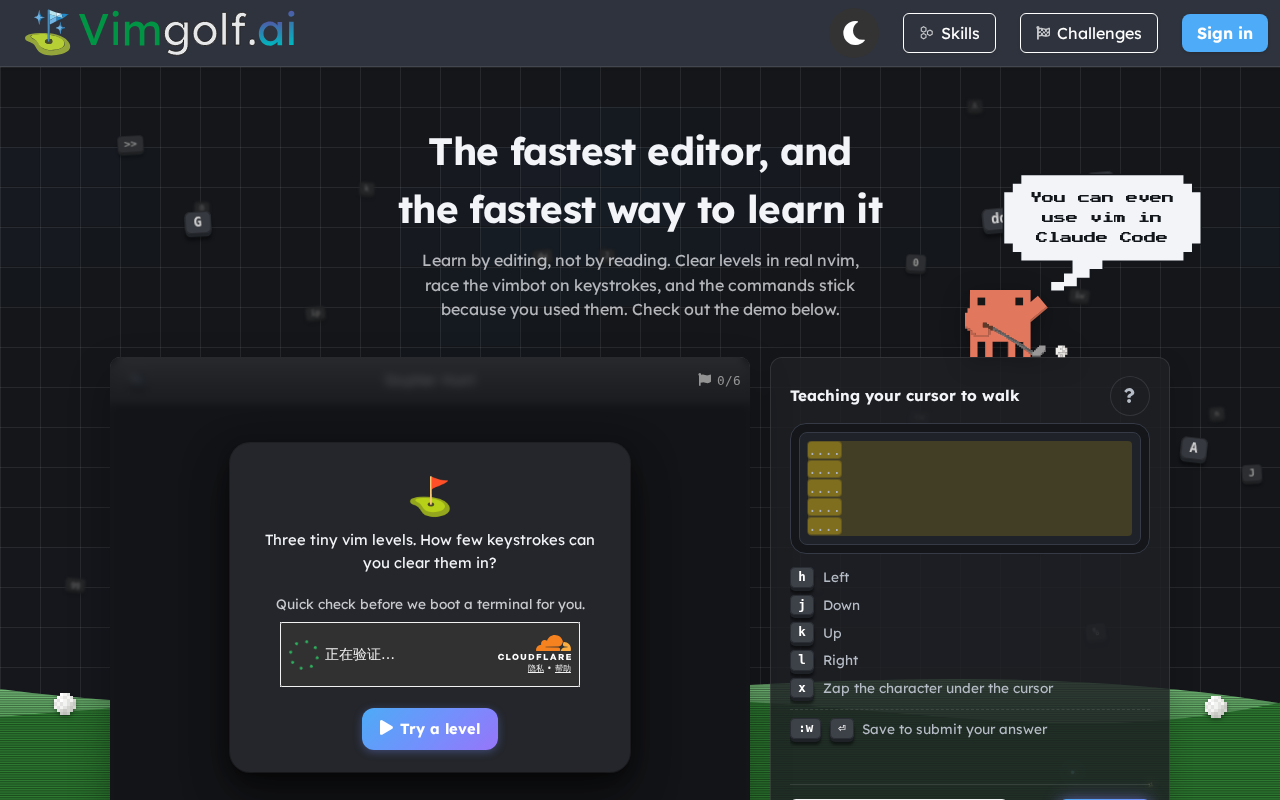
Vimgolf.ai: Learn Vim Through a Level-Based Game
Vimgolf.ai is a gamified Vim learning tool that helps users progressively master Vim commands through level-based challenges. We analyze its approach and compare it with VIM Adventures and similar tools.
Read more →
·2 min
Vimgolf.ai: Learn the Vim Editor Through a Level-Based Game
Vimgolf.ai is a gamified Vim learning tool that helps users progressively master Vim commands through level-based challenges. We explore its core philosophy, gamification advantages, and compare it with tools like VIM Adventures.
Read more →

·3 min
How AI Agents Are Reshaping Enterprise Work: From Task Automation to Organizational Restructuring
Explore how AI agents are redefining enterprise work—from applied AI partnerships and multi-agent collaboration to structural workflow redesign and organizational transformation.
Read more →

·3 min
A Beginner's Guide to AI Agents: Two Learning Paths for Developers and Practitioners
How to learn AI Agents from scratch? This guide covers two clear paths: developers go from Python to LLMs to open-source framework source code; practitioners use Claude Code or similar tools to get results fast.
Read more →

·2 min
From Zero to AI Career: A Complete Breakdown of a 3-Month Self-Study Roadmap
Want to break into AI from scratch? This article breaks down an efficient self-study roadmap: from Python, math, and machine learning basics to PyTorch, then to CV, NLP, and data mining—reaching entry-level career-switching intensity in 3 months.
Read more →

·3 min
GPT 5.6 Deep Dive Review: The Most Capable Model Yet — But Also the Most Confusing to Use?
GPT 5.6 brings major capability upgrades and new SOUL/TERRA/LUNA tiers — but also confusing entry points, hidden quota consumption, and a chat window crammed into a floating widget. A deep-dive review.
Read more →
·2 min
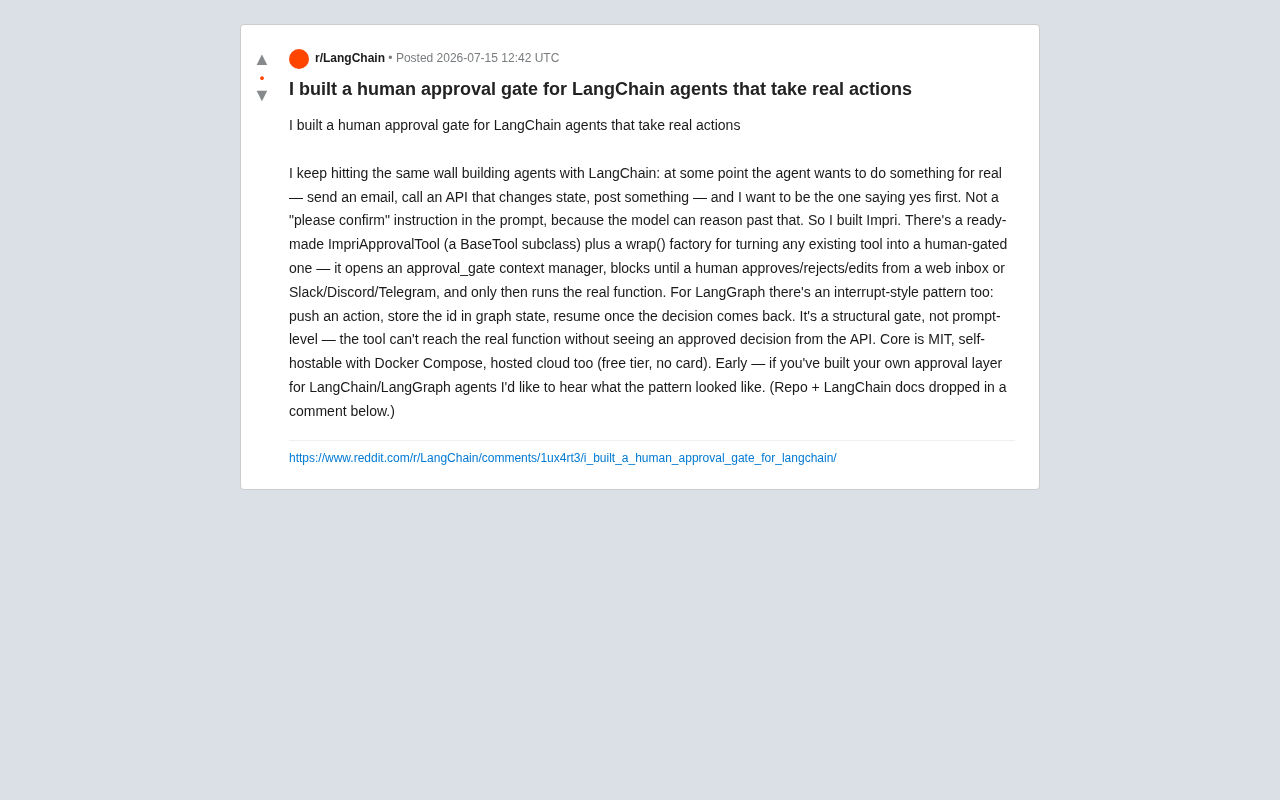
Impri: A Structural Human Approval Gateway for AI Agents
A deep dive into Impri — a structural human approval gateway for LangChain/LangGraph agents, exploring why prompt-level constraints fail and how code-layer gates enable reliable human-in-the-loop AI.
Read more →

·7 min
Base44 in Practice: How Claude Code Powered Rapid Scaling from 1 to 80 People
How Base44's product team scaled from a single founding engineer to an 80-person team with Claude Code. Covers AI-assisted onboarding, code review, user evaluation, and QA automation.
Read more →

·5 min
A Programmer's Guide to Large Language Models: The Complete Path from Prompts to Agents
A tailored large-model learning path for ordinary programmers: from prompt engineering, API calls, and LangChain, to RAG, Agents, fine-tuning, and enterprise deployment—six steps to build AI application skills fast.
Read more →

·7 min
AI Agent Practical Guide: From Content Generation to Enterprise Applications
A deep dive into AI Agent's two core directions: 2C content generation (text/images/video) and 2B enterprise applications (RAG/AutoGen/LLM integration). With real startup cases and practical methods.
Read more →

·3 min
Deep Dive into the /goal Command: The Ultimate Tool for Managing Long-Running AI Agent Tasks
A deep dive into the /goal command in Claude Code and Codex — covering positioning, real-world cases, and a three-element Prompt framework (Goal, Termination Condition, Constraint Rules) for stable long-running AI Agent tasks.
Read more →

·3 min
Codex vs Claude Code Cost Comparison: Breaking Down the Real Reasons Behind the 10x Price Gap
Codex costs $15 vs Claude Code's $155 for the same task. We break down the 10x price gap across Token pricing, consumption, and work patterns with practical tips.
Read more →

·4 min
HAMAS Multi-Agent Framework in Practice: A Guide to Building 5 AI Personas Working in Harmony
Learn how to build a multi-Agent AI team with the HAMAS framework: 5 role configurations, Skill mechanisms, gradient model scheduling, and solutions for AI hallucination and deception.
Read more →

·3 min
Beginner's Guide to Agent Skills: Structure Breakdown & Custom AI Skill Development
A deep dive into Agent Skill's core concepts and internal structure, covering skill.md, references, scripts, and assets with a restaurant poster Skill example.
Read more →

·3 min
12 Practical Tips for Vibe Coding with Trae SOLO: From Getting Started to Efficient Collaboration
12 practical tips for vibe coding with Trae SOLO covering agent selection, Plan mode, context management, custom rules, and more to build an efficient AI programming workflow.
Read more →

·2 min
Claude Fable User Guide: Four Core Tips to Boost AI Development Efficiency
Anthropic shares four key tips for Claude Fable: assign bigger tasks, choose effort levels wisely, rewrite old instructions, and shift from tasks to goals.
Read more →

·3 min
AI Startup in Practice: A Complete Breakdown of $8,374 in Revenue from a $100 Investment in 13 Days
Robbie, an ordinary employee, used $100 and an AI Agent to launch a business, earning $8,374 in 13 days. A full breakdown of the path from failure to success, including AI-driven market analysis and a stunning 43.8% conversion rate.
Read more →