#hot-swap architecture
28 related articles
 Tutorials
·2 min
Multi-Model Hot-Swap Architecture: Switch AI Models at Minimal Cost
A complete guide to building a multi-model hot-swap architecture for production AI projects, covering abstraction layers, adapter patterns, visual configuration, and error-fixing workflows.
Read more →

·2 min
Deep Dive into DeepSeek Harness: The Ambition to Build Infrastructure, Not Just an Agent
A deep dive into DeepSeek Harness developer preview: its Agent infrastructure positioning, Codex kernel hot-swap design, four run modes, and Creation Mode's self-evolution capability.
Read more →

·3 min
DeepSeek Harness Open-Source Agent Framework: Breaking Down the 90K-Star Viral Sensation in 48 Hours
DeepSeek Harness is the fastest-growing open-source Agent framework in GitHub history, earning 95K stars in 48 hours. Deep dive into its MIT license, plugin architecture, and rivalry with Claude Code.
Read more →

·3 min
DeepSeek Harness Explained: An Agent Runtime Where Everything Is a Plugin
Deep dive into DeepSeek Harness (DSH): its Agent=Model+Harness formula, Cordis plugin system, four runtime modes, and Trajectory traceability for modular Agent development.
Read more →

·3 min
Deep Dive into DeepSeek Harness Developer Preview: A Self-Evolving Agent Framework
Deep dive into DeepSeek Harness Developer Preview: its self-evolving agent framework, Codis Kernel's component-based design, hot-swap architecture, and key differences from existing Agent tools.
Read more →

·3 min
DeepSeek Harness Deep Dive: The 'Everything Is a Plugin' Paradigm for AI Programming
DeepSeek's open-source Harness framework, built on Cordis Kernel, uses an 'everything is a plugin' design for ultimate customization. Supports multi-model integration, built-in traceability, and Creator mode self-extension.
Read more →

·2 min
GitHub Daily · August 16: A Dual Explosion of Localized AI and Edge Intelligence
GitHub Trending Aug 16: Localized AI explodes with unsloth's local training UI, needle's 14MB edge model, and ai-memory solving Agent long-term memory.
Read more →

·2 min
GitHub Daily · August 15: The Agent-Native Era and Low-Barrier LLM Fine-Tuning
GitHub Trending Aug 15: cordis meta-framework surges 616 stars, Soup enables 8B model fine-tuning on 4GB VRAM, CLI-Anything drives Agent-Native software.
Read more →

·3 min
Anthropic Breaks HAWK-256: A Security Wake-Up Call for Post-Quantum Signature Schemes
Anthropic publishes a practical key-recovery attack on HAWK-256, exposing vulnerabilities in post-quantum signature schemes and implications for PQC standardization.
Read more →
In-Depth Analysis of the Claude Opus 5…
·3 min
In-Depth Analysis of the Claude Opus 5 Elevated Error Rate Incident and Response Strategies
Deep analysis of the Claude Opus 5 elevated error rate incident, exploring LLM service reliability challenges and providing developers with practical strategies including multi-model redundancy, retry mechanisms, and graceful degradation.
Read more →
·2 min
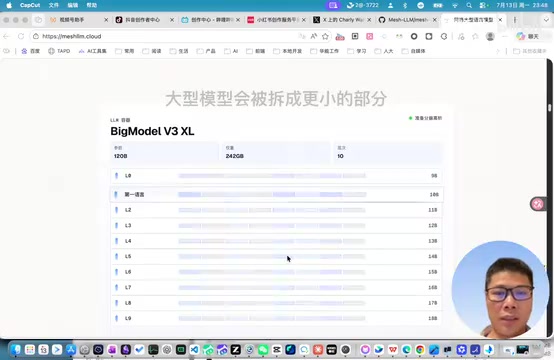
Mesh LLM: Pool Multiple Old Computers Into a Virtual Super GPU for Running Large Models
Mesh LLM is an open-source distributed inference framework that splits model layers across multiple devices, creating a virtual super GPU to run 100GB+ LLMs on consumer hardware.
Read more →

·3 min
Zer0Fit: Connecting Google's TabFM and TimesFM to LLM Chat Interfaces via MCP
Zer0Fit wraps Google's TabFM and TimesFM foundation models as MCP servers, letting users run classification, regression, and time series forecasting through a local LLM chat interface — no ML code required.
Read more →

·3 min
Gemini's Code Highlighting Theme Update Sparks Developer Discussion
Gemini quietly swapped its code syntax highlighting theme, sparking developer discussion. We break down One Dark, Dracula, and how Google's Material Design shapes its coding UI.
Read more →

·3 min
Marshall Acton IV & Stanmore IV Review: Enhanced Bass, Repairability-First Design Explained
Marshall Acton IV & Stanmore IV launch with upgraded tweeters, bass ports, and modular replaceable components. A serious step forward in both sound and repairability.
Read more →
·7 min
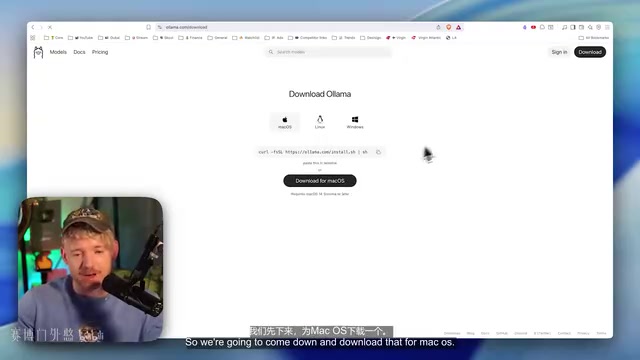
Ollama + Hermes Local AI Deployment: Building a 100% Private Personal AI Operating System
Build a fully private local AI system with Ollama + Hermes: zero cost, no rate limits, data stays local. Learn deployment steps, model selection tips, and private/cloud hybrid workflows.
Read more →

·7 min
Electron + LangGraph in Practice: Building an AI Agent Visual Orchestration App from Scratch
A hands-on guide to building an enterprise-grade AI Agent workflow orchestration app with Electron Forge and LangGraph, covering local LLM deployment (Qwen3-0.6B), node-based visual canvas design, and full Function Calling integration.
Read more →
·5 min
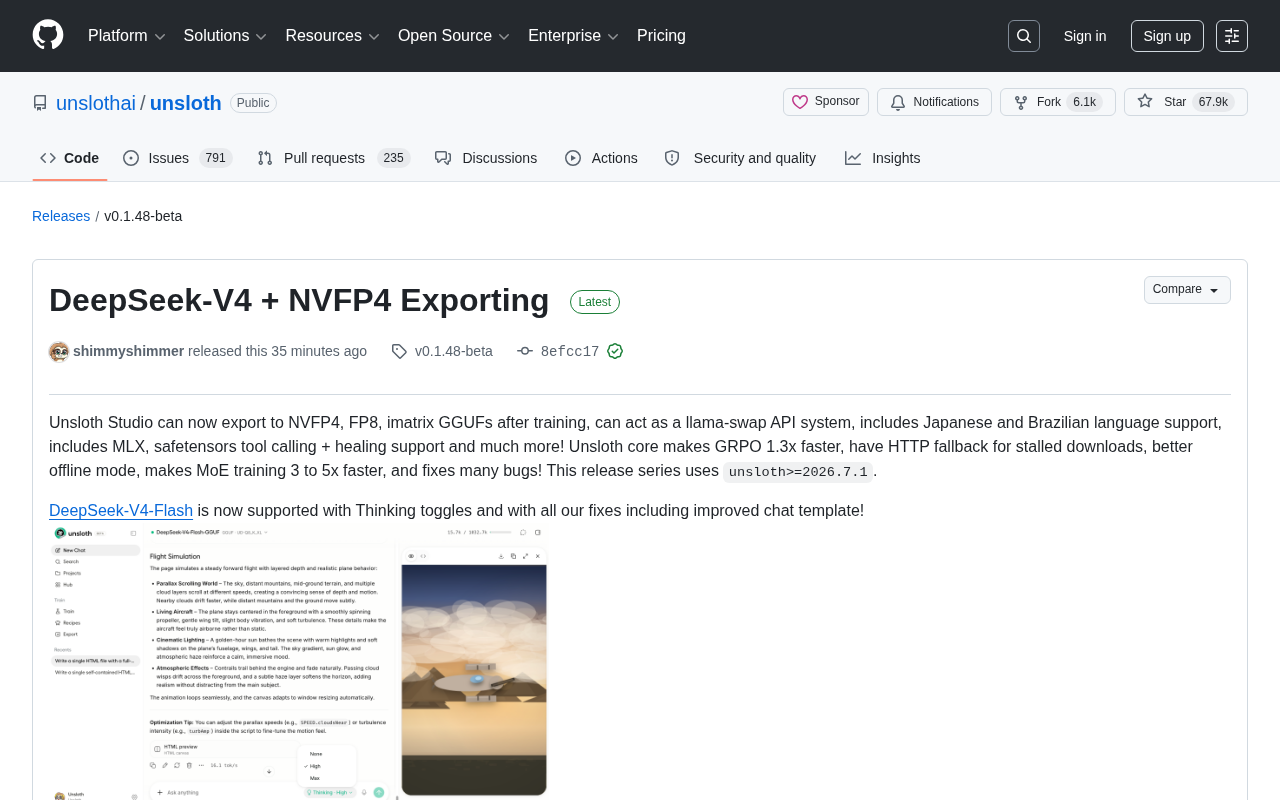
Major Unsloth Update: NVFP4 Quantization Export and DeepSeek-V4 Training Support
Unsloth v0.1.48-beta released, adding NVFP4/FP8 quantization export, OpenAI-compatible API hot-swapping, 3-5x faster MoE training, and 1.3x faster GRPO, covering the full LLM fine-tuning, quantization, and local deployment pipeline.
Read more →

·2 min
Baseten Raises $1.5 Billion: Why AI Inference Infrastructure Has Become a Capital Darling
AI inference startup Baseten is raising $1.5B at a $130B valuation. We analyze why inference infrastructure is booming, the competitive landscape, and what this mega-round signals.
Read more →

·2 min
Antigravity Android Plugin: A Hands-On Guide to AI-Powered Android Development
Explore Google's Antigravity Android plugin: auto Android CLI setup, Skills system for Compose Style & Nav 3, and AI-driven full-cycle Android development.
Read more →

·3 min
Hermes Agent Deep Dive: A Self-Evolving Agent Architecture with Practical Implementation Guide
Deep dive into Hermes Agent's core architecture: four-layer memory system, Skill self-evolution mechanism, Harness Engineering methodology, OpenCloud comparison, and Feishu integration tutorial.
Read more →