#hybrid optimization
355 related articles

·3 min
How to Choose an AI Agent Platform for Your Team: 5 Evaluation Dimensions and a Decision Framework
Choose the right AI Agent platform by evaluating model flexibility, observability, tool integration, security compliance, and total cost. A complete decision framework to help technical leaders avoid vendor lock-in.
Read more →

·3 min
How to Choose an AI Agent Platform for Your Team: 5 Evaluation Dimensions & Decision Framework
Choose an AI Agent platform by evaluating model flexibility, observability, tool integration, security compliance, and total cost. A complete decision framework to avoid vendor lock-in.
Read more →

·4 min
Getting Started with AI Agent Development: A Complete Guide from Concept to Practice
A comprehensive guide to AI Agent architecture and development, covering automated marketing, intelligent customer service, and investment analysis scenarios with single and multi-agent collaboration.
Read more →

·3 min
AMD CDNA5 Architecture Deep Dive: Technical Evolution and the AI Computing Competition Landscape
Deep analysis of AMD's CDNA5 architecture covering Chiplet packaging upgrades, HBM memory evolution, and low-precision compute optimization, examining how AMD challenges NVIDIA's AI chip dominance.
Read more →

·5 min
The Five Stages of AI Agent Architecture Evolution: The Real Path from Model Calls to Production Runtime
Deep dive into the five evolution stages of AI Agent architecture: model calls, tool calls, workflows, Agent loops, and production runtime. Learn the responsibility boundaries and design principles.
Read more →

·4 min
AI Agent Development in Practice: A Complete Path from Zero to Production
A systematic guide to AI Agent development covering core modules, framework selection, tool calling, data preparation, and production deployment to help developers build production-ready Agent applications.
Read more →

·4 min
Building a $5,000 Home Solar System: Budget Breakdown, DIY Process & Payback Analysis
A detailed guide to building a home solar power and storage system for under $5,000, covering PV panel and LiFePO4 battery selection, budget allocation, DIY installation risks, and 5-6 year payback analysis.
Read more →
·3 min
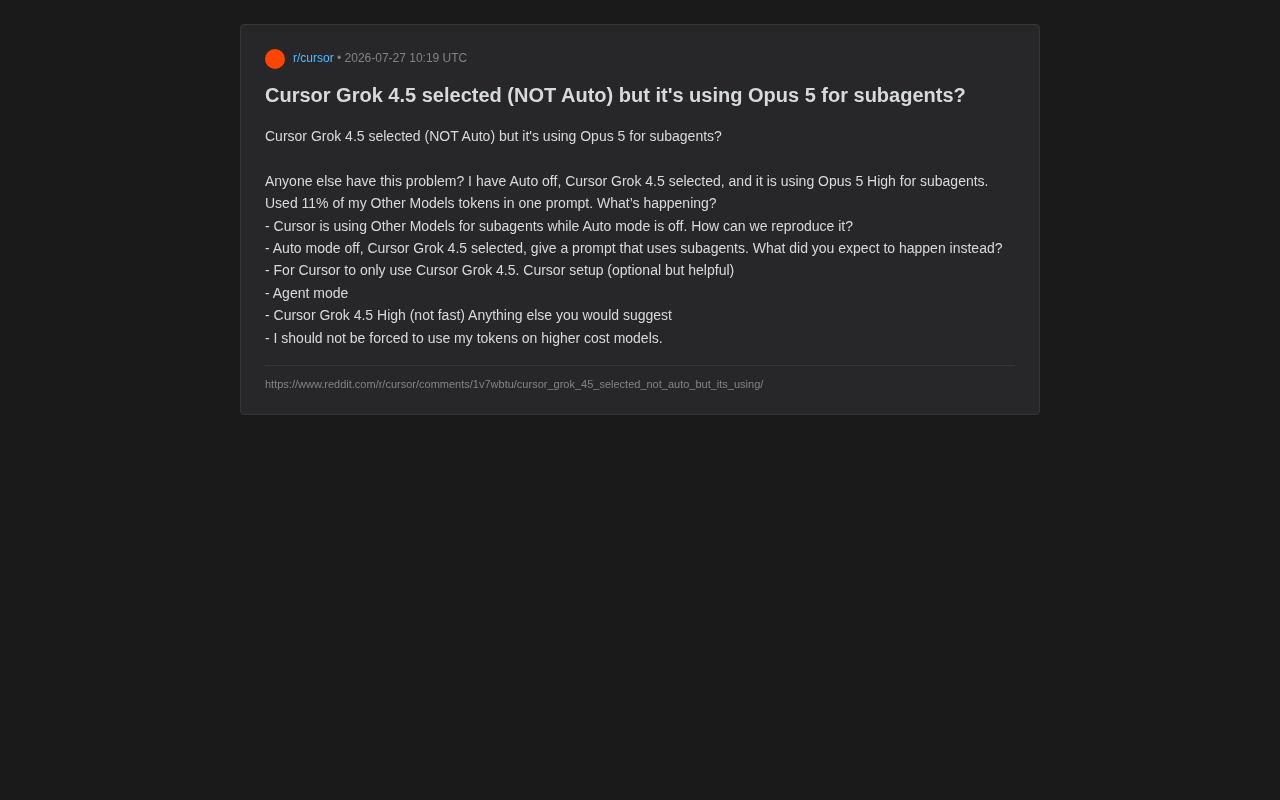
Cursor Selects Grok but Calls Opus: Subagent Model Substitution and Cost Control Issues Explained
Cursor users selecting Grok 4.5 find subagents secretly calling expensive Opus 5, consuming 11% quota per prompt. Analysis of model decoupling, cost transparency, and user strategies.
Read more →

·2 min
Is Bun Being Rewritten in Rust? A Deep Dive into the Zig vs Rust Technical Decision
Is Bun being rewritten in Rust? This article explores the community debate and analyzes why Bun chose Zig over Rust, examining the engineering tradeoffs between Zig and Rust in systems programming.
Read more →

·3 min
How to Assemble a Modern Email System with Off-the-Shelf Components: A Modular Architecture Guide
Learn how to assemble a modern email system using off-the-shelf services like Postmark, SendGrid, and Amazon SES, covering sending, receiving, authentication, and trade-offs around vendor lock-in and cost.
Read more →

·3 min
Unified Prompt Management, Evaluation & Observability: A Comprehensive Comparison of LangSmith and Other Leading Platforms
In-depth comparison of LangSmith, Langfuse, PromptLayer, Helicone, and Orq.ai across Prompt management, Evals, and observability to help teams choose the best unified LLM Ops platform.
Read more →

·4 min
The More Complex the AI Agent, the More It Hallucinates? The Hidden Cost of Architectural Complexity
Why do AI Agents hallucinate more as they grow more complex? This article analyzes the causes from error accumulation, context noise, and model completion nature, with 5 practical production strategies.
Read more →

·3 min
Kimi K3 Local Deployment Guide: Storage Requirements for q4 and q8 Quantization Explained
Detailed analysis of Kimi K3 quantization deployment options, comparing q4 vs q8 storage requirements, precision trade-offs, and hardware configurations for local self-hosting.
Read more →

·4 min
Frontend Engineer Driven to Homelab by AI: From React Specialist to Full-Stack Self-Rescue
A 7-year frontend engineer, fearing AI-driven job loss, builds a homelab to learn Docker, databases, and networking. A pragmatic roadmap for developers building breadth in the AI era.
Read more →

·2 min
Qoder vs Cursor: A Hands-On Comparison of AI Coding Tools
Which is better, Qoder or Cursor? This article compares both AI coding tools through real development scenarios across context understanding, code quality, and Agent autonomy to help you choose the best fit.
Read more →

·4 min
FPGA Softmax Approximation in Practice: A Detailed Guide to Taylor Expansion and Padé Approximation Methods
A detailed guide on efficiently implementing Softmax on FPGAs, comparing Taylor series and Padé approximation methods for accuracy and resource trade-offs, with Python simulation and range reduction techniques.
Read more →

·3 min
Build RAG and AI Agent Projects at Zero Cost: A Practical Guide to Open-Source Tools
Build high-quality AI projects on a budget. Learn how to use Ollama, Groq, Chroma, and other free open-source tools to build RAG systems and multi-Agent workflows from scratch.
Read more →
·3 min
Build RAG and AI Agent Projects at Zero Cost: A Practical Guide to Open-Source Tools
Build high-quality AI projects on a budget. Learn how to use Ollama, Groq, Chroma, and other free open-source tools to build RAG systems and multi-Agent workflows from scratch.
Read more →

·4 min
GenAI Job Interview Gone Wrong: Interviewer Googles Gemini for Questions on the Spot — What's Broken in AI Hiring?
A fresh grad interviewing for a GenAI Trainer role faced prime number coding and activation function questions while the interviewer used Gemini to generate questions live — exposing AI hiring chaos.
Read more →

·4 min
The Cursor Swarm Experiment: What AI Rebuilding SQLite from Scratch in Rust Reveals About Cost
Cursor's swarm experiment had AI teams implement a SQLite engine in Rust from scratch using only 835 pages of docs. All-frontier models cost $10K+, hybrid role division just $1.3K—a 7.9x gap.
Read more →