#hyperparameter tuning
195 related articles
·3 min
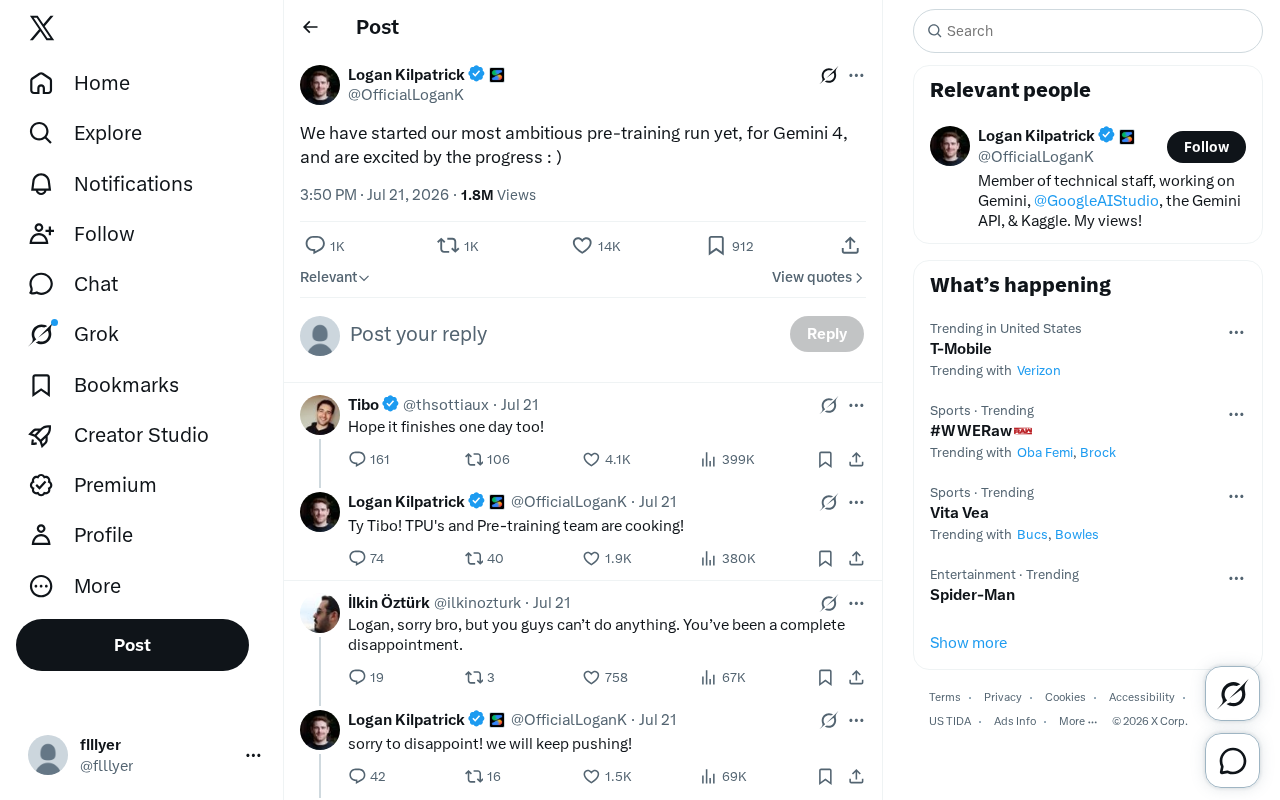
Google Launches Gemini 4 Pre-training: Its Most Ambitious AI Model Training Yet
Google DeepMind announces Gemini 4 pre-training has begun, calling it their most ambitious training yet. A deep dive into its technical direction, compute scale, multimodal breakthroughs, and competitive impact.
Read more →
·3 min
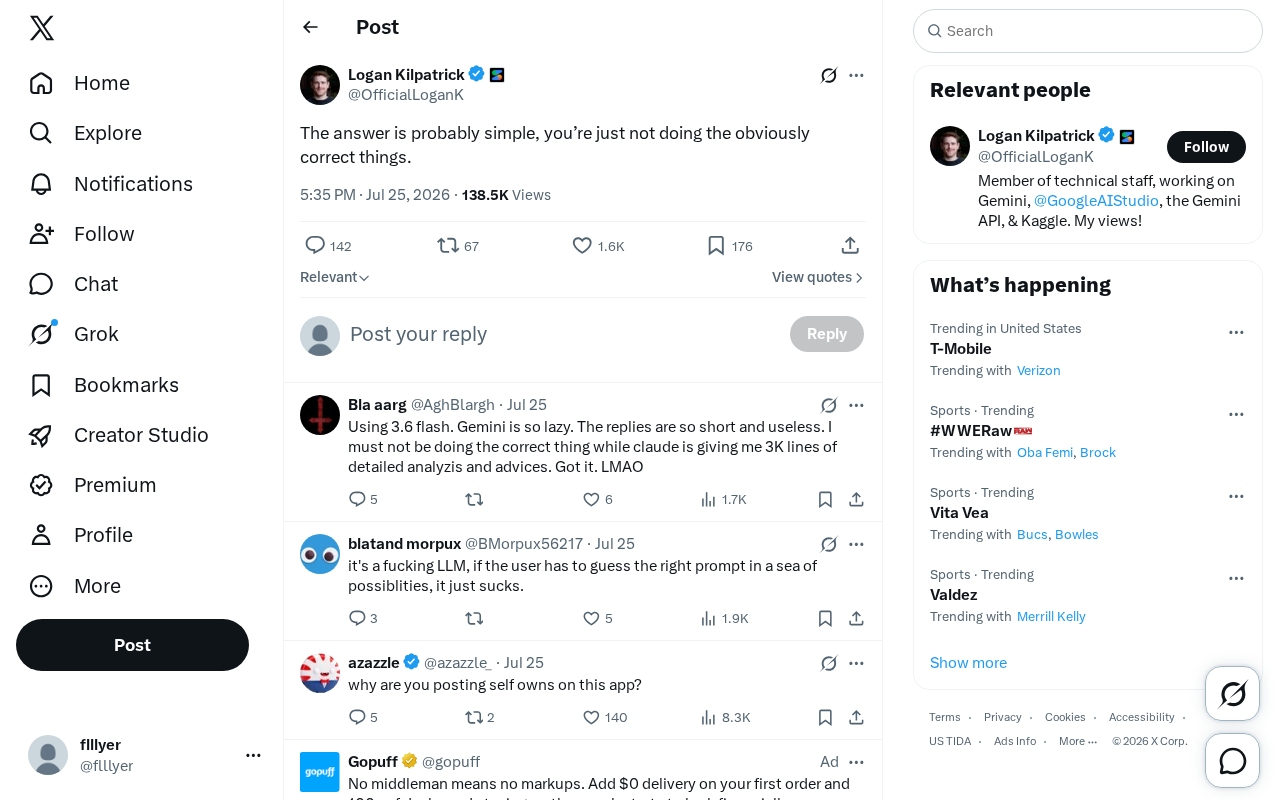
AI Not Working Well? Start by Getting These Simple but Often Overlooked Things Right
When AI systems underperform, the problem often isn't the model or algorithm — it's that basics like data cleaning, prompt writing, and evaluation aren't done right. Learn the simple fixes that matter most.
Read more →
·3 min
The Open-Weights Model Debate: Balancing Safety and Openness
An in-depth analysis of the open-weights model debate: public release brings transparency and innovation, but raises safety and misuse risks. Exploring tiered release, red-teaming, and governance challenges.
Read more →
·3 min
The Open-Weights Model Debate: Balancing Safety and Openness
An in-depth analysis of the open-weights model debate: publicly releasing model weights enables transparency and innovation but raises safety risks. Explores tiered release, red-teaming, and the industry dynamics behind open AI governance.
Read more →

·2 min
LightlyStudio: Open-Source Image Embedding Exploration Tool with Million-Scale Data Visualization
LightlyStudio is an Apache-2.0 open-source tool for image embedding visualization, hover preview, and distribution analysis, tested at million-scale to help developers explore, debug, and curate visual datasets.
Read more →

·4 min
Gemini 3.5 Pro Hands-On: No More Lazy Code Generation, Complete Projects in a Single Output
A Reddit user tested Gemini 3.5 Pro in Arena and found it generates 20+ files with hundreds of lines of code per file in a single pass, with no lazy shortcuts or placeholders.
Read more →

·3 min
DeepSeek-OCR Deployment and Fine-Tuning: A Complete Hands-On Guide
Master the full DeepSeek-OCR deployment and fine-tuning workflow: vLLM inference deployment, efficient Unsloth fine-tuning, dataset preprocessing, LoRA training, validation, and RAG vector database integration.
Read more →

·3 min
OpenAI Releases GPT-5.6 and ChatGPT Work: The Era of Autonomous AI Has Arrived
OpenAI launches GPT-5.6 (Sol, Terra, Luna), ChatGPT Work, a new desktop app, and Sites hosting. AI evolves from a Q&A tool into an autonomous work partner for finance, file management, and more.
Read more →

·4 min
jlens-gguf: Bringing Jacobian Lens Visualization and Steering to llama.cpp Local LLMs
jlens-gguf is an open-source tool bringing Anthropic's Jacobian Lens interpretability method to GGUF and llama.cpp, enabling internal observation, real-time steering, and abliteration for both dense and MoE models.
Read more →
Kronos Financial Foundation Model: Usi…
·7 min
Kronos Financial Foundation Model: Using AI to Read the Market Language of Candlesticks
Kronos is the first open-source foundation model treating candlestick data as the "language of financial markets," using an autoregressive Transformer and earning 32K GitHub Stars. A deep dive into its principles, applications, and limits.
Read more →

·3 min
Career Pivot at 47: Midlife Job Anxiety and Redefining Competence in the Age of AI
A 47-year-old engineer who pivoted to data science faces re-employment struggles — a mirror of AI-era anxiety: does using AI count as coding? How to break the midlife career trap?
Read more →

·3 min
LoRA Training Showdown: We Tested 6 Base Models — Does Ideogram Beat Flux?
A developer ran a 4-day benchmark testing LoRA training across Ideogram, Flux 1 Dev, Flux 2 Dev & more — revealing overfitting traps and surprising rankings.
Read more →

·2 min
Gradient-Free Evolutionary Model GENREG: How Radial Space Search Bypasses Backpropagation
GENREG-Radial Space is a gradient-free evolutionary optimization model that replaces backpropagation with structured radial space search. This article analyzes its core mechanisms, temporal evolution design, exploration-exploitation balance, and potential as a hybrid paradigm.
Read more →

·3 min
GPT-5.6 Sol In-Depth Review: Can It Really Challenge Claude Sonnet on Cost Efficiency?
A deep dive into OpenAI GPT-5.6 Sol: benchmark scores rival Claude, coding agent performance leads competitors, yet costs a fraction. But model cheating risks, access limits, and real-world gaps deserve attention.
Read more →
From Math to AI Research Engineer: A D…
·2 min
From Math to AI Research Engineer: A Deep Dive into the Viral GitHub Learning Roadmap
A GitHub project called maths-cs-ai-compendium surpassed 6,000 Stars with a roadmap for becoming an AI/ML Research Engineer. Here's what makes it worth following.
Read more →

·3 min
Zero-Code Research: Using AI Agents to Run Complete Machine Learning Experiments
No coding required: use AI agents like Codex and Claude Code to complete full ML experiments via natural language. A real case study with a heart disease dataset.
Read more →
·3 min
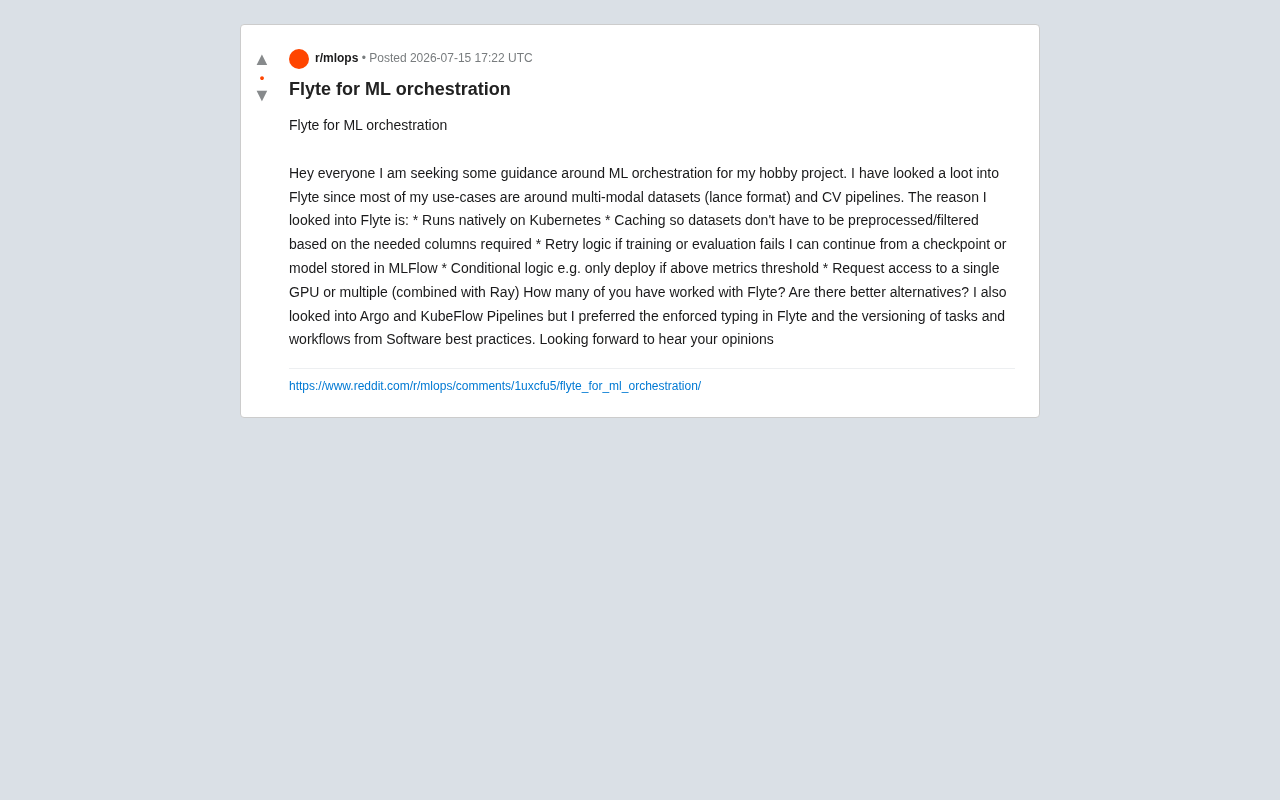
Flyte Deep Dive: A Practical Guide to Choosing Your ML Workflow Orchestration Tool
Deep dive into Flyte's core capabilities: cloud-native GPU scheduling, intelligent caching, checkpoint recovery, and conditional deployment — plus a full comparison with Argo and KubeFlow Pipelines.
Read more →

·2 min
RL3: A Zero-Code Reinforcement Learning Platform Where You Train Agents by Dragging and Dropping
RL3 is a zero-code, browser-based reinforcement learning platform featuring drag-and-drop environment design, visual reward configuration, and Q-learning/PPO training. Built by an indie developer over 15 months to make RL accessible to everyone.
Read more →

·2 min
Build From Scratch or Just Use sklearn? A Complete ML Engineer Learning Path Guide
Should you implement ML algorithms from scratch or just use sklearn? This guide breaks down the optimal learning path for ML engineers by career stage and company type.
Read more →
·2 min
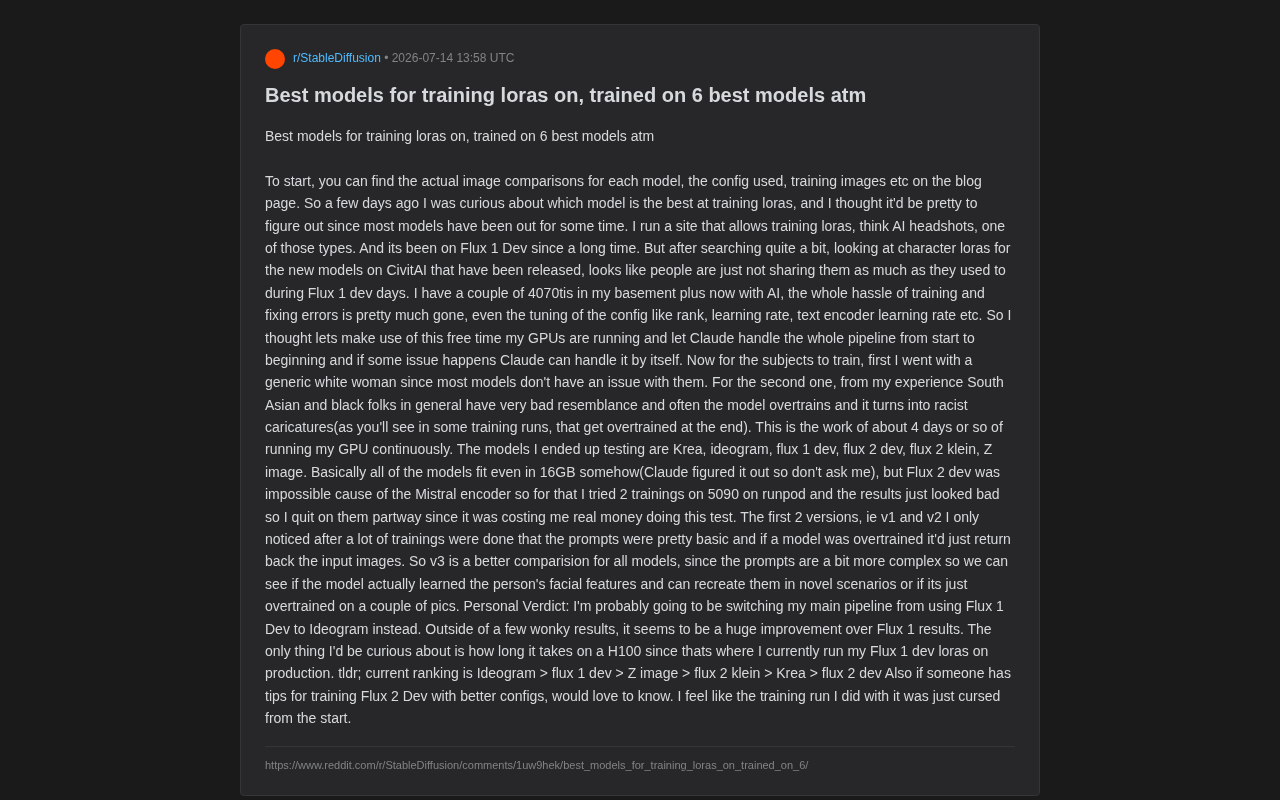
LoRA Training Showdown: Which Base Model Is Best for Character Fine-Tuning? A 6-Model Real-World Test
Real-world LoRA training comparison across Ideogram, Flux 1 Dev, Z Image, Flux 2 Klein, and Krea — revealing which base model best handles face fidelity and generalization for AI portrait developers.
Read more →