#iPhone LLM
69 related articles
·2 min
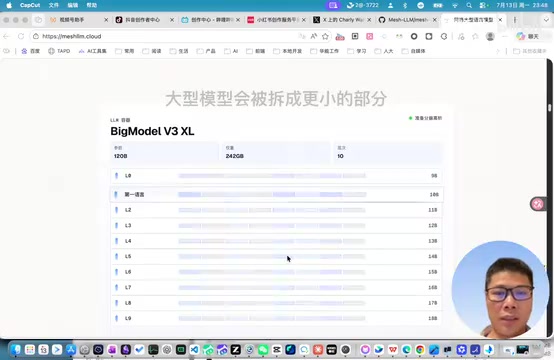
Mesh LLM: Pool Multiple Old Computers Into a Virtual Super GPU for Running Large Models
Mesh LLM is an open-source distributed inference framework that splits model layers across multiple devices, creating a virtual super GPU to run 100GB+ LLMs on consumer hardware.
Read more →

·6 min
OpenAI Merges ChatGPT and Codex: The Super App for the AI Agent Era Is Here
OpenAI merges ChatGPT and Codex into a super app and releases three new GPT-5.6 models: Sol, Terra, and Luna. A deep dive into four hands-on workflows—Computer Use, Loops, and multi-threading—for the AI agent era.
Read more →

·3 min
Understanding RAG from Scratch: A Complete Guide to Retrieval-Augmented Generation
RAG (Retrieval-Augmented Generation) is a key technology for solving LLM hallucinations. This guide breaks down how RAG works, its advantages, and real-world use cases — no math required.
Read more →

·2 min
LangChain in Practice: Building the ChatDoc Document Chat Application with RAG
An in-depth explanation of RAG (Retrieval-Augmented Generation) principles, with a hands-on guide to loading PDF, Word, and other document formats in LangChain to build a complete ChatDoc Q&A app.
Read more →

·5 min
How Can Working IT Professionals Learn AI Efficiently? A Practical Learning Path from Zero to Real-World Projects
Limited time but want to learn AI systematically? This guide maps out a practical learning path for working IT pros—from AI application engineering and prompt engineering to RAG and Agents.
Read more →
·6 min
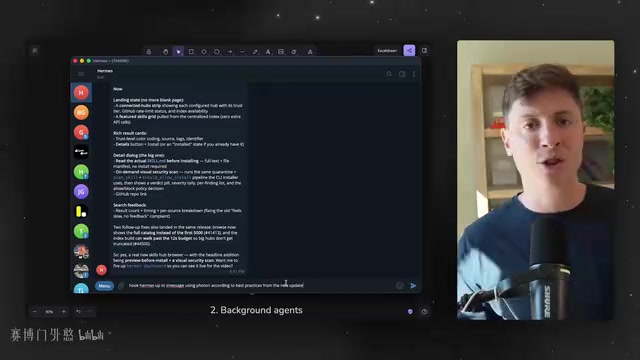
Hands-On With Hermes Agent's Eight Major Updates: A Complete Guide to AI Automation and Self-Evolution
The Hermes Agent gets a major upgrade with eight new features: native iMessage, parallel background sub-agents, Unreal Engine MCP support, a self-evolving Skill Hub, and more. A hands-on breakdown of the core changes and their real impact on personal AI automation workflows.
Read more →

·4 min
TomoAI vs Daimon: An In-Depth AI Companion Comparison — Which One Is Worth Sticking With?
An in-depth comparison of AI companion apps TomoAI and Daimon: conversation experience, long-term memory, cross-platform support, and pricing to help you find the right AI companion.
Read more →

·3 min
Benchmarking LLMs on Smartphones: A Deep Dive into the MELTing Point Benchmark
The MELTing Point paper is the first to evaluate mobile LLM performance in real user scenarios, covering iPhone, Samsung, Pixel and more, testing TinyLlama, Mistral-7B and others—revealing GPU inference gains, 47°C heat warnings, and prefill-decode disaggregation.
Read more →

·5 min
DCTS: A Deep Dive into an Open-Source Self-Hosted E2EE Encrypted Communication Platform
DCTS is an open-source, self-hosted instant messaging platform led by an individual developer, integrating E2EE and decentralized architecture across desktop and mobile.
Read more →

·4 min
433 Fitness Exercises Open-Source Dataset: Structured Fields + Animation Demos Fully Explained
GitHub trending project exercises-dataset features 433 fitness exercises with target muscles, equipment types, instructions, and animation demos—ideal for fitness apps, AI coaches, and RAG systems.
Read more →

·5 min
Has Apple Lost the AI Race? The Battle Between Software Setbacks and the Hardware Moat
After Apple failed to deliver on its new Siri promise for two years running, many ask: has Apple lost the AI race? We break down two AI tracks—software models vs. on-device hardware.
Read more →
·3 min
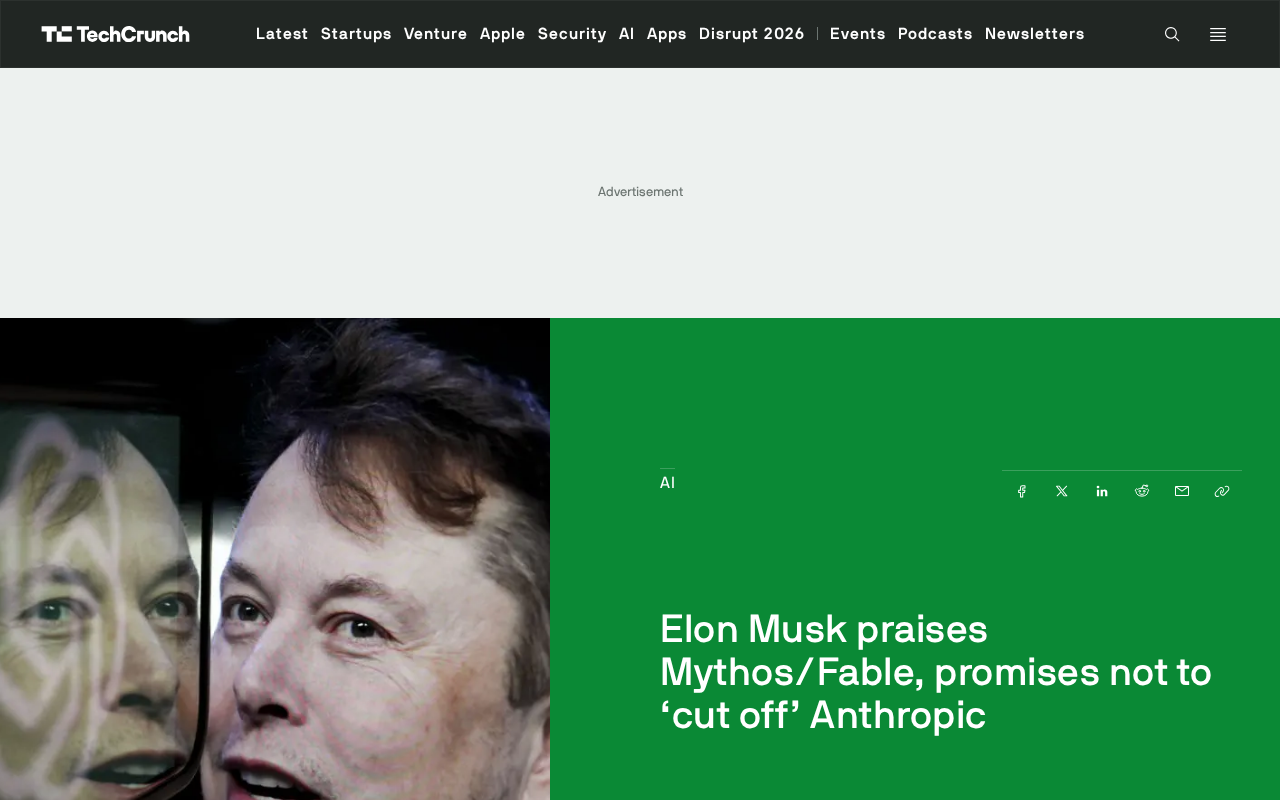
Musk Pledges Not to Cut Off Anthropic: The Trust Game in AI Cloud Infrastructure
Musk publicly pledges not to cut off Anthropic's compute access. We break down the $40B stakes, AI infrastructure coopetition, and how companies manage trust risk in a compute-concentrated era.
Read more →

·3 min
Running LLMs Locally: The Illusion vs. the Real Value of Open-Weight Models
Open weight ≠ runnable locally. This article breaks down the hardware barriers, VRAM limits, electricity costs, and parallelism constraints of models like GLM 5.2 and DeepSeek — revealing where open-weight models truly add value: driving cloud competition, not home replication.
Read more →

·4 min
6-Week Agent Engineering Roadmap: From Beginner to Enterprise Deployment
A structured 6-week roadmap for enterprise Agent deployment covering LangChain, LangGraph, MCP, and RAG — from planning and memory to multi-agent collaboration and production deployment.
Read more →

·7 min
The Revenge of the Philosophy Majors in the AI Era: Why Critical Thinking Has Become the New Scarce Resource
As generative AI sweeps the workplace, once-marginalized philosophy and humanities are being revalued. This article explores why critical thinking, ethical judgment, and questioning are the new scarce competencies in the AI era.
Read more →
·7 min
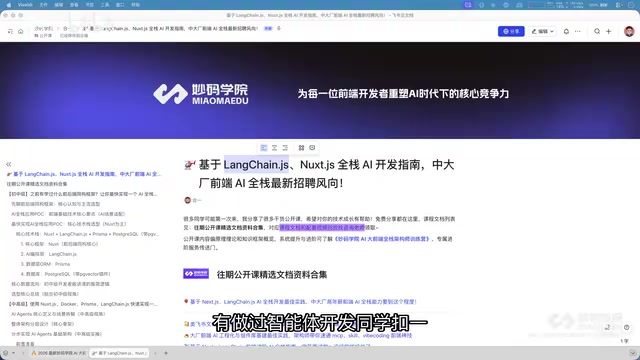
LangChain.js + Nuxt.js: An AI Full-Stack Advancement Path for Frontend Engineers
Frontend hiring now treats AI capabilities as a core assessment, covering RAG knowledge bases, AI Agent development, and LangChain.js engineering. Learn how LangChain.js + Nuxt.js helps frontend developers build memory- and retrieval-capable AI full-stack apps.
Read more →

·6 min
Can AI Antivirus Cure the Chronic Pop-Up Problem? An In-Depth Hands-On Review of Wukong Security
Struggling with Windows pop-ups and rogue software? This in-depth review of Wukong Security reveals how AI antivirus breaks past traditional virus-database limits, blocking ads and bundleware in real time, plus a comparison of five repair shops.
Read more →

·7 min
Dispersion Loss: A Key Technique for Solving Embedding Condensation in Small Language Models
Embedding condensation is a hidden bottleneck in small language model training. Dispersion Loss combats this by enforcing representation spread during training at zero inference cost.
Read more →

·2 min
AI Marketing Backlash: Why Obsessing Over 'AI-First' Is Starting to Backfire
Why "AI-First" branding is backfiring: how over-marketing AI erodes brand trust, triggers consumer fatigue, and what brands should do instead to rebuild credibility.
Read more →

·6 min
OpenAI CFO Deep Dive: IPO Stance, Compute Shortage, and Jony Ive's New Hardware Revealed
OpenAI CFO Sarah Fryer discusses the $122B fundraise, IPO timeline, Anthropic rivalry, compute shortage crisis, and the mysterious Jony Ive hardware collaboration on the All-In Podcast.
Read more →