#in-context optimization
50 related articles

·6 min
LangChain 1.3 in Practice: A Complete Guide to DeepAgent Architecture and the Harness Philosophy
An in-depth look at LangChain 1.3's core modules and DeepAgent architecture—covering the Harness philosophy, LangGraph internals, HITL, memory management, and guardrails to master production-grade AI Agent development.
Read more →
·7 min
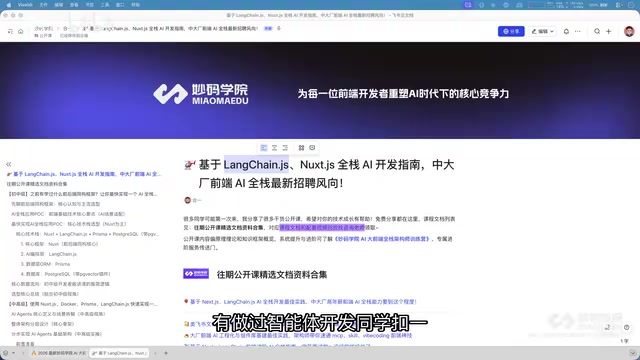
LangChain.js + Nuxt.js: An AI Full-Stack Advancement Path for Frontend Engineers
Frontend hiring now treats AI capabilities as a core assessment, covering RAG knowledge bases, AI Agent development, and LangChain.js engineering. Learn how LangChain.js + Nuxt.js helps frontend developers build memory- and retrieval-capable AI full-stack apps.
Read more →

·6 min
AI Agent Learning Roadmap: A Four-Stage Guide from Beginner to Practical Mastery
A systematic AI Agent learning roadmap in four progressive stages: fundamentals → ReAct core paradigm → memory & tools → multi-agent collaboration. Master LangChain, AutoGen, and more, growing from beginner to practical developer in three months.
Read more →

·5 min
The Rise of Slow Content: A Tweet Sparks Reflection on the Attention Economy and Content Creation
A tweet about "live streaming reading a book aloud" reflects the deep dilemma of content creators in the attention economy. This article explores the revival of slow content, the irreplaceability of the human voice in the AI era, and lessons on content differentiation.
Read more →

·5 min
Introduction to Prompt Engineering: A Complete Guide to Core Concepts, Methodologies, and Limitations
Prompt engineering is a core skill in the AI era. This article breaks down the essential differences between prompts and prompt engineering, the six-step workflow, four evaluation criteria, and key limitations like context limits and hallucination.
Read more →

·7 min
Harness Engineering: Core Methodology and Practical Guide for Enterprise-Level AI Programming
Can AI really replace programmers? This article explains Harness Engineering principles and its three evolutionary stages, revealing real pain points of enterprise AI programming.
Read more →

·7 min
The Complete Guide to OpenCode: Installing, Configuring, and Using the Terminal AI Coding Assistant
An in-depth guide to installing, configuring, and extending OpenCode, the terminal AI coding assistant. Covers desktop and WSL installation, model config, MCP integration, and custom Agents.
Read more →
GPT-5.5 Codex Reasoning-Token Clusteri…
·2 min
GPT-5.5 Codex Reasoning-Token Clustering Explained: Causes of Performance Regression and How to Respond
An in-depth look at reasoning-token clustering in GPT-5.5 Codex — exploring causes like reasoning budget imbalance and model iteration side effects, with prompt engineering strategies for developers.
Read more →

·8 min
The Codex Orange Book: An Open-Source Full-Stack Practical Guide for AI Programming Beginners
The Codex Orange Book is an open-source unofficial guide with 2.5K+ GitHub Stars, covering installation, plugins, MCP extensions, and hands-on projects to help beginners master AI programming tools.
Read more →

·7 min
Building an AI Agent from Scratch: Implementing Core Conversational Agent Features in Python
Learn AI Agent development from scratch. This tutorial covers LLMs and prompts, then builds a conversational agent in Python using the DeepSeek API with multi-turn dialogue and system prompts.
Read more →

·7 min
Complete Guide to OpenCode: Installation, Configuration, and Custom Commands in Practice
A systematic guide to OpenCode, the open-source terminal AI coding tool: installation methods (including WSL), model configuration, rules files, Agent types, custom commands, and MCP tool extensions.
Read more →

·7 min
Cost Optimization for AI Agent Fleets: Why an Expensive Commander + Cheap Workers Is More Cost-Effective
Deep analysis of multi-agent system cost optimization: why the 'expensive commander + cheap workers' combination outperforms all-frontier fleets, covering decision-intent cost logic and Sonnet 5 tokenizer traps.
Read more →
·3 min
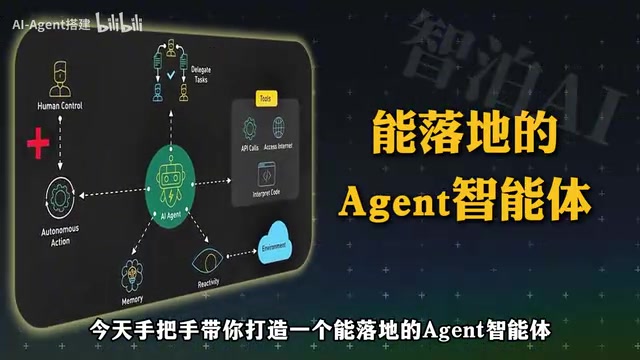
AI Agent Beginner's Guide: A Complete Four-Stage Learning Path
A complete learning path for AI Agent development from scratch, covering core theory, ReAct paradigm, multi-agent collaboration, Prompt optimization, and hands-on projects across four stages.
Read more →

·3 min
Four Prompts to Remove the AI Smell from Your Articles, Plus Detection Tools and a Complete Workflow
Four tested prompts to fix AI-generated articles: remove clichés, simplify structure, add conversational tone, and adjust voice. Includes detection tools and a complete workflow.
Read more →

·3 min
A Three-Month Roadmap to LLM Development: A Deep Dive into the Learning Path from Zero to Freelancing
A deep dive into the three-step LLM development learning path: from prompt engineering and RAG knowledge bases to AI Agent development, with realistic timelines for beginners and experienced developers.
Read more →

·3 min
Building AI Agents from Scratch: A Complete Beginner's Guide
Build AI Agents with zero coding experience! Learn prompt engineering, RAG knowledge bases, and workflow orchestration using no-code platforms like Coze and Dify, plus real monetization paths.
Read more →

·3 min
Open-Source Models Keep Throwing Errors in Your Code? The Problem Might Be the Framework
DeepSeek and Kimi keep failing at coding? The problem may not be the model but the framework. Learn how Commander Code fixes this with cache routing, tool call repair, and continuous learning.
Read more →

·2 min
Three Key Narrative Threads Behind Siri's Reboot
Apple's Siri is undergoing its biggest reboot ever. Tim Cook sets AI strategy, Craig Federighi leads integration, and Mike Rockwell rebuilds Siri from the ground up.
Read more →

·4 min
The 8 Core Modules of Prompt Engineering: A Complete Guide from Fundamentals to Advanced Techniques
A systematic breakdown of the 8 core modules of prompt engineering, covering fundamentals, CoT, Few-shot, prompt security, and real-world AI applications.
Read more →

·3 min
Prompt Template Design for Document Summarization: A Practical Guide to Three-Layer Progressive Prompt Engineering
A practical guide to three-layer progressive Prompt template design for document summarization, covering requirements analysis, architecture design, validation, and optimization — boosting information extraction completeness from 78% to 91%.
Read more →