#in-context optimization
46 related articles

·4 min
What Is the True Nature of Large Language Models? A Super Compressor Analogy That Makes Everything Click
LLMs aren't search engines — they're more like super compressors. This article explains how large models compress corpora to learn semantic patterns, and explores the principles and limitations of emergent intelligence.
Read more →

·5 min
30+ Free AI & Machine Learning Classic Textbooks: All in One GitHub Repository
Awesome Free AI Books is an open-source repo with 30+ legally free AI & ML classic textbooks covering deep learning, reinforcement learning, NLP, LLMs, and more — all linking to official sources with weekly automated link checks.
Read more →

·7 min
Context Engineering: A Systematic Approach to Stop AI Agents from 'Talking Nonsense'
Context engineering is the core methodology for building efficient AI Agents, covering query enhancement, RAG retrieval, prompt design, memory management, and tool invocation. Master Write, Select, Compress, and Isolate to solve LLM hallucination at its root.
Read more →
·2 min
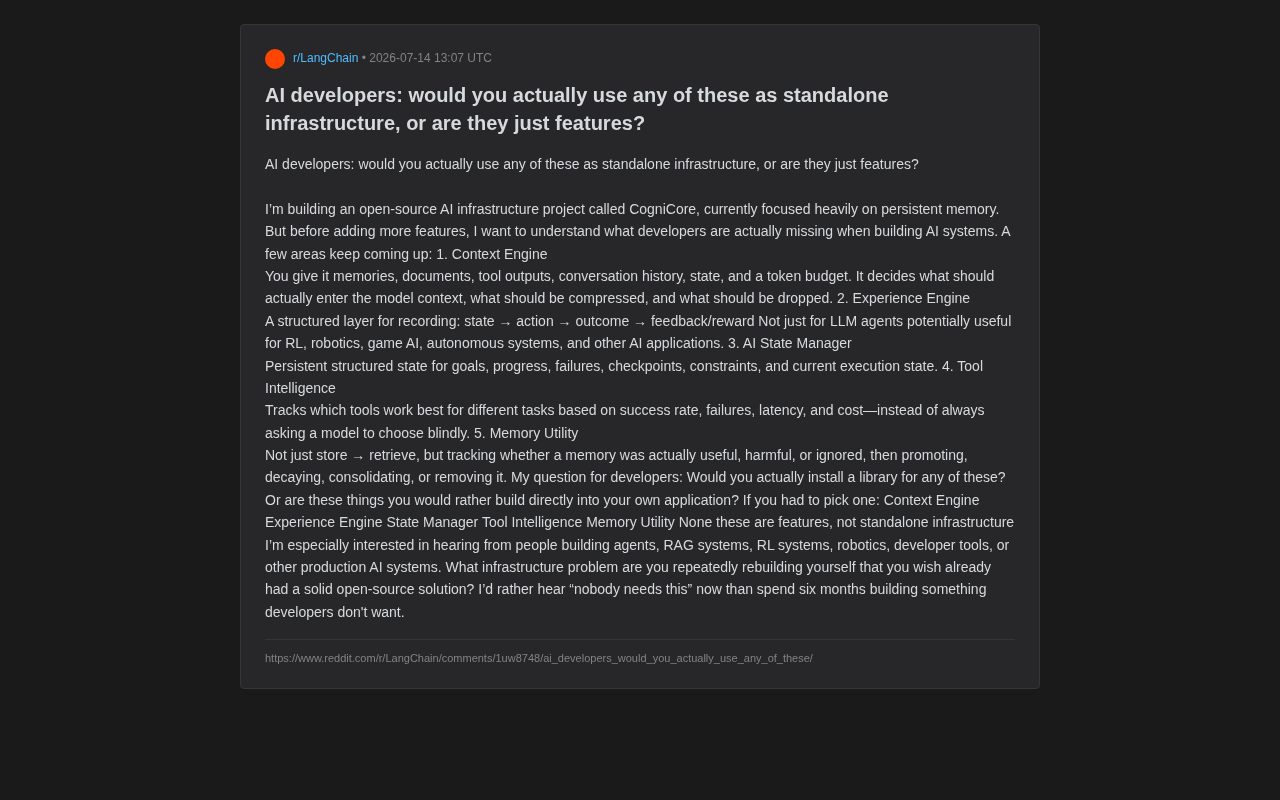
AI Infrastructure or App Feature? The Architecture Debate Sparked by CogniCore
CogniCore asks: should persistent memory, context engines, and state management be standalone AI infrastructure or in-app features? A deep dive into 5 key directions and the missing middleware of the agent era.
Read more →

·7 min
Claude Code Practical Tutorial: A Complete Beginner's Guide to Automating Your Entire Workflow
No coding required! This guide breaks down the complete Claude workflow: custom Projects, batch SEO content, one-sentence tool building with Artifacts, and Claude Code terminal ops—with real traffic-growth cases.
Read more →
How DSLs Make LLM Outputs More Reliabl…
·3 min
How DSLs Make LLM Outputs More Reliable: Principles and Practice
LLM output instability is a core production challenge. This article analyzes how DSLs improve LLM reliability through verifiability, semantic convergence, and structural constraints.
Read more →

·2 min
The Complete AI Agent Development Roadmap: A Four-Stage Guide from Zero to Production
A complete four-stage AI Agent development roadmap: from LLM fundamentals and core modules, to ReAct/CoT paradigms, multi-agent collaboration, and real-world projects.
Read more →

·2 min
AI Agent Development in Practice: A Complete Guide to Framework Selection, Tool Calling, and Production Deployment
A comprehensive guide to AI Agent development: covering Agent vs. Chatbot differences, framework selection, tool calling design, RAG pipeline setup, and production deployment best practices.
Read more →

·4 min
The Complete AI Agent Development Learning Path: From Zero to Enterprise-Grade Practice
A systematic AI Agent development learning path covering fundamentals, prompt engineering, tool calling, multi-agent collaboration, and hands-on practice with LangChain, CrewAI, and Dify.
Read more →
·6 min
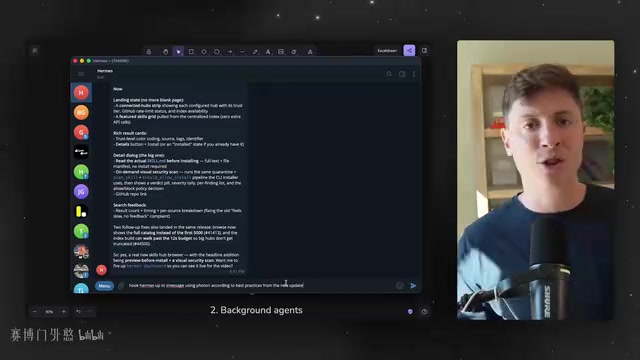
Hands-On With Hermes Agent's Eight Major Updates: A Complete Guide to AI Automation and Self-Evolution
The Hermes Agent gets a major upgrade with eight new features: native iMessage, parallel background sub-agents, Unreal Engine MCP support, a self-evolving Skill Hub, and more. A hands-on breakdown of the core changes and their real impact on personal AI automation workflows.
Read more →

·3 min
TabFM: A Zero-Shot Foundation Model for Tabular Data That Disrupts Traditional Modeling
TabFM is a zero-shot foundation model designed for tabular data, enabling direct prediction without retraining on new datasets. This article analyzes TabFM's positioning, its relationship to TabPFN, key strengths, and real-world challenges.
Read more →

·6 min
A Three-Month AI Agent Learning Roadmap: From Zero to Hands-On Agent Development
A systematic breakdown of the complete AI Agent learning roadmap, covering prompt engineering, the ReAct paradigm, memory mechanisms, and multi-agent collaboration, with hands-on project advice.
Read more →

·6 min
Introduction to Prompt Engineering: Principles, Methods, and Practical Case Studies
Prompt Engineering is the core skill for harnessing LLMs. This article covers principles and design methods through real cases like translation role-setting and DeepSeek image generation.
Read more →

·6 min
Rust AI Agent System Prompt Engineering in Practice: A Seven-Dimensional Design Guide
An in-depth analysis of the four core roles of AI Agent system prompts and the four-step tool-calling method, covering behavioral boundaries, autonomous execution principles, and trigger pattern design—helping Rust developers build high-quality agents.
Read more →

·7 min
Andrew Ng's Prompt Engineering Course Essentials: Core Methodology Every Developer Must Learn
An in-depth analysis of the essentials of Andrew Ng and OpenAI's ChatGPT Prompt Engineering course. Covers the difference between base and instruction-tuned models, two core prompting principles, and how to wield LLM APIs to build apps.
Read more →

·7 min
The Agent Engineer Transition Roadmap: A Deep Dive into Three Core Skill Systems
Want to become an Agent engineer? This article systematically covers three core skill tracks—LLM fundamentals, LangChain architecture development, and enterprise deployment—to help you avoid detours.
Read more →

·7 min
Dify 1.8.0 in Practice: A Complete Guide to Building Enterprise-Grade AI Workflows with Zero Code
An in-depth walkthrough of deploying Dify 1.8.0 and building applications: three-step Docker deployment, five app types compared, and Workflow vs Chatflow use cases—build enterprise AI apps with zero code.
Read more →

·6 min
Skill vs MCP: The Essential Difference Between Two Types of AI Agent Capabilities and How They Work Together
Skill and MCP are two core concepts for building AI Agents. Skill encapsulates task execution methodology, while MCP provides a standardized protocol for connecting external tools. This article breaks down their core differences, abstraction levels, and collaboration.
Read more →

·4 min
Career Switch to LLM Development: A Four-Level Skill Progression Roadmap
Want to switch careers into LLM development but don't know where to start? This guide breaks down a four-level skill roadmap — from basics and API calls to RAG, fine-tuning, Agent development, and multimodal — to help you build real AI career value.
Read more →

·6 min
LangChain 1.3 in Practice: A Complete Guide to DeepAgent Architecture and the Harness Philosophy
An in-depth look at LangChain 1.3's core modules and DeepAgent architecture—covering the Harness philosophy, LangGraph internals, HITL, memory management, and guardrails to master production-grade AI Agent development.
Read more →