#iterative coding workflow
573 related articles
 Tutorials
·3 min
Architect Uses Codex to Develop Plugins and Websites with Zero Coding: Six Months of Hands-On Experience Shared
A state-owned enterprise architect with zero programming skills used GPT Codex to develop Blender plugins and websites in 6 months. Covers tool selection, API cost-saving tips, and Vibe Coding workflow.
Read more →
 Tech Frontiers
·2 min
Claude Code Web Launch: Parallel Programming and Haiku 4.5 Multi-Model Collaboration in Practice
Anthropic launches Claude Code Web with browser and mobile coding, plus Haiku 4.5 at 1/3 the cost of flagship models. Parallel tasks, multi-model collaboration, and seamless cloud-to-local workflows.
Read more →
 Tutorials
·3 min
Complete Guide to Claude Code: Installation, Configuration, and Practical Comparison with Cursor/TRAE
Deep dive into Claude Code's core advantages, installation setup, and fundamental differences from Cursor and TRAE. Covers model configuration for Chinese users, system requirements, and usage tips.
Read more →
 Tutorials
·3 min
51.8K Stars! Claude Code Best Practices: A Complete Guide from Getting Started to Agent Engineering
Deep dive into the 51.8K Star Claude Code best practices project on GitHub, covering Prompt Engineering, efficient Web Coding, multi-Agent collaboration, and more.
Read more →
 Tutorials
·3 min
8 AI Testing Skill Building Guides: Turn AI Into Your Dedicated QA Assistant
A detailed guide to 8 essential AI Skills for testers, covering requirements-to-cases, API script generation, bug reports, log analysis, and more — helping QA teams harness AI with engineering discipline.
Read more →
 Tutorials
·4 min
Replit Agent Tutorial: Build and Launch an AI Website in 30 Minutes with Zero Code
Step-by-step tutorial on building an AI photography website with Replit Agent—no coding needed. Covers requirements, API setup, iteration, and one-click deployment for rapid MVP validation.
Read more →
 Tutorials
·4 min
Claude Code Tutorial: Complete Guide to Installation, Configuration & Model Selection for Chinese Users
Complete guide to Claude Code installation, configuration for Chinese users, comparing DeepSeek V4 Pro, Tongyi Qianwen & Sonnet proxy APIs for cost-effective AI coding.
Read more →
 Tutorials
·4 min
Complete Guide to Agent Observability: Tracing, Evaluation, and Red Teaming in Practice
Deep dive into Microsoft Foundry's Agent observability solution covering multi-Agent tracing, AI quality evaluation, Red Teaming security testing, and automated prompt optimization to bridge the gap between expected and actual Agent behavior.
Read more →
 Industry Insights
·4 min
OpenAI's $3 Billion Windsurf Acquisition: The Real Reason They Didn't Choose Cursor
Deep analysis of OpenAI's $3B Windsurf acquisition: why not Cursor? How Windsurf's enterprise DNA, process data, and user mindshare fill OpenAI's gaps, while Cursor's $9B valuation reshapes the AI coding landscape.
Read more →
 Deep Dives
·4 min
The Four Stages of AI Agent Evolution: A Complete Guide from Copilot to Multi-Agent Collaboration
Deep dive into the four stages of AI Agent evolution: Chat, Copilot, Agent, and Agentic AI. Covers ReAct framework, Spring AI stack, and multi-Agent architecture design for 2025.
Read more →
 Tutorials
·4 min
AI-Powered Research in Practice: From LLM Selection to Building Automated Workflows with N8N
A deep dive into AI-driven research methodology: LLM selection, Python automation, Zotero reference management, Overleaf writing, local LLM deployment, and N8N workflow automation.
Read more →
 Tech Frontiers
·2 min
GitHub Copilot Cloud Agents Now Support Fully Configured Development Environments
GitHub Copilot Cloud Agents now support fully configured dev environments with repo cloning, dependency installation, and toolchain credentials—evolving AI from code completion to autonomous development.
Read more →
 Tutorials
·3 min
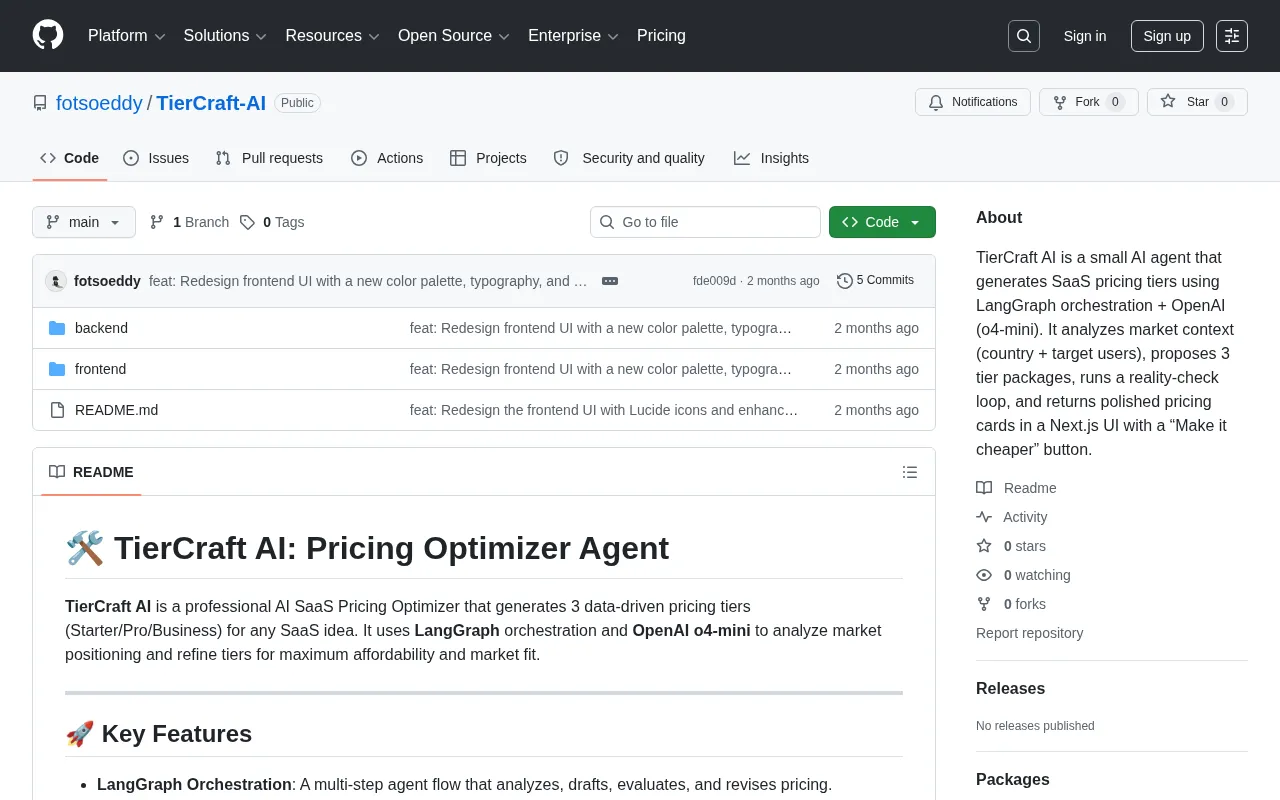
TierCraft AI: A Practical Deep Dive into Auto-Generating SaaS Pricing Plans with LangGraph + OpenAI
Deep dive into the TierCraft AI open-source project: using LangGraph to orchestrate AI Agent workflows with OpenAI o4-mini to auto-generate three-tier SaaS pricing plans, featuring Reality-Check loops and context-aware pricing.
Read more →
 Tech Frontiers
·2 min
Qwen Continues to Lead on SWE-bench: The Rise of Open-Source AI Coding Models
Qwen team leads open-source models on SWE-bench, demonstrating strong software engineering capabilities. This article analyzes SWE-bench standards, Qwen's progress, and the value of open-source AI coding tools.
Read more →
 Tech Frontiers
·3 min
Kimi-Writer: An Open-Source AI Novel Writing Agent Powered by Deep Reasoning
Deep dive into the Kimi-Writer open-source project — an AI novel writing Agent built on Kimi-K2-Thinking with deep reasoning, autonomous planning, and long-form narrative capabilities.
Read more →
 Tech Frontiers
·2 min
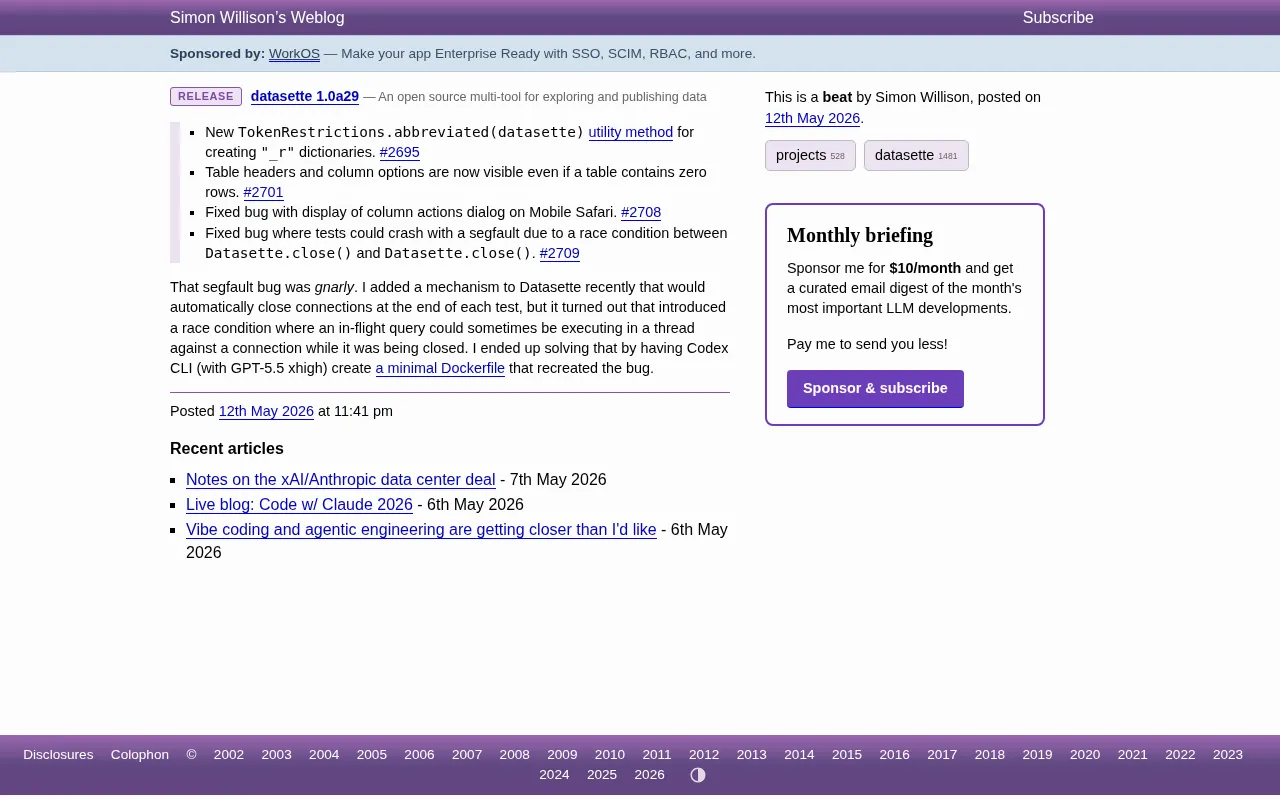
Datasette 1.0a29 Released: Fixing a Gnarly Segfault Race Condition with GPT-5.5
Datasette 1.0a29 preview released, fixing a segfault race condition introduced by test optimization. Developer Simon Willison used GPT-5.5 xhigh to help reproduce the issue, showcasing AI debugging in practice.
Read more →
 Deep Dives
·3 min
Claude's Advisor Strategy: Small Models Execute, Large Models Supervise — A New Cost-Saving Paradigm for AI Agents
Anthropic's Advisor Strategy lets Sonnet execute tasks while Opus serves as advisor, cutting costs 12% while boosting SWE-Bench by 2.7 points. A new multi-model AI Agent paradigm explained.
Read more →
 Tutorials
·3 min
Claude Code Domestic Alternative: Low-Cost Deployment and Six Core Architecture Components Explained
Detailed guide on deploying Claude Code domestic alternatives via compatible API interfaces. Deep dive into six core systems: built-in tools, hierarchical memory, multi-Agent collaboration, and more.
Read more →
 Deep Dives
·3 min
Augment Code Architecture Revealed: Dedicated Subagents Replace KV Cache, Cutting Costs by 90%
Deep dive into how Augment Code uses Mercury 2 dedicated subagents to replace traditional KV cache, achieving 82% faster context compaction, 90% lower summarization costs, and 30% reduced LLM spending.
Read more →
 Research
·2 min
Prompt Tuning Delivers 3-10% Efficiency Gains: The Hidden Dividend of Scaling Coding Agents
Prompt engineering optimizations for coding Agents reduce tool calls, lower output tokens, and improve completion speed by 3-10%—delivering significant cost savings and latency reduction at scale.
Read more →