#jailbreak
128 related articles
AI Multilingual Bias: Why Claude Is Mo…
·2 min
AI Multilingual Bias: Why Claude Is More 'Polite' in Hindi and Arabic
Tests reveal Claude uses a more polite tone in Hindi and Arabic. This article explores the causes of AI multilingual alignment bias, its security risks, and fairness challenges.
Read more →
OpenAI Mandates Hardware Passkeys: A N…
·2 min
OpenAI Mandates Hardware Passkeys: A New Cybersecurity Standard for the AI Era
OpenAI now requires hardware-backed passkeys for Trusted Access Cyber members. Learn how hardware passkeys work, their phishing resistance, and what this means for enterprise security.
Read more →

·2 min
Testing ChatGPT Voice Mode: The Boundaries and Pitfalls of Human-Like AI Interaction
A viral experiment video "pushing" ChatGPT's Live Voice mode reveals the real capabilities and design boundaries of AI real-time voice interaction — and the risks of emotional AI.
Read more →
·3 min
Uncensored AI Models Deep Dive: How They Work, Local Deployment, and the Truth About Self-Learning
A deep dive into uncensored AI models: how censorship is removed, whether self-learning is real, and hardware requirements for local deployment. Covers Ollama, LM Studio, Llama, quantization, and more.
Read more →

·6 min
The Frontier of AI Interpretability Research: Opening the Neural Network Black Box
An in-depth look at AI interpretability research: from chain of thought and probes to sparse autoencoders, exploring how scientists understand neural network internals and assess AI alignment and safety.
Read more →
AI Model Alignment Unpacked: The Guard…
·2 min
AI Model Alignment Unpacked: The Guardrail Battle Between Sol and Fable
A deep dive into AI alignment strategy differences: how Sol and Fable diverge on guardrail design, what drives over-refusal, and how developers can choose the right AI tool for their needs.
Read more →
LLM Evaluation Tools Compared: An In-D…
·3 min
LLM Evaluation Tools Compared: An In-Depth Look at LangSmith, Langfuse, and Three More
Deep comparison of LangSmith, Langfuse, Phoenix, Braintrust, and Galileo across self-hosting, open-source licensing, and real-time guardrails to find the best LLM eval tool for production.
Read more →

·3 min
GPT-5.6 and ChatGPT Work Launch: AI Evolves from Conversational Assistant to Task Executor
OpenAI launches the GPT-5.6 family (Sol/Terra/Luna), ChatGPT Work, a new desktop app, and Hosted Sites — marking AI's evolution from Q&A assistant to autonomous task executor.
Read more →
Meta Muse Spark 1.1 Released: A Deep D…
·4 min
Meta Muse Spark 1.1 Released: A Deep Dive into the First Spark Model with an Open API
Meta officially releases Muse Spark 1.1, the first model in the Spark series to offer an API, with a focus on strengthening agentic tool calling and computer use capabilities.
Read more →

·4 min
A Deep Dive into Claude Cookbooks: A Guide to the Official 47K-Star Hands-On Code Repository
Anthropic's open-source Claude Cookbooks project offers runnable Jupyter Notebook examples covering RAG, Tool Use, multimodal processing, and more—helping developers master Claude API best practices.
Read more →

·6 min
AI Agent Security in Practice: 7 Attack Techniques and a Five-Layer Defense System
An in-depth breakdown of the 7 major attack techniques against AI agents (prompt injection, data poisoning, image attacks, etc.) and a five-layer defense system, with real cases from Doubao and DeepSeek.
Read more →

·2 min
Making AI Challenge Its Own Limits: Deep Thoughts Behind a Viral Prompt
A viral Reddit Prompt asking AI to "push guardrails to the limit" sparked debate. We analyze why AI's rebellion stays gentle and the tech behind creative safety.
Read more →

·3 min
Enterprise AI Evaluation Tools: An In-Depth Comparison of Six Leading Platforms
An in-depth comparison of five AI evaluation tools—Arize, Braintrust, Confident AI, Langfuse, and LangSmith—across governance, framework lock-in, and evaluation vs. monitoring.
Read more →

·5 min
GPT-5.6 Launches: Comprehensive Upgrades to ChatGPT Work, Sites, and Desktop Client
OpenAI releases the GPT-5.6 model family, launching enterprise-focused ChatGPT Work, one-click ChatGPT Sites, and a major desktop client upgrade, with coding now ahead of rivals. Meta, Google, and Kimi follow intensively.
Read more →

·5 min
ChatGPT Work Officially Launches: How GPT-5.6 Is Reshaping the Way You Work
OpenAI launches the GPT-5.6 model family (Sol/Terra/Luna) and ChatGPT Work, enabling automated financial analysis, local file operations, Codex coding, and cross-app workflows—AI officially becomes a real work partner.
Read more →

·4 min
Surge in Claude Mythos Preview Vulnerabilities: How Can We Ensure LLM Security?
After the release of Claude Mythos Preview, critical security vulnerabilities surged, raising widespread concern. This article analyzes the tension between rapid iteration and security, explores LLM attack surface challenges, and offers practical defense strategies.
Read more →

·4 min
The Boundaries of AI Safety Guardrails: Deep Reflections Sparked by a Single Prompt
A Reddit post sparks debate: what happens when a user asks AI to "push guardrails to the limit"? An in-depth look at AI safety guardrails, jailbreaks, and content balance.
Read more →
·5 min
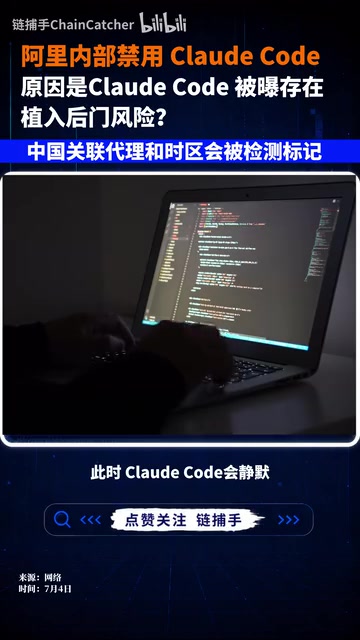
Alibaba Bans Claude Code: Invisible Fingerprints and the AI Tool Trust Crisis
Alibaba has banned Claude Code as high-risk software. Reverse engineering revealed a covert environment-identification mechanism hiding user fingerprints in punctuation via prompt steganography. A deep dive into the incident and AI tool trust.
Read more →
Boko Haram's Abuse of Frontier AI: How…
·3 min
Boko Haram's Abuse of Frontier AI: How Terror Groups Weaponize Technology and the Governance Crisis It Reveals
Boko Haram is systematically exploiting AI tools for propaganda automation, multilingual recruitment, and operational coordination. An in-depth analysis of generative AI abuse by terror groups, the open-source governance dilemma, and the AI safety arms race.
Read more →
·6 min
GPT-5.6 Sol Limited Preview: The Safety Boundaries Behind AI's Capability Expansion
OpenAI's flagship GPT-5.6 advances on three fronts—Sol, Kara, Luna tiered rollout; ByteDance CGN 5.0 Pro and Meta Muse push image generation toward controllable workflows; AI coding agents expose new supply chain risks.
Read more →