#memory allocator
23 related articles

·2 min
Hidden ComfyUI Bug: What Caused H3 Video Generation to Slow Down 4x and How to Fix It
A recent ComfyUI update introduced a hidden performance bug causing MiniMax H3 video generation to slow down ~4x. Learn the root cause — a v.clone() memory optimization side effect — and how to fix it.
Read more →

·4 min
musl Performance Pitfalls: The Hidden Cost Behind Static Linking
Deep analysis of musl libc vs glibc performance differences, revealing hidden costs of Alpine Linux static linking in memory allocation and multithreading, with practical guidance.
Read more →

·1 min
Pony Language: The Lock-Free Concurrent and Memory-Safe Programming Language Is Still Alive
Pony is an Actor model-based programming language that guarantees memory safety and data-race freedom at compile time through its reference capabilities system.
Read more →

·3 min
GrapheneOS Plans to Support High-End Motorola Devices by 2027
GrapheneOS plans to expand support to high-end Motorola devices by 2027, breaking its long-standing Pixel-only dependency. Analysis of the impact on privacy OS ecosystems and technical challenges.
Read more →

·3 min
17-Year-Old Builds Deep Learning Framework Forge from Scratch in C++, Precisely Reproducing GPT-2
A 17-year-old developer built Forge, a complete deep learning framework in C++ from scratch, featuring a custom tensor engine, autodiff, and BPE tokenizer that reproduces GPT-2 output token-for-token exactly matching HuggingFace.
Read more →

·3 min
CVE-2026-53361 Vulnerability Analysis: Linux Kernel AF_UNIX Container Escape Mechanism and Defenses
In-depth analysis of CVE-2026-53361 Linux kernel vulnerability: AF_UNIX socket GC and MSG_PEEK race condition causing UAF, container escape exploitation chain, and defense strategies.
Read more →

·3 min
persistent-inference: Solving TF/Keras Cold Start Problems with Just Two Files
Deep dive into the persistent-inference open-source project: solve TF/Keras cold start problems with just two files by keeping models resident in memory, eliminating reload overhead.
Read more →
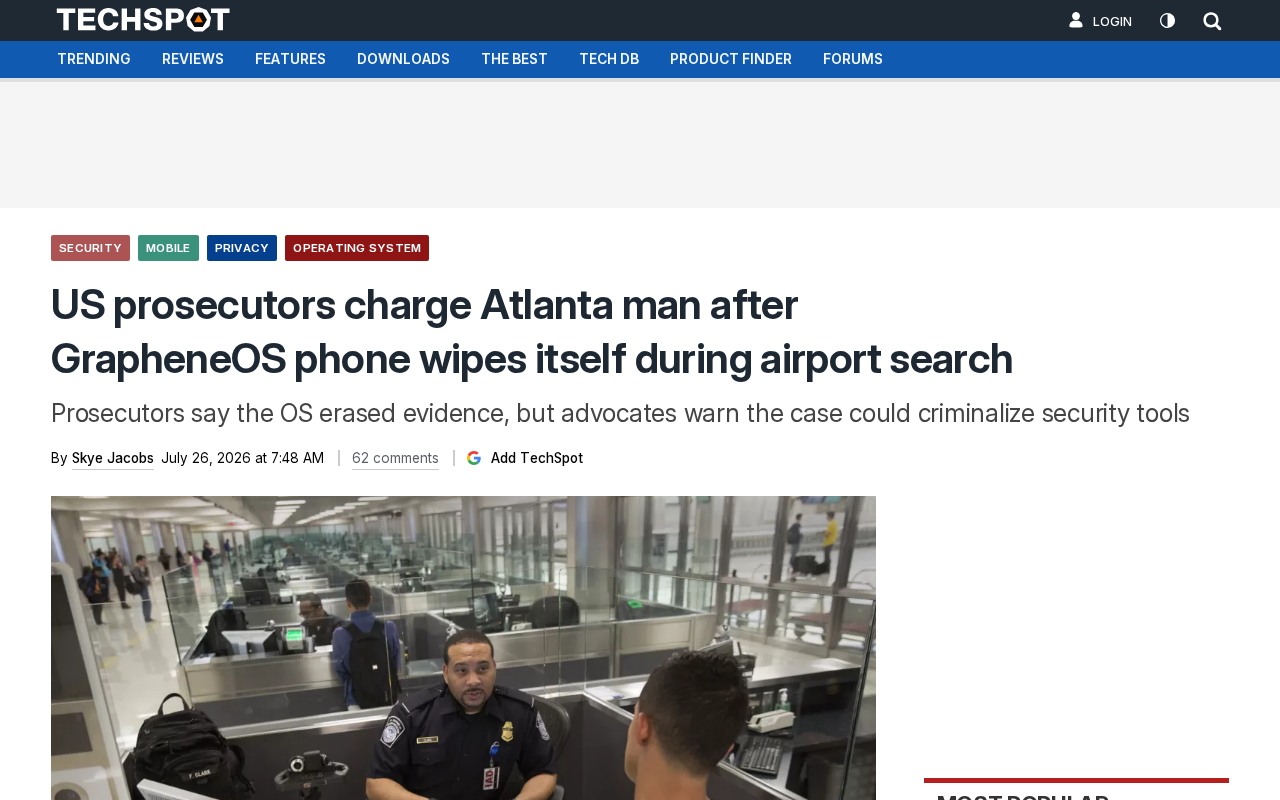
·5 min
GrapheneOS Phone Auto-Wipe Triggers Criminal Charges: Privacy Rights Clash with Border Enforcement
A U.S. citizen faces criminal charges after a GrapheneOS phone auto-wiped during an airport border search. Analysis of the privacy rights vs. law enforcement clash.
Read more →

·6 min
How the Creator of Redis Squeezed a 284B-Parameter DeepSeek into an Ordinary Laptop
Redis creator antirez built DS4 "Dwarf Star," a pure-C inference engine, using asymmetric quantization to compress DeepSeek V4 Flash from 500GB to 80.8GB for local 128GB unified-memory deployment at 26.7 tokens/sec.
Read more →

·6 min
How the Creator of Redis Squeezed a 284-Billion-Parameter DeepSeek Into an Ordinary Laptop
Redis author antirez built the pure-C inference engine DS4 "Dwarf Star," compressing DeepSeek V4 Flash from 500GB to 80.8GB via asymmetric quantization for local deployment on 128GB unified memory at 26.7 tokens/sec.
Read more →

·6 min
AI Application Engineer Interview Guide: Core Topics in Model Quantization and Inference Deployment
A systematic review of must-know topics for AI Application Engineer interviews: PTQ/QAT quantization, operator fusion, inference pipelines, latency/throughput analysis, and edge deployment of detection/segmentation/BEV models.
Read more →
·6 min
AI Application Engineer Interview Guide: Core Topics on Model Quantization and Inference Deployment
A systematic guide to must-know AI application engineer interview topics: PTQ/QAT quantization, operator fusion, inference pipelines, latency/throughput analysis, and edge deployment of detection/segmentation/BEV models.
Read more →

·2 min
GhostLock: A Deep Dive into the 15-Year-Old Linux Stack UAF Vulnerability
GhostLock is a stack use-after-free (stack-UAF) vulnerability affecting all major Linux distributions, lurking for 15 years. A deep dive into its mechanics, severity, scope, and practical mitigation.
Read more →

·2 min
Bun: The All-in-One High-Performance JS Toolkit — Runtime, Bundler, and Package Manager
Bun combines a JS runtime, bundler, test runner, and package manager into one executable. Built on JavaScriptCore and Zig, it offers blazing-fast startup, native TypeScript support, and Node.js compatibility.
Read more →

·2 min
AI Agents for SGLang Kernel Optimization: Real-World Performance Gains and Engineering Methodology
SGLang's team converted expert knowledge into agent skills, achieving 71.4% throughput gains, TTFT reduced from 456ms to 168ms. A deep dive into agent-assisted kernel optimization methodology.
Read more →

·2 min
Deep Dive: How a Local User Can Escalate to Root via an OpenBSD Kernel UAF Vulnerability
A kernel-level Use-After-Free vulnerability in OpenBSD allows local attackers to escalate privileges to root via dangling pointers. Learn how UAF works, its impact, and mitigation steps.
Read more →

·5 min
Embedded Linux vs. AI Agent Development: A Comprehensive Comparison of Salary, Job Availability, and Career Stability
Embedded Linux or AI Agent development? This in-depth comparison covers salary, job availability, and career stability to help developers pick the right path.
Read more →

·6 min
14x Speedup: How Manticore Rebuilt the ONNX Embedding Inference Path
Manticore Search restructured its ONNX inference path to achieve 14x faster text embeddings. Deep dive into batching, session reuse, zero-copy memory, and thread tuning for vector search systems.
Read more →
 Tutorials
·3 min
TheCherno Reboots Game Engine Series: AI-Assisted Development and Hazel Code Review
TheCherno reboots his Game Engine series with AI-assisted development. This article covers his Hazel engine code review, architecture analysis, and key improvements for building a new engine from scratch.
Read more →
 Tech Frontiers
·2 min
SGLang v0.5.12.post1 Released: DeepSeek V4 Stability Fixes and Blackwell Adaptation
SGLang v0.5.12.post1 stability patch details: 12 critical fixes covering DeepSeek V4 garbled text and crashes, NIXL PD disaggregated inference logic, Blackwell B300 adaptation, and cold start optimization.
Read more →