#message queue comparison
64 related articles

·7 min
The Prompt is the Platform: How AI Agents Deeply Participate in System Design and Specification
Resonate's founder proposes "The Prompt is the Platform": as AI agents generate production-grade implementations from abstract specs, engineers' value shifts to specification. A deep dive into deterministic simulation and forbidden-fruit debugging.
Read more →

·7 min
A Java Developer's Guide to AI: Framework Selection and Practical Tutorial for LangChain4J
As LLM costs keep falling, how can Java developers seize the AI opportunity? This article explores LangChain4J's core capabilities, supported models and vector databases, and compares LangChain4J vs. Spring AI to help you build local knowledge bases and intelligent customer service systems.
Read more →
·6 min
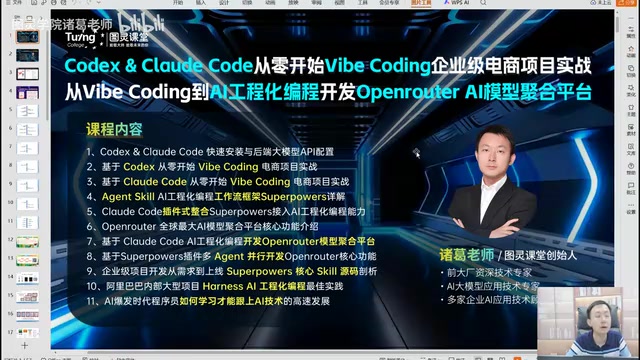
Understanding the Limits of Vibe Coding: A Practical Guide to AI Engineering-Grade Programming
An in-depth look at the difference between Vibe Coding and AI engineering-grade programming. Can AI replace programmers? From Claude Code and Codex to Cursor, revealing the real limits, enterprise pain points, and engineering solutions of AI coding tools.
Read more →

·7 min
Discord Wrongfully Bans 8,000 Accounts: Why an AI Moderation System Mistook Chessboards for Violating Content
Discord admits a safety-system bug wrongfully banned over 8,000 accounts, triggered by chessboards, Minecraft screenshots and other grid images. A deep dive into AI moderation false positives and the efficiency-vs-accuracy dilemma.
Read more →
·3 min
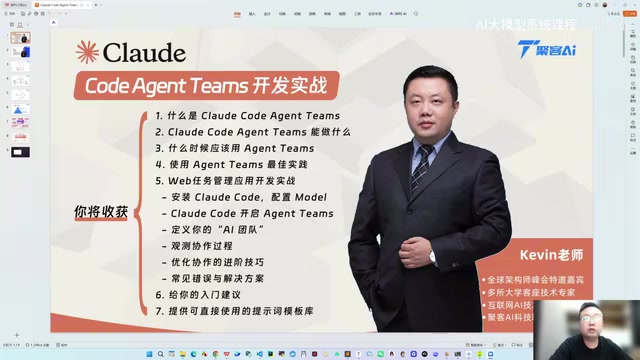
Claude Code Agent Teams: A Practical Guide to AI Team Collaboration in Software Development
A deep dive into Claude Code Agent Teams: how they differ from Subagents, contract-first design, model allocation strategies, and a real case of 16 agents building a C compiler.
Read more →

·7 min
The Complete Codex Guide: From Installation to Real-World Practice
Master OpenAI Codex fast, even from scratch! Learn Codex vs ChatGPT differences, four versions, interface tips, plugins & skills, browser automation, plus six best practices.
Read more →

·3 min
Unsloth Major Update: GLM-5.2 Support, 3x Longer Context, and a New Model Hub
Unsloth v0.1.471-beta adds full GLM-5.2 support, 3x longer context (up to 200K tokens on a single GPU), a new Model Hub, and Chat Canvas — a major leap for local LLM fine-tuning.
Read more →

·7 min
The Complete Guide to AI-Powered Customer Service: How AI Is Reshaping Enterprise Service Systems
AI customer service is a core tool for digital transformation. This guide covers its value, use cases, and implementation logic, including efficiency gains, cost reduction, and data-driven optimization.
Read more →

·7 min
Hermes Agent Deep Dive: An AI Agent Framework That Uses Fewer Tokens Than Open Cloud
Full comparison of Hermes Agent vs Open Cloud: lower token usage, 200+ model support, auto Skill encapsulation, WeChat/DingTalk integration. A cost-effective AI Agent alternative for long-term deployment.
Read more →

·6 min
Dify Self-Hosted Deployment in Practice: Building an Enterprise-Grade AI Application Platform from Scratch
A complete guide to self-hosting Dify, the open-source AI platform: environment setup, Docker Compose deployment, LLM integration, and app building. Runs on just 2 cores and 4GB RAM.
Read more →

·4 min
AI Agent Memory System Architecture Breakdown: A Practical Selection Guide from 16 Open-Source Projects
Deep analysis of memory system architectures across 16 open-source AI Agent projects including Hermes, Goose, NanoClaw, and Deerflow, covering FTS5 vs vector search, multi-tenant isolation, and LLM auto-extraction.
Read more →

·4 min
The Four Stages of AI Engineering Evolution: From Prompt to Loop Engineering Explained
A systematic breakdown of the four stages of AI engineering: Prompt Engineering, Context Engineering, Runtime Environment Engineering, and Loop Engineering — with core logic, bottlenecks, and real-world use cases.
Read more →

·3 min
Python Webhook Callbacks in Practice: Ditch Polling for Efficient Async Communication
Build a complete Python Flask project comparing polling vs. Webhook async communication. Learn to implement callback endpoints for payment notifications and production-grade event-driven architectures.
Read more →

·4 min
From Vibe Coding to AI-Engineered Programming: A Practical Guide to Three Levels of Mastery
A deep dive into three levels of AI programming: Vibe Coding for rapid prototyping, Plan Mode for structured development, and AI-engineered programming for enterprise-grade projects with SDD and Claude Code SuperPower.
Read more →
·4 min
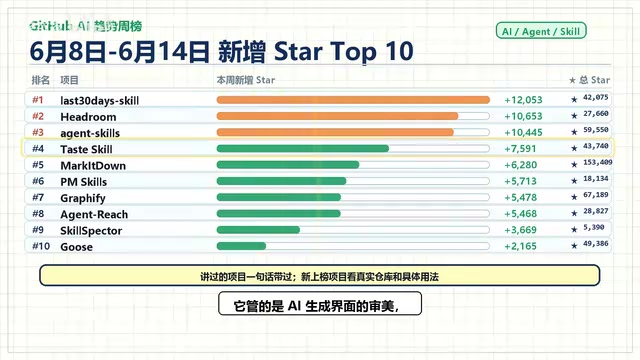
GitHub AI Weekly: Agent Ecosystem Support Tools Explode onto the Scene
June 2026 GitHub AI trends: Agent ecosystem middleware tools surge — PM Skills, Agent Reach, Graphify, and Skill Spectre signal the Agent middleware era.
Read more →

·3 min
AI Agent Learning Roadmap: A Four-Step Practical Guide from Zero to Job-Ready
A proven AI Agent learning roadmap covering four core elements, mainstream architecture patterns, multi-agent collaboration, and hands-on projects to go from zero to job-ready in three months.
Read more →

·3 min
CrewAI Multi-Agent Collaboration in Practice: A Complete Guide from Setup to API Service
A detailed guide to CrewAI multi-Agent collaboration covering core concepts, FastAPI service setup, and real-world comparisons of GPT-4o Mini, Qwen Max, and Llama 3.1.
Read more →

·2 min
Tsinghua and Zhipu Release Full-Stack Web Dev Benchmark: Top AI Models Fail Spectacularly
Tsinghua and Zhipu AI release a full-stack web dev benchmark with three difficulty levels. Top models like Gemini 2.5 Pro see scores plummet from 63 to 11.7 on full-stack tasks, exposing AI's real limits.
Read more →

·3 min
NestJS + LangChain: A Practical Guide for Frontend Engineers Transitioning to AI Full-Stack Architecture
How can frontend engineers transition to AI full-stack? This guide covers NestJS + LangChain, TypeScript fundamentals, AI Agent development, local model deployment, and cross-language architecture skills.
Read more →

·4 min
7 Core Features of Hermes Agent Explained: The Real Reasons Users Are Abandoning OpenCore
Deep dive into Hermes Agent's 7 core features including Kanban multi-tasking, /goal deep execution, and multi-agent architecture, compared with OpenCore's stability and performance issues.
Read more →