#mobile remote programming
113 related articles

·7 min
Unity Custom MCP Tool Development Guide: Enabling AI Agents to Precisely Control the Editor
Learn how to develop custom tools based on the Unity MCP Relay Server, enabling AI agents like Cursor to directly control the Unity editor. Covers setup, tool building, parameter validation, and MCP Pro comparison.
Read more →
·6 min
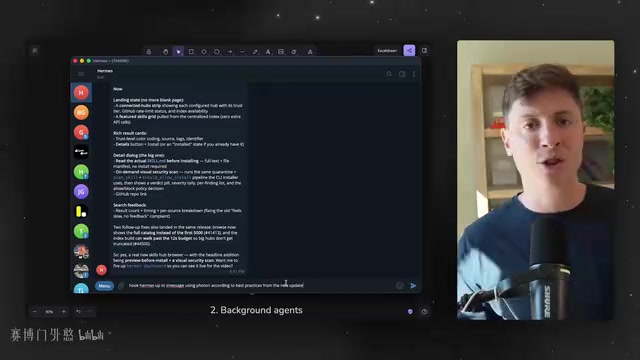
Hands-On With Hermes Agent's Eight Major Updates: A Complete Guide to AI Automation and Self-Evolution
The Hermes Agent gets a major upgrade with eight new features: native iMessage, parallel background sub-agents, Unreal Engine MCP support, a self-evolving Skill Hub, and more. A hands-on breakdown of the core changes and their real impact on personal AI automation workflows.
Read more →

·3 min
Deep Dive into gRPC: Building High-Performance Microservice Communication with HTTP/2 + Protobuf
An in-depth analysis of gRPC's core architecture: HTTP/2 multiplexing, Protocol Buffers serialization, and unified multi-language implementation, covering microservice communication and cloud-native integration.
Read more →

·5 min
GPT-5.6 In-Depth Field Test: A Real-World Log After Burning Through $200K
A developer stress-tested GPT-5.6 for six weeks across 67 projects, burning $180K-$240K in inference. Real cases of task persistence, Rust rewrites, autonomous browser control — plus honest frontend and 3D shortfalls.
Read more →

·5 min
ChatGPT Work Officially Launches: How GPT-5.6 Is Reshaping the Way You Work
OpenAI launches the GPT-5.6 model family (Sol/Terra/Luna) and ChatGPT Work, enabling automated financial analysis, local file operations, Codex coding, and cross-app workflows—AI officially becomes a real work partner.
Read more →

·3 min
Spending $200K to Test GPT-5.6: Have AI Coding Assistants Reached a Tipping Point?
Developer Theo spent ~$200K over 6 weeks testing GPT-5.6 across 67 projects — from 20-hour autonomous coding runs to fixing boot partitions and Rust rewrites.
Read more →

·3 min
GPT-5.6 Released: Sol, Terra, and Luna Reshape AI Programming and Office Automation
OpenAI launches GPT-5.6 with three models — Sol, Terra, and Luna — plus ChatGPT Work, a new desktop app, and Hosted Sites. Codex now autonomously trains models.
Read more →

·3 min
Cursor Launches iOS App: Direct AI Coding from Your Phone, Anywhere
Cursor launches its iOS app with always-on cloud AI agents and remote local Agent control, letting developers direct AI coding from anywhere — no desktop required.
Read more →

·7 min
Turning Any AI Agent into an Orchestration Hub: A Deep Dive into Multi-Agent Collaboration Architecture
An in-depth analysis of the "any Agent as an orchestrator" design philosophy, exploring the technical implementation of multi-Agent collaboration, context management, and workflow automation.
Read more →

·4 min
Kun: An Open-Source AI Coding Agent Deeply Optimized for DeepSeek
Kun is an open-source AI coding agent optimized for DeepSeek and domestic users, with nearly 5,000 GitHub stars. Features include requirements drafting, inline diffs, cost visualization, and mobile monitoring. Real-world cache hit rates reached 97%, keeping costs extremely low.
Read more →

·7 min
21-Day Python Automation Testing Crash Course: A Complete Breakdown of the Three-Stage Learning Path
Learn automation testing from scratch! This article breaks down a three-stage path: Selenium/Appium tools, Requests+PyTest API testing, performance testing and CI/CD, with real projects—build a complete skill set in 21 days.
Read more →

·7 min
Rowboat: An Open-Source, Local-First Alternative to Claude Desktop
Rowboat is an open-source, local-first AI desktop client positioned as a Claude Desktop alternative. Local data storage and fully transparent code help developers control privacy and workflows.
Read more →

·4 min
Shellular: A New Way to Remotely Control Claude Code and Other AI Coding Assistants from Your Phone
Shellular lets developers remotely control AI coding assistants like Claude Code and Codex from their phones. A deep dive into the problem it solves, its architecture, and the real demand for mobile AI coding.
Read more →
·2 min
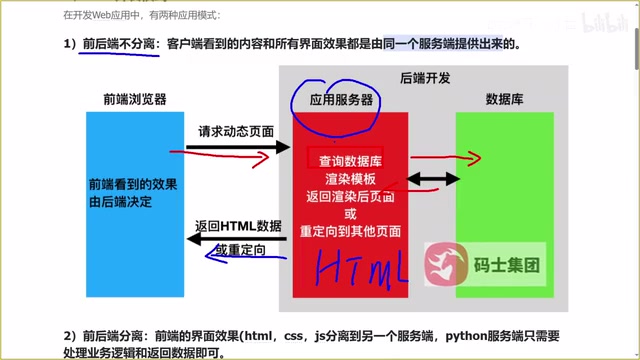
FastAPI Fundamentals: Frontend-Backend Separation and RESTful API Design Explained
A comprehensive introduction to FastAPI's core concepts: frontend-backend separation, RESTful API design, JSON data exchange, HTTP methods, and idempotency explained clearly.
Read more →

·3 min
Three Fatal Flaws of AI Script Writing — and How MCP Services Fix Them
AI script development plagued by amnesia, blindness, and repeat errors? This article examines how MCP service tools — history nodes, node preprocessing, and an error library — systematically fix AI programming's structural flaws.
Read more →

·7 min
The Complete Guide to OpenCode: Installing, Configuring, and Using the Terminal AI Coding Assistant
An in-depth guide to installing, configuring, and extending OpenCode, the terminal AI coding assistant. Covers desktop and WSL installation, model config, MCP integration, and custom Agents.
Read more →

·7 min
Spring AI 2.0 in Practice: A Beginner's Guide for Java Developers Building AI Agents
A complete Spring AI 2.0 guide for Java developers covering unified API abstraction, RAG, tool calling, MCP protocol, and enterprise projects to build AI Agents.
Read more →

·6 min
10 Billion Tokens in Practice: An In-Depth Review of Codex's Long-Horizon Engineering Capabilities
Creator Ajiang burned 10B Tokens on Codex to migrate cc-haha from Tauri 2 to Electron. A deep dive into Codex's long-horizon engineering, Computer Use, costs, and practical advice for developers.
Read more →

·5 min
Cursor Reshapes AI Programming: Cloud Agents, the Origin Platform, and a Custom-Built Foundation Model
Cursor launches three major products: cloud agents on mobile, Origin — an agent-native Git platform challenging GitHub, and a custom foundation model with 10-20x compute. AI coding enters the Agent-First era.
Read more →

·5 min
AI-Native Team Practices: How Anthropic Engineers Achieved an 8x Productivity Boost
Anthropic's Fiona Fung shares how AI tools drove an 8x increase in engineer code output, and how AI-native teams are rethinking management, quality, and collaboration.
Read more →