#pipeline orchestration
636 related articles

·3 min
Verification Browser for AI Agents: How 13ms Ultra-Fast Validation Solves the Trust Problem in Automation
Deep dive into the verification browser for AI agents: how 13ms verification windows and one-call checks solve hallucination problems in browser automation, enabling the leap from capability to trustworthiness.
Read more →

·4 min
Pure Vibecoding Builds a 130+ Card Multiplayer CCG: Full AI Tech Stack Breakdown
An indie dev built a 130+ card multiplayer CCG entirely through vibecoding with Claude Code, GPT, and ElevenLabs. Full AI tech stack breakdown and analysis of vibecoding's capabilities and limits.
Read more →

·3 min
Deep Analysis and Hardening Practices for 16 Critical Vulnerabilities in an AI Security Platform
An AI security platform was found to have 16 critical vulnerabilities spanning prompt injection, privilege escalation, and auth bypass. A deep dive into hardening methodologies.
Read more →

·4 min
Transitioning from DevOps to MLOps: A Complete Learning Roadmap
How can DevOps engineers efficiently transition to MLOps? This guide covers MLOps core concepts, standard workflows, essential tools, and Azure practices with a progressive learning roadmap.
Read more →

·2 min
Running Manim in the Browser: Rebuilding 3Blue1Brown's Animation Engine with WebGPU
Explore how WebGPU brings 3Blue1Brown's Manim math animation engine to the browser, enabling zero-install, real-time mathematical visualization with interactive education potential.
Read more →

·3 min
Cynative: A Read-Only CLI Tool Written in Go That Makes Infrastructure Explainable
Cynative is a read-only CLI tool written in Go focused on explaining live infrastructure state. This article analyzes its safety-first design, explainability philosophy, and implications for cloud-native operations tooling trends.
Read more →

·3 min
Cynative: A Read-Only CLI Tool Written in Go That Makes Infrastructure Explainable
Cynative is a read-only CLI tool written in Go that focuses on explaining live infrastructure state. This article analyzes its safety-first design, explainability philosophy, and cloud-native tooling implications.
Read more →

·3 min
From Demo to Production: The Real Challenges of Deploying LLM Systems
Deep analysis of deploying LLM systems from prototype to production: a real-world AI incident investigation assistant case revealing critical engineering challenges beyond the model.
Read more →

·3 min
From Demo to Production: The Real Challenges of Deploying LLM Systems
Deep analysis of deploying LLM systems from prototype to production: a real-world AI incident investigation assistant case study revealing key engineering challenges beyond the model.
Read more →

·4 min
What It Feels Like When Production Actually Runs Like Localhost
Why does production never match local? This article analyzes root causes like config gaps and dependency drift, and explores how Docker, Twelve-Factor App, and IaC practices bridge the dev-prod divide.
Read more →

·4 min
Getting Started with Claude Code: Environment Setup, Common Commands, and Git Workflow in Practice
A detailed guide to Claude Code installation, domestic model switching, project analysis commands, and Git workflow practice to help developers quickly master this AI programming collaboration tool.
Read more →

·3 min
GeoLibre: An Open-Source Cloud-Native GIS Platform and Lightweight Cross-Platform Geospatial Tool
GeoLibre is an open-source lightweight cloud-native GIS platform built with TypeScript, running across web browsers, desktop, mobile, and Jupyter Notebook environments.
Read more →

·3 min
GeoLibre: An Open-Source Cloud-Native GIS Platform and Lightweight Cross-Platform Geospatial Tool
GeoLibre is an open-source lightweight cloud-native GIS platform built with TypeScript, supporting Web browsers, desktop, mobile, and Jupyter Notebook environments. Explore its core features and advantages.
Read more →

·3 min
Gemini Batch API Major Upgrade: 80% Latency Reduction, Success Rate Exceeds 99.998%
Google's Gemini Batch API completes major infrastructure upgrade with 80% lower p95 latency, 99.998%+ success rate, 98% fewer expirations, and new partial batch support for large-scale AI inference.
Read more →
·3 min
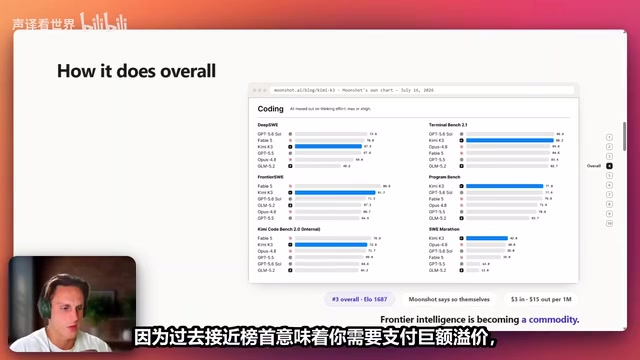
Kimi K3 Hands-On Tutorial: Claude Code Sub-Agent Configuration & GPT-5.6 Comparison Test
Complete guide to configuring Kimi K3 as a Claude Code sub-agent, including API setup, YFlow workflow building, and head-to-head comparison with GPT-5.6 and Claude Fable 5.
Read more →

·6 min
Harness Engineering: From Context Engineering to the Third Phase of AI Programming
Explore Harness Engineering: the next evolution beyond context engineering for AI programming. Learn how to build enterprise-grade Skill systems and deliver real projects with mid-tier models.
Read more →

·5 min
Opus 5 Builds a No Man's Sky-Style Exploration Game in One Day: MCP and Sub-Agent Architecture Explained
A developer used Anthropic's Opus 5 model to build a No Man's Sky-style space exploration game in one day using Blender MCP and sub-agents. Deep dive into the technical architecture and industry implications.
Read more →

·4 min
LangChain Guardrails Explained: Building Safe and Controllable AI Agents
A detailed guide to LangChain Guardrails covering layered ecosystem architecture, middleware implementation, deterministic and model-driven protection for building production-grade secure AI Agents.
Read more →

·3 min
Learning AI Large Language Models: A Complete Roadmap from Beginner to Practitioner
A systematic breakdown of the AI LLM learning roadmap covering prompt engineering, AI Agent development, RAG knowledge bases, model fine-tuning, and hands-on projects for beginners.
Read more →

·3 min
Spring AI Explained: Unified API, RAG, and Enterprise AI Development Guide
Deep dive into Spring AI framework's core features including provider-agnostic unified API abstraction, RAG retrieval-augmented generation, and structured output to help Java developers build enterprise AI apps.
Read more →