#quantitative research
296 related articles

·7 min
Agentic AI Reshapes Genomic Interpretation: A SOTA Case Study in Interstitial Lung Disease Diagnosis
How Agentic AI achieves SOTA performance in interstitial lung disease (ILD) genomic interpretation through autonomous planning, multi-step reasoning, and tool calling—and its clinical impact.
Read more →

·6 min
From Vibe Coding to AI Engineering: A Complete Practical Guide to Codex and Claude Code
An in-depth analysis of the practical use of Codex and Claude Code, comparing Vibe Coding and AI engineering, covering Super Power plugins, Spec-Driven Development, and Chinese LLM integration strategies.
Read more →

·5 min
Nonuniform Tensor Parallelism: NVIDIA's New Fault-Tolerance Approach to Boost LLM Training Goodput
NVIDIA introduces Nonuniform Tensor Parallelism, letting GPUs bear different compute loads so training can continue without checkpoint rollback during hardware failures—boosting LLM training Goodput and fault tolerance at scale.
Read more →

·7 min
Dispersion Loss: A Key Technique for Solving Embedding Condensation in Small Language Models
Embedding condensation is a hidden bottleneck in small language model training. Dispersion Loss combats this by enforcing representation spread during training at zero inference cost.
Read more →

·5 min
Why Speed Is the Most Important Quality of Software
Software speed isn't just a performance metric — it's a core feature shaping user experience and trust. Learn how responsiveness drives creativity, flow, and lasting competitive advantage.
Read more →

·6 min
AI Superforecasters: Can Machines Surpass Human Experts at Prediction?
Have AI superforecasters truly arrived? A deep dive into how LLMs challenge human superforecasters in probability calibration, information integration, and scalable forecasting, plus core debates on data leakage, interpretability, and real-world applications.
Read more →

·7 min
The C Readability Crisis: Engineering Reflections Behind Clever Tricks
Why do C programmers keep creating readability disasters? An in-depth look at macro abuse, fancy pointer tricks, and over-nesting—and how coding standards, static analysis, and code review protect maintainability.
Read more →

·5 min
The Attention Bottleneck in AI Coding: Hands-On Agent Workflows from the Father of Crayfish
OpenClaw author Peter shares his thinking on AI coding: when compute is no longer the bottleneck, developer attention becomes the new ceiling. Learn three practical skills—Agent Transcript, Auto-Review, and the Crapbox sandbox.
Read more →
·7 min
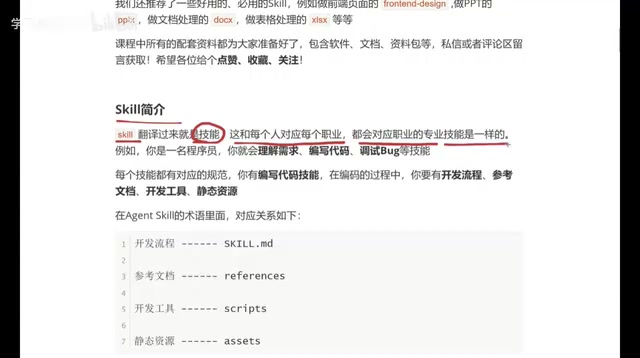
The Complete Guide to Agent Skills: Principles, Structure & Practical Applications
Deep dive into AI Agent Skills: SKILL.md file structure, four component modules, differences from prompts, and practical scenarios for frontend generation, PPT creation, and more.
Read more →

·4 min
AI's Impact on the Entry-Level Developer Job Market: Crisis or Opportunity?
Generative AI is reshaping software development, shrinking demand for junior developer roles. This article analyzes why entry-level positions are most at risk, the talent pipeline implications, and how junior developers can leverage AI tools to stay competitive.
Read more →

·5 min
Building RAG from Scratch: Creating a Domain Expert System with Local Small Models
Step-by-step guide to building a complete RAG pipeline with Ollama + LangChain + FAISS + Qwen 1.5B. Run document retrieval and intelligent Q&A locally without a GPU.
Read more →

·6 min
Step-by-Step Guide: Power Codex with DeepSeek for Users Without ChatGPT Access
No ChatGPT account? No problem! Learn how to power Codex with DeepSeek API using the Codex++ management tool. Five easy steps, starting at just $1.40.
Read more →

·3 min
RuView: Camera-Free Spatial Awareness and Vital Sign Monitoring Using Ordinary WiFi Signals
RuView is a Rust-based open-source project that uses commercial WiFi CSI signals for real-time spatial awareness, presence detection, and vital sign monitoring — no cameras needed. 76,500+ GitHub stars.
Read more →
The 100,000-Satellite Limit: Why Astro…
·3 min
The 100,000-Satellite Limit: Why Astronomers Are Drawing a Line in Earth's Orbit
Astronomers warn that no more than 100,000 faint satellites should orbit Earth. Learn why this limit matters for astronomy, Kessler Syndrome risk, and space governance.
Read more →
High-Speed Atomic Force Microscopy: A …
·2 min
High-Speed Atomic Force Microscopy: A Real-Time Revolution in Nanoscale Dynamic Imaging
High-Speed AFM (HS-AFM) raises imaging frame rates to tens of frames per second, enabling real-time video of nanoscale dynamics like steel etching and live bacteria. A deep dive into HS-AFM's principles, breakthroughs, and applications.
Read more →

·5 min
AI-Native Team Practices: How Anthropic Engineers Achieved an 8x Productivity Boost
Anthropic's Fiona Fung shares how AI tools drove an 8x increase in engineer code output, and how AI-native teams are rethinking management, quality, and collaboration.
Read more →

·3 min
Liang Wenfeng and DeepSeek: How an Idealist Is Disrupting Global AI with Algorithmic Efficiency
Why did DeepSeek go open-source? How does a 300-person team beat tech giants? A deep dive into Liang Wenfeng's logic: flat org, algorithmic efficiency, and open-source disruption.
Read more →
GPT-5.5 Codex Reasoning-Token Clusteri…
·2 min
GPT-5.5 Codex Reasoning-Token Clustering Explained: Causes of Performance Regression and How to Respond
An in-depth look at reasoning-token clustering in GPT-5.5 Codex — exploring causes like reasoning budget imbalance and model iteration side effects, with prompt engineering strategies for developers.
Read more →
GeneBench-Pro: A New AI Benchmark for …
·2 min
GeneBench-Pro: A New AI Benchmark for Genomics and Life Sciences Research
GeneBench-Pro is an AI benchmark designed for genomics and life sciences, using real-world datasets to evaluate research-grade AI capabilities across biology and scientific workflows.
Read more →
Anthropic Launches Sonnet 5: An AI Orc…
·2 min
Anthropic Launches Sonnet 5: An AI Orchestration Model Built for Computer Use
Anthropic launches Sonnet 5, an orchestration model for Computer Use scenarios, available to Pro and Max subscribers. Designed for multi-step task execution, tool calling, and AI Agent workflows.
Read more →