#quantitative research
313 related articles

·3 min
Building 'Beat the Couch' with Claude: Can You Outperform Doing Nothing?
Beat the Couch is a minimalist web game built with Claude that challenges you to outperform a buy-and-hold strategy using real S&P 500 history. 25,000+ plays prove market timers almost always lose to the couch.
Read more →

·3 min
AI/ML Students Lost in Job Search? A Deep Comparison of Four Career Paths and How to Choose
AI/ML students unsure which career path to pursue? Compare AI engineering, SDE, PM, and UI/UX in depth — with honest entry barriers and a practical self-assessment framework.
Read more →
U.S. Workers Capture Only 27% of Wealt…
·2 min
U.S. Workers Capture Only 27% of Wealth: Why America Ranks Last in the OECD
U.S. workers receive only 27% of what the economy could theoretically support — last among OECD nations. We analyze the structural causes and AI-era implications.
Read more →

·3 min
What to Do When Model Training Fails? A Systematic Debugging and Iteration Guide
Model training failure is the norm in research, not the end. Using a real DiT fine-tuning failure on weather radar as a case study, this guide offers a systematic three-layer debugging methodology — data, training convergence, and evaluation — to help deep learning practitioners diagnose issues and iterate efficiently.
Read more →

·2 min
Pheno4D: A Deep Dive into the Sub-Millimeter 4D Plant Point Cloud Dataset
Pheno4D is a 4D plant point cloud dataset built with laser scanning, covering 20 days of daily scans across 14 maize and tomato plants at 0.012mm precision with per-leaf instance tracking.
Read more →
Assess Your Engineering Team's AI Agen…
·3 min
Assess Your Engineering Team's AI Agent Maturity in 5 Minutes: A Tiered Framework and Key Dimensions
How to quickly gauge your engineering team's AI Agent adoption level? This article breaks down a four-tier AI maturity framework covering tool adoption, workflow integration, governance, and measurement.
Read more →

·3 min
AI Cracks a 50-Year Math Problem in Under an Hour: A Deep Dive into GPT-5.6 and the Cycle Double Cover Conjecture
OpenAI's latest AI model solved the 50-year-old Cycle Double Cover Conjecture in under an hour. We break down the three-tier architecture, 64-agent workflow, and what this means for math.
Read more →

·4 min
GPT-5.6 Deep Dive: AI Training AI Opens a New Paradigm in the Model Race
OpenAI's GPT-5.6 launches as three models: SO, TERA, and LUNA. The flagship SO autonomously completed LUNA's post-training, marking a new era of AI-trained AI. Deep dive into pricing, Programmatic Tool Calling, METR safety findings, and government oversight.
Read more →
Guided Generative Models: A New Approa…
·2 min
Guided Generative Models: A New Approach to Estimating Extreme Event Probabilities
Guided generative models use guidance sampling to extend generative AI into rare event probability estimation — covering financial risk, climate prediction, and engineering reliability.
Read more →

·2 min
The Technical Reality of Sports Betting Prediction Models: How Developers Should Rationally Evaluate Collaboration Opportunities
Starting from an MLB betting model job post on Reddit, this article examines the technical feasibility of sports betting prediction models, the statistical bar for a genuine edge, and the risks developers must understand before joining such projects.
Read more →

·2 min
GPT-5.6 Sol XHigh Real-World Test: The Coding Capability That Changed a Claude User's Mind
A long-time Claude user was genuinely impressed by GPT-5.6 Sol XHigh. We break down the model's coding performance, shifting AI assistant competition, and how to rationally choose the right coding AI.
Read more →

·3 min
Getting Started with Codex: A Comprehensive Comparison with Claude Code and How to Choose
A deep comparison of Codex vs. Claude Code on pricing, stability, and frontend/backend strengths — plus how to choose between Cursor, Claude Code, and Codex.
Read more →

·3 min
LangChain V1.3 Hands-On Tutorial: A Complete Breakdown of RAG, Multi-Agents, and Engineering Mindset
An in-depth look at LangChain V1.3's core philosophy: from RAG to multi-agent workflows. Master LangGraph, Chain, and DeepAgent, learn token control and Human-in-the-loop, and become a true master of AI app development.
Read more →

·5 min
Open-Source MCP Server: Automatically Verifying the Authenticity of AI-Generated Paper Citations
AI "citation hallucination" threatens academic integrity—LLMs generate perfectly formatted but nonexistent references. This open-source MCP server verifies AI citations in real time against CrossRef, PubMed, and more, catching fakes at the source.
Read more →

·6 min
AI Agent Security in Practice: 7 Attack Techniques and a Five-Layer Defense System
An in-depth breakdown of the 7 major attack techniques against AI agents (prompt injection, data poisoning, image attacks, etc.) and a five-layer defense system, with real cases from Doubao and DeepSeek.
Read more →

·4 min
Zhipu GLM-5.2 Released: China's First Open-Source Model to Cross the 'Primary Model' Threshold
Zhipu releases GLM-5.2 with 1M token context, matching GPT-5.x and Claude. Zcode 3.0 offers 3M free daily calls with one-click migration from Claude Code and Codex.
Read more →

·3 min
Why Transformer Dominates AI Foundation Models: A Deep Dive into Its Three Core Advantages
Why do ChatGPT and Gemini both use Transformer? This deep dive explains how self-attention solves RNN's serial inefficiency and CNN's local limitations across three key dimensions.
Read more →
·6 min
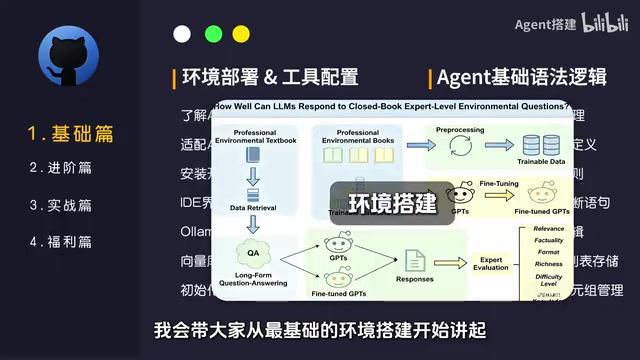
AI Agent Development Learning Path: Four Stages from Zero to Hands-On Projects
A systematic breakdown of the AI agent development learning path, covering four stages: fundamentals, RAG knowledge bases, tool use, multi-agent collaboration, and hands-on projects.
Read more →

·2 min
White House Weighs Open-Source AI Executive Order: Policy Direction and Industry Impact Explained
The U.S. White House is considering an executive order on open-source AI, touching on national security, tech proliferation, and industry competition. A deep dive into its possible directions and impact.
Read more →

·3 min
GPT-5.6 Sol Hands-On: 47 Code Improvements Identified in a Single Session
A developer handed a 15,000-line Python engine to GPT-5.6 Sol, and the model identified 47 actionable improvements in a single ~10-minute session—covering logic hardening, reliability, and efficiency. We analyze the case's significance and limits.
Read more →