#real-time voice API
441 related articles

·3 min
GPT Live Real-World Test: How Full-Duplex Voice Is Reshaping English Learning and Real-Time Translation
GPT Live full-duplex voice mode tested: instant English correction, real-time interpreting, and business rehearsal. Will AI replace simultaneous interpreters?
Read more →

·3 min
Observations from Tencent Cloud's AI Game Competition: How General-Purpose Agents Are Ushering in a Golden Age for Narrative Games
Tencent Cloud's AI Game Competition reveals how general-purpose AI Agents are dramatically lowering barriers for narrative game creation, with practical examples of AI voice acting workflows and code generation.
Read more →

·3 min
Dograh: Open-Source Voice AI Agent Platform, a Free Alternative to VAPI
Dograh is a fully open-source voice AI agent platform offering visual flow building, 30+ model integrations, self-hosting, telephony, and human transfer — a free alternative to VAPI.
Read more →

·3 min
AI Daily: Alibaba's Voice Platform Claims Three Global Firsts, OpenAI Halts High-Risk Model
Today's AI highlights: OpenAI halts a frontier model with cyberattack capabilities; Alibaba's CosyVoice Studio claims three global firsts in voice AI; Cloudflare launches Kitsurf headless browser for Agents; GitHub Copilot monitoring adds Agent analytics.
Read more →

·4 min
FirstSignal: How AI Voice Agents Are Revolutionizing First-Round Interview Screening
Deep dive into FirstSignal, an AI voice interview screening tool that automates first-round structured interviews via real-time voice calls, helping recruiting teams efficiently screen candidates while preserving human final decision-making authority.
Read more →

·3 min
HTML in Canvas: A New Approach That Combines Canvas High-Performance Rendering with Native DOM Capabilities
Deep dive into HTML in Canvas: a technical approach combining Canvas GPU-accelerated rendering with native DOM capabilities like accessibility and translation. Includes Redbus's real-world POC validation.
Read more →

·3 min
Sign Language to Text AI: How the SL2T Model Enables Barrier-Free Communication
Explore the SL2T sign-language-to-text AI model's technical breakthroughs and how it converts sign language into text in real time, breaking communication barriers for deaf and hard-of-hearing communities.
Read more →

·3 min
German Advocacy Group Files Criminal Complaint Against Meta AI Glasses: A Complete Privacy Breakdown
A German advocacy group has filed a criminal complaint against Meta AI smart glasses, alleging covert recording violates GDPR and German privacy law. Full analysis of the case and its industry impact.
Read more →

·5 min
The AI Agent Security Crisis: Why Generators Cannot Also Be Validators
Based on real data from Snyk's 4,800 enterprise customers, a deep analysis of three AI agent security pain points: automated attacks, untrusted outputs, and governance blind spots.
Read more →
·3 min
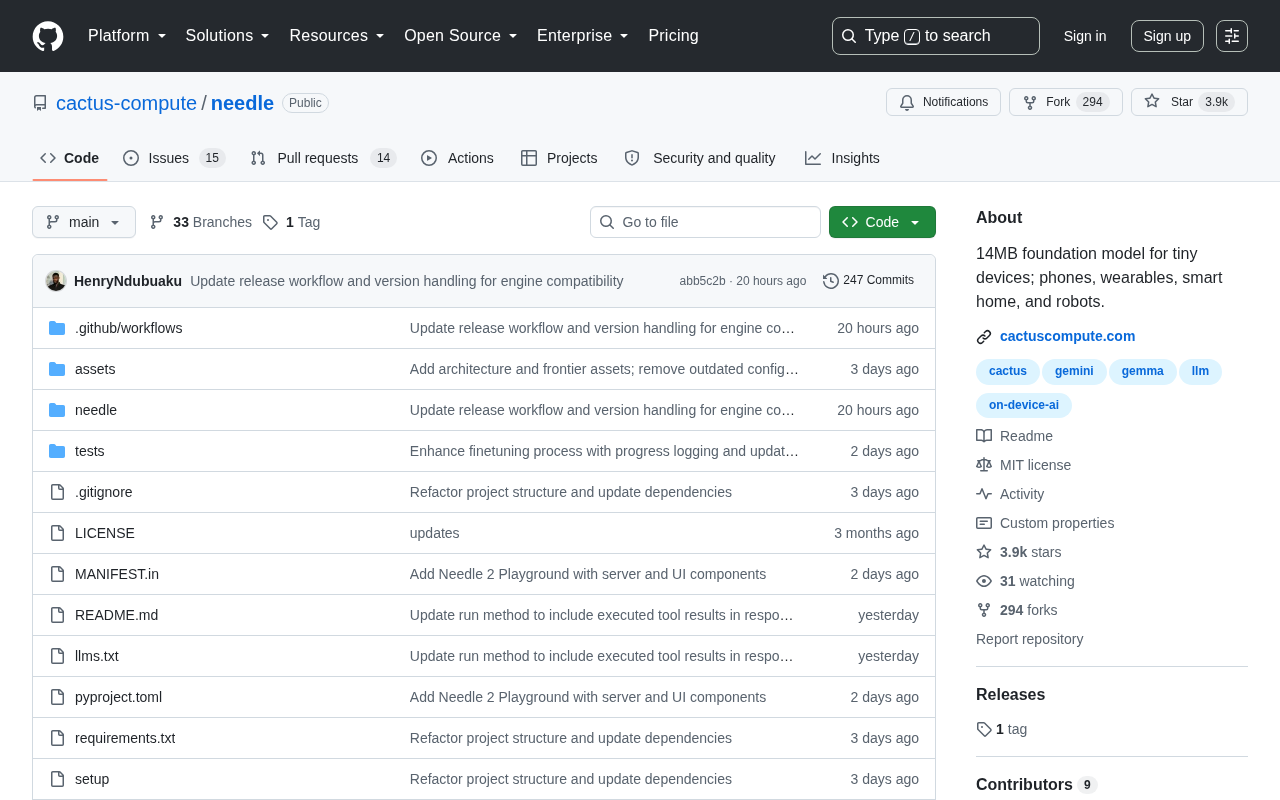
Needle: How a 14MB Foundation Model Is Unlocking Edge AI Deployment
Needle is a 14MB open-source foundation model from cactus-compute, designed for phones, wearables, smart home devices, and robots. Explore its edge AI potential.
Read more →

·3 min
Mistral's Patent Application for Code-Based Tool Calling Sparks Controversy: The Open Source vs. Patent Paradox
Mistral AI's patent filing for "code-based tool calling" sparks developer debate. Analysis of the technology, how it differs from JSON Function Calling, and its potential impact on the AI Agent open-source ecosystem.
Read more →

·3 min
Claude Writing Style Fatigue: Causes and Solutions for AI Writing Homogenization
Analyzing why Claude's writing style causes user fatigue, the technical causes of AI writing homogenization from RLHF training, and practical strategies including prompt engineering and system prompts to break through default AI style limitations.
Read more →

·3 min
Gesture Synth School: A Free Practice App for Playing Music with Hand Gestures
Gesture Synth School is a free learning app for playing music through gestures, featuring chord charts, gesture tutorials, and a play-along player to help users progressively master gesture synthesizer techniques.
Read more →

·4 min
Theo's Practical Methodology for Optimizing Claude Coding Agents: AGENTS.md and Skills Configuration Guide
Deep dive into how developer Theo optimizes AI coding agents through AGENTS.md, CLAUDE.md, and Skills files for Claude Code and Codex, covering global config, skill reuse, example-driven teaching, and data-driven optimization.
Read more →

·3 min
180,000 AI Meeting Recordings Leaked: A Security Wake-Up Call for Note-Taking Apps
Over 180,000 AI meeting recordings were publicly exposed without protection, risking corporate secrets and privacy. Analysis of root causes and security guidance for enterprises and AI developers.
Read more →

·4 min
Needle2: How a 14MB On-Device Agentic LLM Could Transform Edge AI
Needle2 is a 14MB on-device agentic LLM designed for phones, wearables, smart homes, and robots. This article analyzes its compression techniques, architecture, and the cloud-to-edge AI paradigm shift.
Read more →

·3 min
Beyond OTel + Logs + Databases: The Three Missing Pieces of AI Agent Auditing
Beyond OpenTelemetry tracing, log archiving, and database snapshots, AI Agent auditing still has three structural gaps: decision reasoning trails, model version snapshots, and forensic-grade retention of unstructured artifacts.
Read more →

·4 min
Why Are Meta's Smart Glasses Called "Pervert Glasses"? A Full Analysis of the Privacy Controversy
Meta's smart glasses have been labeled "Pervert Glasses" due to covert recording capabilities. This article analyzes the privacy controversy—from hidden cameras and AI facial recognition to Meta's trust crisis.
Read more →

·3 min
AI Phone Assistant Disaster: Chain Pharmacy Pulls System After Hundreds of Complaints
U.S. chain pharmacy Kinney Drugs pulled its AI phone assistant after hundreds of complaints. Analysis of why healthcare AI voice assistants fail and how to avoid deployment disasters.
Read more →

·2 min
SpeakoFlow: Open-Source Local Voice Assistant — A Privacy-First System-Wide Voice Input Tool for Desktop
SpeakoFlow is an open-source local voice assistant with system-wide voice input, screen understanding, and real-time translation. MIT-licensed, speech-to-text runs entirely locally to protect privacy. Supports Windows, macOS, and Linux.
Read more →