#self-hosted AI chat
142 related articles

·7 min
The Agent Engineer Transition Roadmap: A Deep Dive into Three Core Skill Systems
Want to become an Agent engineer? This article systematically covers three core skill tracks—LLM fundamentals, LangChain architecture development, and enterprise deployment—to help you avoid detours.
Read more →
·5 min
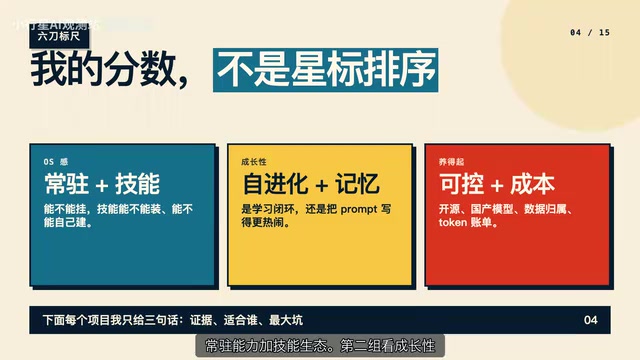
6 Self-Hosted AI Agents Compared: Which One Is a Truly Self-Evolving Digital Employee?
An open-source AI Agent with 380K stars ranks only third? This comparison of 6 self-hosted AI Agents scores them on persistence, self-evolution, and data control—revealing why Generic Agent won with just 3,000 lines of code.
Read more →

·5 min
OSWorld 2.0 Benchmark: Top AI Agent Achieves Only 20% Completion Rate — Long-Horizon Tasks Are the Achilles' Heel
OSWorld 2.0 benchmark tests 108 long-horizon computer tasks. Claude Opus tops at only 20.6% completion, exposing critical AI weaknesses in state tracking and error self-correction.
Read more →
·5 min
OSWorld 2.0 Benchmark: Top AI Agents Achieve Only 20% Completion Rate — Long-Horizon Tasks Are the Fatal Weakness
OSWorld 2.0 benchmark tests 108 long-horizon computer tasks (median 1.6 hrs for humans). Claude Opus tops out at 20.6% completion, exposing critical AI Agent weaknesses in state maintenance and self-correction.
Read more →

·6 min
AI Agent Practical Guide: From Chatting to Directing — Building Fully Automated Workflows
AI use has three levels: Chat, Automation, and Agent. Learn how to use tools like Manus AI with a "director mindset" to build fully automated workflows — no technical background required.
Read more →

·7 min
Otari: A Comprehensive Look at the Open-Source LLM Control Plane Tool
An in-depth analysis of the open-source LLM control plane tool Otari—covering unified multi-model access, cost observability, and security compliance governance to help teams build manageable, production-grade AI infrastructure.
Read more →

·4 min
Complete Guide to Connecting External Models in Codex: Two Methods to Unlock Full Capabilities
Two methods for connecting external models to Codex: manually configure keys via relay services, or use the CC Tool to auto-bridge GPT, DeepSeek, and more. Covers auth/config files, CC Tool usage, and multi-model switching.
Read more →

·2 min
Getting Started with Ollama: The Go-To Tool for Free Local LLM Deployment
Ollama is a free, open-source LLM management tool supporting macOS, Windows, Linux, and Docker. Deploy DeepSeek and other open-source models locally — no API fees, full data privacy.
Read more →

·2 min
Flock: Building an AI Development Squad with Claude Code to Reshape Team Programming Workflows
Flock is a multi-agent development tool built on Claude Code. With roles like Planner, Coder, Tester, and Reviewer, it turns AI coding into a traceable development pipeline.
Read more →

·3 min
GitHub Daily · July 5: The Dual Narrative of Skill Ecosystem Explosion and Local-First AI
GitHub Trending July 5: Claude Code Skill ecosystem explodes, AI pen-testing tool Strix gains +2137 Stars, and local-first privacy apps surge.
Read more →

·6 min
Dify Self-Hosted Deployment in Practice: Building an Enterprise-Grade AI Application Platform from Scratch
A complete guide to self-hosting Dify, the open-source AI platform: environment setup, Docker Compose deployment, LLM integration, and app building. Runs on just 2 cores and 4GB RAM.
Read more →

·3 min
The Complete Guide to Building Dify Workflows: A Hands-On Guide to No-Code AI Applications
Complete guide to Dify's five app types, Docker deployment for v1.8.0, and workflow building. Compare Dify vs Coze and learn to build enterprise AI apps with no code.
Read more →

·4 min
Dify Beginner's Guide: Interface Overview & Complete Docker Self-Hosted Deployment Guide
Complete guide to Dify's four core modules (Explore, Studio, Knowledge Base, Tools) with step-by-step Docker self-hosted deployment instructions for building production-grade AI apps.
Read more →

·3 min
Free Access to Top AI Models? The Hidden Security Risks Behind Aggregator Sites
Exposing the truth behind viral free AI aggregator sites: fake model versions, privacy risks, and data security threats. Learn how to safely use ChatGPT, Claude, Gemini, and other AI models.
Read more →

·2 min
Deep Dive into n8n Workflow Platform: Core Capabilities and Suitability Assessment for China
Deep dive into n8n's core capabilities including 500+ nodes, AI Agent building, and RAG integration, with an objective analysis of its limitations and suitability for use in China.
Read more →

·2 min
n8n from Beginner to Expert: A Complete Guide to Building AI Agent Workflows with Zero Code
Complete guide to n8n's AI capabilities covering AI Agent, Chain nodes, and Tool nodes. Learn to build enterprise-grade AI workflows with zero code, from setup to RAG systems.
Read more →

·3 min
Tutorial: Connecting Codex to Third-Party API Proxies for Low-Cost GPT-5.5 Access
Step-by-step tutorial on connecting GPT-5.5 to Codex via API proxy using CC Switch plugin. Complete setup in minutes with Fast mode and cost optimization tips.
Read more →

·3 min
Building a WeChat Mini Program with Zero Code: A 3-Day Hands-On Journey with Codex + Antigravity
A developer used OpenAI Codex and Antigravity to build and launch a WeChat Mini Program in 3 days with zero code. Full breakdown of the AI recipe app's design, tool workflow, and development process.
Read more →
·3 min
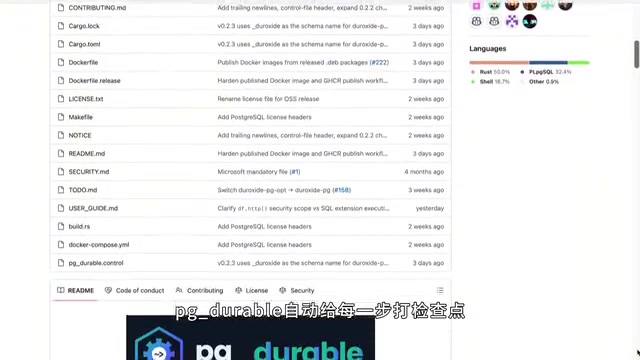
Semantic Code Diff, In-Database Workflows & Mac-Native Containers: Open Source Projects Worth Watching This Week
This week's roundup covers five open source projects: SAM semantic code diff boosting AI Agent accuracy 2.3x, Microsoft's PG Durable for PostgreSQL workflows, Apple Container, Mattermost, and Extend UI.
Read more →

·3 min
Building AI Agents from Scratch: A Complete Beginner's Guide
Build AI Agents with zero coding experience! Learn prompt engineering, RAG knowledge bases, and workflow orchestration using no-code platforms like Coze and Dify, plus real monetization paths.
Read more →